


Moving from an Apartment to a House in Florida: What Affects Insurance Costs
Moving from an apartment to a house in Florida changes more than the address on your insurance policy. A house needs dwelling coverage based on its estimated rebuilding cost, not its purchase price. The home’s features, location, and occupancy can also affect coverage and premiums. If the policy doesn’t reflect the new property and how you’ll use it, coverage gaps may remain.
A homeowners policy isn’t simply an extension of renters insurance: the house itself brings different risks and coverage needs. This guide explains how rebuilding costs, roof and property features, location, move timing, and plans to live in or rent out the home can affect your insurance. You’ll also learn why coverage should be coordinated around closing and what to consider for belongings in transit or storage, so you can plan for the protection your new home needs.
Table of Contents
Replacement Cost Value coverage for the rest of the home
A homeowners policy should cover the house based on its estimated rebuilding cost, not its purchase price. Land value, market demand, and sale price don’t show what it would cost to rebuild the structure. After moving, update the policy to reflect the home’s construction, size, and features. Coverage based only on belongings in your former apartment won’t protect the house itself.
Florida law also addresses how dwelling losses are valued. Before issuing a homeowners policy, a Florida insurer must offer dwelling coverage that adjusts repaired or replaced losses at replacement cost rather than actual cash value, subject to policy limits, according to the Florida Legislature. Read the policy’s valuation language and limits together: replacement cost does not mean payment beyond the stated policy limit.
For a concise overview of Florida home insurance considerations, including wind and roof factors, watch this video:
Pay particular attention to roof settlement terms. Fannie Mae and Freddie Mac accept Actual Cash Value coverage for roofs on single-family homes and condos. With this arrangement, the roof is insured for its current value, while the rest of the home retains Replacement Cost Value protection. Compare the roof settlement terms with the dwelling coverage rather than assuming the same valuation applies to every part of the structure.
When comparing Florida homeowners insurance quotes and insurers, review the dwelling limit, roof settlement, wind coverage, hurricane deductible, and exclusions side by side. For example, a 2% hurricane deductible on a home insured for $400,000 means paying $8,000 out of pocket before insurance pays on a hurricane claim.
For personal property coverage, make a room-by-room inventory and estimate current values, as the Florida Office of Insurance Regulation recommends. Include items you may not have had in your apartment, such as patio furniture or equipment stored in a garage. Use the inventory to choose coverage, then review limits and exclusions for valuable belongings.
Dwelling coverage should reflect the cost to rebuild the house, while liability limits should account for the assets and exposure you want protected. There’s no single limit that suits every Florida homeowner. Compare the policy’s limits and covered risks, and check how it handles wind coverage. Policies with and without wind coverage can differ in both protection and cost.
Condo owners should check whether the association’s master policy leaves gaps in coverage for interior improvements, personal property, loss of use, liability, or condominium assessments.
In Florida, most insurers require a four-point inspection for homes that are 20 years old or older before issuing or renewing a homeowners policy.
How home characteristics and location can affect insurance cost
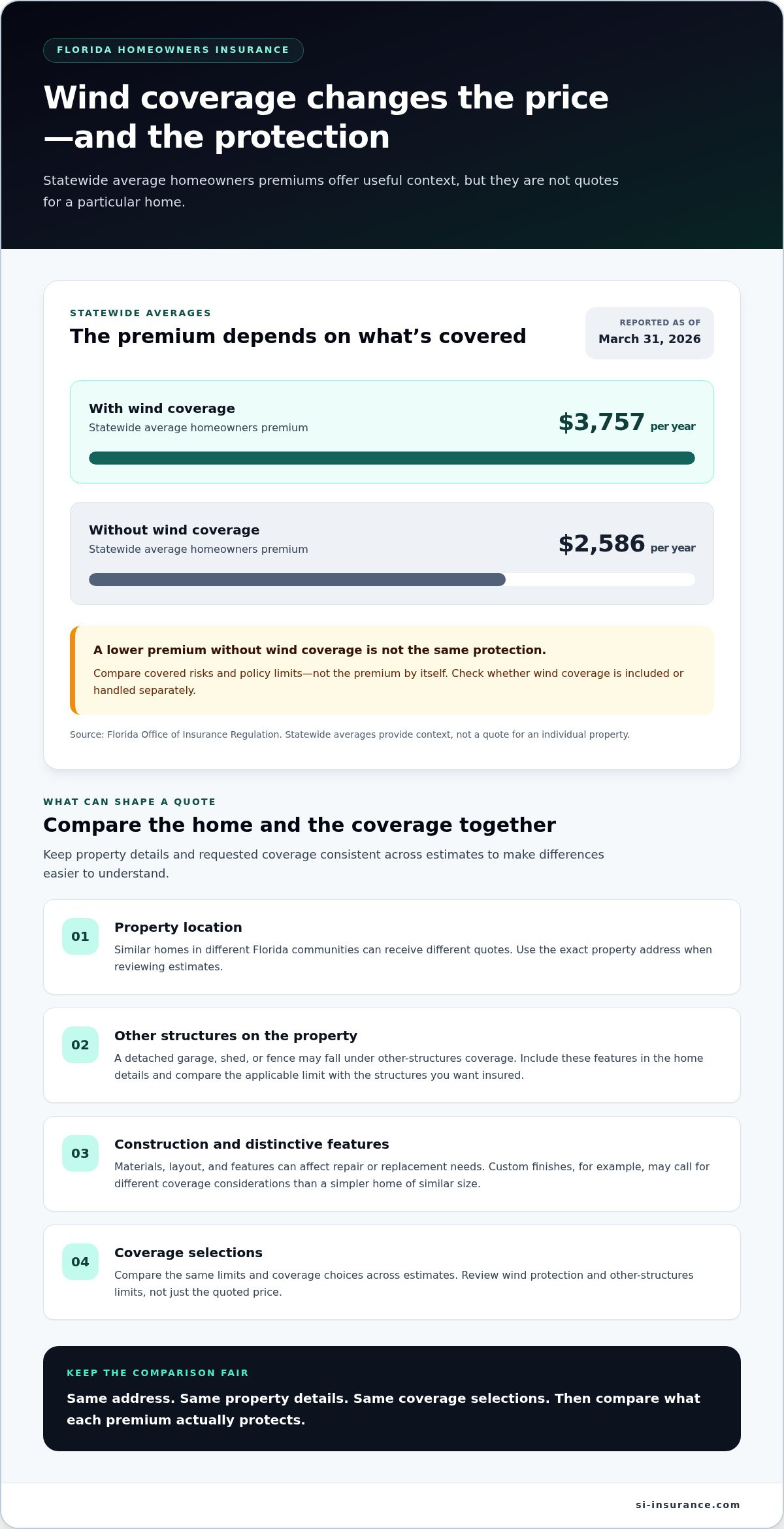
For a Florida household moving from an apartment to a house, insurance changes can reshape both the premium and the coverage being compared. The Florida Office of Insurance Regulation reports a statewide average homeowners insurance premium of $3,757 per year with wind coverage, based on data reported as of March 31, 2026. Without wind coverage, its statewide average is $2,586 per year, based on data reported as of the same date. These figures provide context, not a quote for a particular home.
Differences in premiums matter only when you compare the coverage behind them. A lower premium without wind coverage doesn’t provide the same protection as a policy that includes it. Compare covered risks and limits instead of treating the premium as a stand-alone measure. Florida homeowners should check whether a quote includes wind coverage or treats it separately.
Location matters because each property has its own risk profile and insurance conditions. Two similar homes can receive different quotes in different Florida communities. Use the exact property address when reviewing estimates, and compare policies with the same coverage selections. This makes it easier to see whether a price difference reflects the policy terms or the home’s location.
Include more than the main house when describing the property. A detached garage, shed, or fence may fall under the policy’s other-structures coverage. List these features in your home details and compare the applicable limit with the structures you want insured. For example, a property with a separate storage shed has different structures to account for than one without a shed.
Construction details also affect how insurers assess a house and its rebuilding needs. Materials, layout, and distinctive features can affect the cost to repair or replace the property after a covered loss. A home with custom finishes, for example, may need different coverage considerations than a simpler home of similar size. Accurate property details make quote comparisons more meaningful.
As you assess options, keep the address, structures, and requested coverage consistent across estimates. Then review how wind protection and other-structures limits are handled, rather than choosing by premium alone. For a Florida home purchase, review home insurance options with the property’s details in view.
Move-related insurance planning timeline
Plan your insurance before closing on a Florida home, not on moving day. Coverage for the new home should begin by closing, when ownership transfers. An insurance agent can prepare the policy and provide documentation for the mortgage lender or closing process. Add insurance dates to your purchase timeline alongside inspections and financing milestones.
After the offer is accepted: Tell the insurance agent the property address and expected closing date. Share details that can affect underwriting, such as construction, roof condition, and whether the home will be occupied or rented. This gives the insurance company time to assess the property and prepare coverage documents for the transaction.
Before closing: Confirm the new policy’s effective date and make sure the lender or closing team receives the required evidence of coverage. The policy should be active by closing, when responsibility for the new property transfers. If the date changes, update the insurance agent promptly so the documents and effective date match.
If flood insurance is needed: Account for the waiting period before choosing a start date. A new National Flood Insurance Program policy typically has a 30-day waiting period before taking effect. That timing can affect a purchase planned near closing, so consider flood coverage early rather than treating it as a last-minute addition.
During the move: Keep the former home insured while ownership or responsibility continues. A seller should wait a few days after closing before canceling home insurance. If you buy the new home before selling the old one, overlapping coverage may be needed for a few days, with protection addressed separately for each address.
If both homes are yours temporarily: Tell the insurance agent about the two-home period. The old property’s vacancy status may affect coverage, while the new property needs protection based on its occupancy. A change in move dates or an unoccupied home can alter the circumstances the insurance company evaluates.
Renters and homeowners policies cover different interests, so coordinate their dates rather than assuming one automatically replaces the other. Align the homeowners policy with closing, then set the renters policy’s end date to match your move and the protection needed for your belongings. If plans change, such as a delayed sale or an extended stay at the old address, update the timeline with your insurance agent. This helps keep coverage aligned with who owns and occupies each property.
Occupancy and rental use
A homeowners policy is generally based on the owner occupying the home. If you move into a house but leave your former home vacant, the properties have different occupancy situations. Tell your insurance agent about both addresses and how you expect to use each one. Vacancy rules may affect coverage for the former home, so don’t assume its existing policy still fits unchanged.
Plans to rent the new house also change the coverage conversation. Homeowners who rent their property to tenants typically need landlord insurance rather than owner-occupant homeowners insurance. Long-term rentals commonly use a six- or 12-month lease. Share the rental arrangement and expected occupancy with your agent, because the policy should reflect how the property will actually be used.
For perspective, the Insurance Information Institute says landlord insurance in the United States costs about 25% more than a standard homeowners policy. That is a national comparison, not a quote for a particular Florida property. The difference reflects the distinct risks associated with rental use, while the actual premium depends on the property and selected coverage.
An unoccupied house needs particular attention. If you’ll be away for a month or longer and have concerns about coverage, discuss temporary changes with your insurance agent. This may apply during an extended trip, a delayed move, or a gap before tenants arrive. An empty property may not be treated like an owner-occupied home, so describe the timeline clearly.
Occupancy also matters when a claim involves damaged property. Review how the policy covers the dwelling, personal belongings, and liability based on the home’s actual use. Replacement-cost terms and deductibles affect claim payments, but you still need to state whether you live there, lease it, or leave it vacant. A house rented to tenants, for example, is used differently from one occupied by its owner.
Before changing occupancy, share the planned start date and arrangement with your agent. Explain whether you’ll live in the house, rent it under a six- or 12-month lease, or leave it vacant temporarily. If the plan changes after moving, update the information rather than relying on the original description. Accurate occupancy details help align the policy with the property’s real use and the protection being sought.
How does homeowners insurance differ from renters insurance in Florida?
Renters insurance is designed for someone who lives in a property they don’t own. It generally focuses on personal belongings and personal liability, rather than the apartment building itself. A renter’s couch, clothing, and electronics belong to the renter; the building structure belongs to the property owner. The lease and policy documents clarify each party’s responsibilities.
Homeowners insurance addresses different interests because you own the house. Depending on the contract, the policy can cover the dwelling, personal belongings, and liability, subject to its limits and terms. A damaged roof or wall is a concern for the homeowner, not a building repair assigned to a landlord. Review covered property and exclusions rather than assuming renters coverage simply converts.
Personal belongings need attention under both types of policy. Some homeowners policies cover personal property away from the home, but limits and exclusions may apply to items in transit or storage. A television packed in a moving box, for instance, may be treated differently from one inside the insured home. Read the policy to understand how it covers belongings during the move and while they’re stored.
Coverage for the building is a central difference. Renters typically don’t insure the apartment structure, while homeowners need dwelling coverage that reflects the house. Homeowners coverage should also account for features such as attached structures and the home’s contents. Compare covered property, limits, deductibles, and exclusions, not just the total premium.
Liability is another point to compare. A renter could face a claim involving an incident connected to the apartment, while a homeowner’s exposure may relate to the house and its premises. The policy wording sets out what’s covered and which limits apply. Compare the liability sections and exclusions across both policies instead of carrying over an apartment limit automatically.
As you move, identify what changes and what stays yours: the building becomes your responsibility, while furniture and personal items remain your property. Check how the homeowners policy treats belongings during transport and storage, then coordinate the renters policy’s end date with the move. For a focused review of coverage for your new home, review your homeowners coverage options alongside the terms you currently have.
SI Insurance: Auto Insurance
SI Insurance can help you review home and auto coverage as you settle into a new Florida house. Moving is a good time to consider whether your home policy reflects the property and its intended use, and whether your auto policy reflects your current circumstances. If you own a motorcycle or boat, include those policies in the review.
Gather your new address, closing date, and planned occupancy details when discussing home coverage. For auto insurance, consider how the move affects the information on your policy. Reviewing these changes together can help you understand how your coverage fits your household after the transition.
Contact SI Insurance to discuss your coverage, or visit si-insurance.com.
Make your next move with a clear coverage plan
A new house changes more than your daily routine. It’s also a chance to align insurance with how you’ll use the property and how your household is changing. Moving from an apartment to a house in Florida is easier to manage when you plan coverage as part of the move, rather than leaving it until after you’ve settled in.
Before closing, gather details about the home, your intended occupancy, and any changes to your household’s vehicles or recreational equipment. A focused discussion can connect the property’s needs with the coverage you’re arranging for this next stage. SI Insurance Agency can help you review your insurance needs as part of the move.
Contact SI Insurance about your move to discuss your next steps. A thoughtful review now can help you begin life in your Florida home with greater clarity.
Frequently Asked Questions
What are the risks of not updating your home insurance coverage?
Outdated coverage can leave the home, its use, or its value out of step with the policy when a claim occurs. For example, a policy that still describes an apartment or an owner-occupied home may not reflect a house rented to tenants. After moving, review the insured address, occupancy, dwelling limit, and major changes to the property. A mismatch can affect how a loss is assessed and which policy terms apply.
What factors affect the cost of insuring a Florida house, including location, roof age, and construction?
Location, construction, roof condition, replacement costs, and fire protection can all influence a Florida home insurance quote. The statewide average homeowners premium reported by the Florida Office of Insurance Regulation was $3,757 per year with wind coverage and $2,586 per year without wind coverage, based on data reported as of March 31, 2026. These are statewide averages, not a prediction for an individual property or its coverage.
What Florida homeowners insurance coverage is required by law or by mortgage lenders?
According to the Florida Legislature, before issuing a homeowners policy, insurers must offer dwelling coverage that adjusts repaired or replaced losses at replacement cost, subject to policy limits. A mortgage lender may also require homeowners insurance as a condition of financing and request proof by closing. These lender requirements are separate from the state’s offer rule, so review your loan conditions and policy documents together.
Do Florida homeowners policies cover flooding, or is separate flood insurance needed?
Homeowners insurance generally doesn’t cover flood damage, so a separate flood policy may be needed to protect the house and belongings from rising water. Consider the home’s flood exposure and the amount of protection needed when assessing options. A new NFIP policy typically has a 30-day waiting period before taking effect, so timing matters.
What home features or mitigation inspections can lower Florida homeowners insurance premiums?
Wind-resistant features documented through a wind mitigation inspection can qualify a home for premium credits. Florida wind mitigation credits can reduce homeowners premiums by 10% to 50% or more. An inspection report can help document wind-resistant features when discussing possible premium credits. A four-point inspection, often required for older homes, documents major systems for underwriting; it is not the same as a wind mitigation inspection or a guarantee of a discount.
What liability and dwelling coverage limits should I consider for a Florida home?
Set dwelling coverage to the home’s estimated rebuilding cost, not its purchase price, and remember that replacement-cost coverage is subject to the policy limit. Choose liability limits based on the assets and exposure you want protected. There’s no single limit that suits every Florida homeowner.
Comments