


Car Insurance Cancelled for Nonpayment in Florida: What Happens Next
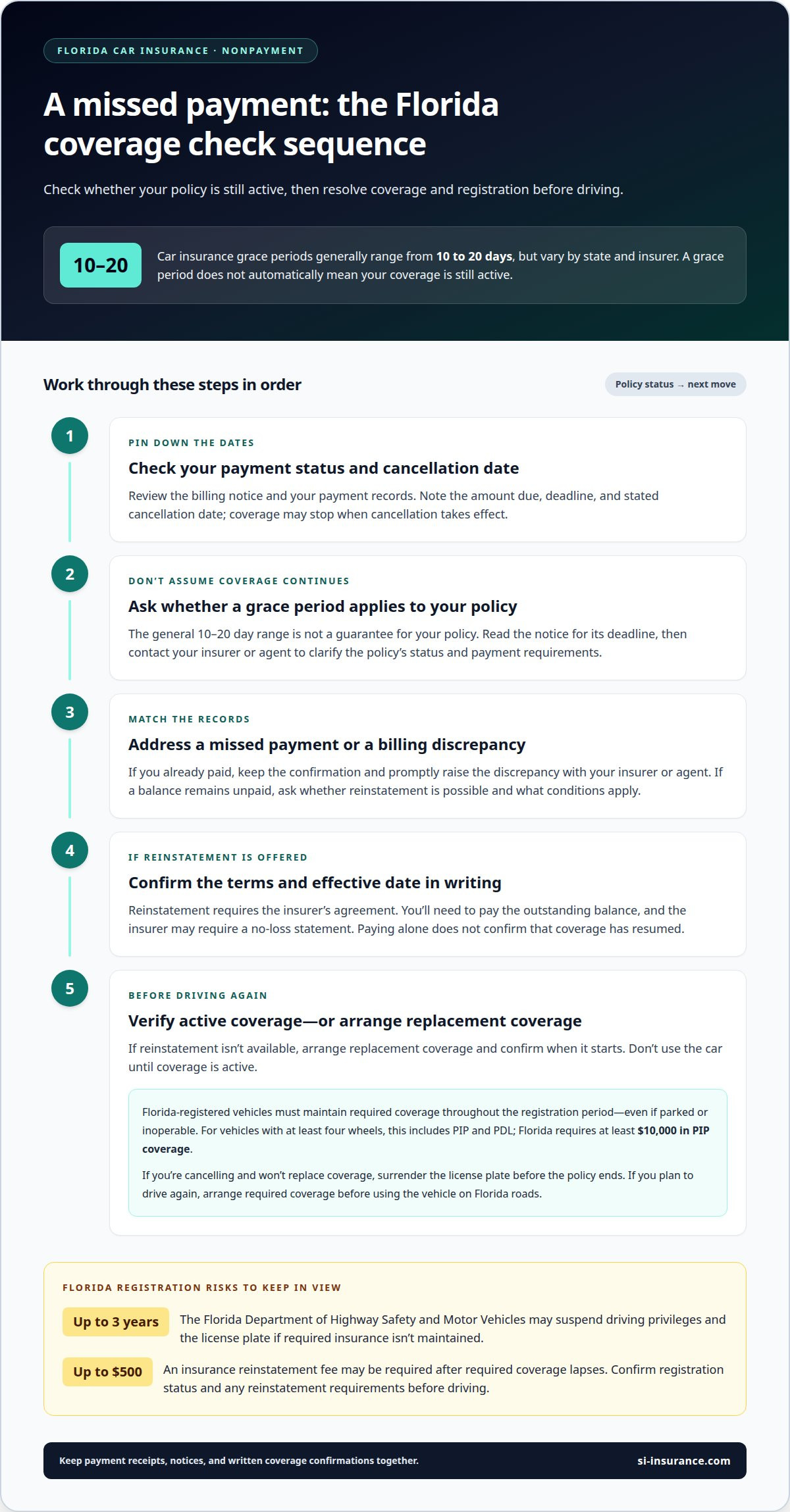
A car insurance grace period isn’t a guaranteed extension of coverage: grace periods generally range from 10 to 20 days, but vary by state and insurer. Once a cancellation takes effect, a lapse can leave you uninsured, and failing to maintain required coverage may put your Florida driving privileges and license plate at risk of suspension for up to three years, according to the Florida Department of Highway Safety and Motor Vehicles. Understanding what happens when your car insurance is cancelled for non-payment in Florida starts with knowing whether the policy is still active.
A missed payment can be more than a billing problem: the cancellation date may affect your insurance coverage and vehicle registration. This guide explains what happens when your car insurance is cancelled for non-payment in Florida, how to check whether your policy is still active, and what to do if coverage ends or you believe the notice was incorrect. It also covers steps to take before driving again.
Table of Contents
Continuous insurance requirements for registered vehicles
No. Florida drivers can’t keep a vehicle registered without required insurance simply because they stop driving it. Florida-registered vehicles must maintain coverage throughout the registration period, even when they’re inoperable or parked. For vehicles with at least four wheels, the Florida Department of Highway Safety and Motor Vehicles requires proof of Personal Injury Protection (PIP) and Property Damage Liability (PDL) before registration.
Florida requires at least $10,000 in PIP coverage, according to the Florida Department of Highway Safety and Motor Vehicles. PDL coverage must also be maintained. Keeping a car off the road does not end the insurance requirement while its registration remains active. For example, a driver who parks a damaged car but keeps its plate and registration should not assume the vehicle can remain uninsured.
A coverage lapse can affect both vehicle registration and driving privileges. The Florida Department of Highway Safety and Motor Vehicles may suspend your driving privileges and license plate for up to three years if required insurance isn’t maintained. This applies even if you haven’t driven the car. With a suspended plate, you can’t legally drive the vehicle under that registration.
If you’re cancelling coverage and won’t replace it, surrender the license plate before the policy ends. This can help avoid a registration suspension and related reinstatement fees. The order matters: cancelling insurance while the vehicle remains registered can create a compliance problem, even if it’s parked. If you plan to drive again, arrange required coverage before using the vehicle on Florida roads.
For example, if you store an inoperable car in Florida, consider two separate questions: whether it remains registered and whether required coverage is active. The car’s condition alone doesn’t end the continuous insurance requirement. Knowing this can help you decide whether to maintain coverage or surrender the plate before cancelling, rather than finding out later that your registration is affected.
What Should You Do if Your Car Insurance Is Canceled for Nonpayment?
A missed payment can lead from an overdue bill to cancellation, but the timing depends on the insurer and policy. Check your payment status and the cancellation date before assuming coverage is still active.
Missed Premium Payments
A missed premium is an unpaid amount due under your policy. If it remains unpaid, the insurer may cancel the policy, leaving you without coverage after the cancellation takes effect. Check the billing notice and payment records for the amount due, deadline, and stated cancellation date. If you already paid, keep the confirmation and promptly raise the discrepancy with your insurer or agent.
Grace Periods for Overdue Premiums
A grace period is a limited window after a missed due date in which payment may prevent a coverage problem. Car insurance grace periods generally range from 10 to 20 days, but the period varies by state and insurer. Don’t assume that window applies automatically to your policy or that coverage remains active throughout it. Read the notice for the relevant deadline, then contact the insurer or agent to clarify the policy’s status and payment requirements.
Premiums After Cancellation
A lapse may affect the availability or cost of future coverage. Insurers may consider the length of the gap, your payment history, and your driving record. A suspension of your license or registration is a separate issue to resolve before driving. Arrange replacement coverage as soon as possible, and don’t use the car until that coverage is active.
If the insurer offers reinstatement, ask for its effective date and any conditions, and confirm that you’ve paid the outstanding balance. If reinstatement isn’t available, arrange replacement coverage and confirm when it starts before relying on it. Keep receipts and written confirmation so you can distinguish an active policy from a past-due account or cancelled policy.
What Happens After Your Policy Is Cancelled?
Cancellation ends a policy before its scheduled expiration, so coverage may stop on the stated effective date. The reason for cancellation determines what you should review next.
Nonpayment isn’t the only possible reason for cancellation. Problems with application information or statements during a claim investigation may affect your policy. A suspended or revoked license may also trigger cancellation. Underwriting changes or an insurer’s decision to leave a market can affect policies, too. Read the stated reason carefully: a billing dispute and an underwriting decision require different responses.
Policyholder Rights and Complaints
You’re entitled to a written explanation when an insurer cancels an auto policy. Use it to understand the stated reason and respond if it doesn’t match your records. Compare the effective date and reason with payment confirmations, application details, or claim correspondence. Raise any specific error with the insurer or agent, and keep copies of notices and replies. If the issue remains unresolved, you can file a complaint with the Florida insurance department.
Reinstating a Canceled Policy
A cancelled policy is reinstated only if the insurer agrees and you meet its conditions. You’ll need to pay the outstanding balance, and the insurer may also require a no-loss statement confirming that no claim-related loss occurred during the lapse. Ask for the reinstatement date in writing: paying the balance alone doesn’t confirm that coverage has resumed. If reinstatement is declined, arrange replacement coverage before driving.
A lapse can also affect Florida registration. The Florida Department of Highway Safety and Motor Vehicles may require an insurance reinstatement fee of up to $500 after required coverage lapses. Confirm the registration status and any reinstatement requirements before using the vehicle. A clear record of the cancellation notice, payments, and insurer response helps explain the result and supports your next steps.
What Does “Cancelled Without Notice” Mean?
“Cancelled without notice” means you believe the insurance company ended your policy without proper warning. Auto insurers must notify policyholders before cancellation, but Florida’s general cancellation notice rule excludes motor vehicle policies subject to section 627.728.
Don’t assume a notice period from another state applies in Florida. Notice periods differ: California requires at least 10 days for nonpayment, New York requires 15 days, and Texas generally requires 10 days. A commonly cited 10-to-30-day range across states isn’t a Florida-specific deadline. The applicable Florida motor vehicle rule is distinct from the general rule for other covered policies.
Check the cancellation notice for the reason, the amount owed to avoid cancellation, the payment deadline, and the effective date. Compare these details with your payment records. Check both email and mail, since electronic notices may be used if you agreed to paperless communication. If you paid on time or believe the notice is inaccurate, contact the insurer or agent and keep a written record of the response.
Cancellation and nonrenewal are different. Cancellation ends coverage before the policy’s expiration date; nonrenewal takes effect at the end of the policy term. If you believe the required notice wasn’t provided, explain the discrepancy to the insurer and request the notice and cancellation details. If the issue remains unresolved, Florida policyholders can consider filing a complaint with the state insurance department.
While the notice dispute is being addressed, don’t assume insurance coverage remains active. Confirm the policy’s current status and arrange replacement coverage promptly if cancellation has taken effect. A notice review can help clarify the timeline, but it doesn’t itself restore an ended policy. For help considering replacement coverage, review Florida auto insurance options.
SI Insurance
SI Insurance offers Auto Insurance for Florida drivers seeking coverage after a cancellation or a replacement policy. Once you know whether your former insurer will reinstate your policy, consider coverage that meets Florida’s requirements and suits your circumstances.
A recent lapse may affect your coverage options. Have the cancellation date, payment status, and notices ready when discussing your situation. SI Insurance can help you explore Auto Insurance and other coverage, including Motorcycle, Boat, and Home Insurance. The goal is to find a suitable path forward, not to assume your old policy is still active.
For help exploring coverage options after a cancellation, contact SI Insurance for a quote.
Take the Next Step Toward Reliable Coverage
After a cancellation, focus on establishing a clear path forward instead of making assumptions about past coverage. Understanding what happens when your car insurance is cancelled for non-payment in Florida can help you make informed decisions about your next policy and avoid uncertainty before driving. Discuss the cancellation and the coverage you need going forward with Si Insurance Agency.
SI Insurance offers Auto Insurance, Motorcycle Insurance, and Boat Insurance, and can help you consider coverage options suited to your needs. Contacting an insurance agency can be useful when you’re arranging replacement coverage or reviewing your options after a policy ends. Contact SI Insurance for help, and take the next step with a clearer understanding of your coverage choices.
Frequently Asked Questions
How Long Is a Car Insurance Grace Period?
Grace periods generally range from 10 to 20 days, but the period depends on the state and insurer. For example, a driver shouldn’t assume another household member’s policy timeline applies to their own account. Review the billing notice for its payment deadline and contact the insurer if the date or policy status is unclear. A grace period isn’t automatically extra time with active coverage.
What Should You Do if You Can’t Afford Your Car Insurance Payment?
Contact your insurer before the payment deadline and explain that you’re having difficulty paying. Ask how much is due, when cancellation may take effect, and whether a payment arrangement or policy change is available. Don’t assume an option is available until the insurer confirms it. If coverage ends, don’t drive until replacement insurance is active. An accident during a lapse can leave you responsible for losses.
What if You’re Caught Driving Without Insurance?
Driving without required insurance in Florida can lead to consequences for your registration or driving privileges, as well as financial losses if a crash occurs. The Florida Department of Highway Safety and Motor Vehicles may suspend your driving privileges and license plate for up to three years if required coverage isn’t maintained. Don’t present an expired policy as current. Resolve your coverage and registration status before driving again.
What happens immediately when car insurance is canceled for nonpayment in Florida?
After cancellation takes effect, the policy no longer covers events that occur after that date. If a crash happens during the lapse, you may face financial losses without the policy’s protection. For example, if you receive a cancellation notice, distinguish its effective date from the bill’s due date. Contact the insurer to confirm whether your coverage is still active or has ended.
How much notice must a Florida insurer give before canceling auto insurance for nonpayment?
Florida auto cancellation notices are subject to motor-vehicle-specific rules, so general notice periods for other types of policies don’t answer this question. Check the notice for the cancellation date, reason, amount needed to avoid cancellation, and payment deadline. If you believe the notice was mishandled, compare it with your payment records and raise the discrepancy with the insurer. Don’t rely on another state’s deadline.
Can a Florida auto insurer reinstate a canceled policy after missed payment?
Yes, an insurer may reinstate a policy if it agrees and you meet its conditions. These may include paying the outstanding balance, and the insurer may also request a no-loss statement covering the lapse period. Get written confirmation of the reinstatement’s effective date before driving. If the insurer declines reinstatement, arrange replacement coverage and confirm its start date before using the vehicle.
Comments