


Cleaning Service Liability Insurance Costs in Fort Lauderdale
A cleaning job can lead to a liability claim even when the work is done carefully. Liability insurance for a small cleaning service in Fort Lauderdale may help cover claims from others involving bodily injury or property damage, as well as certain lawsuits and advertising-injury claims. It does not cover the business’s own property.
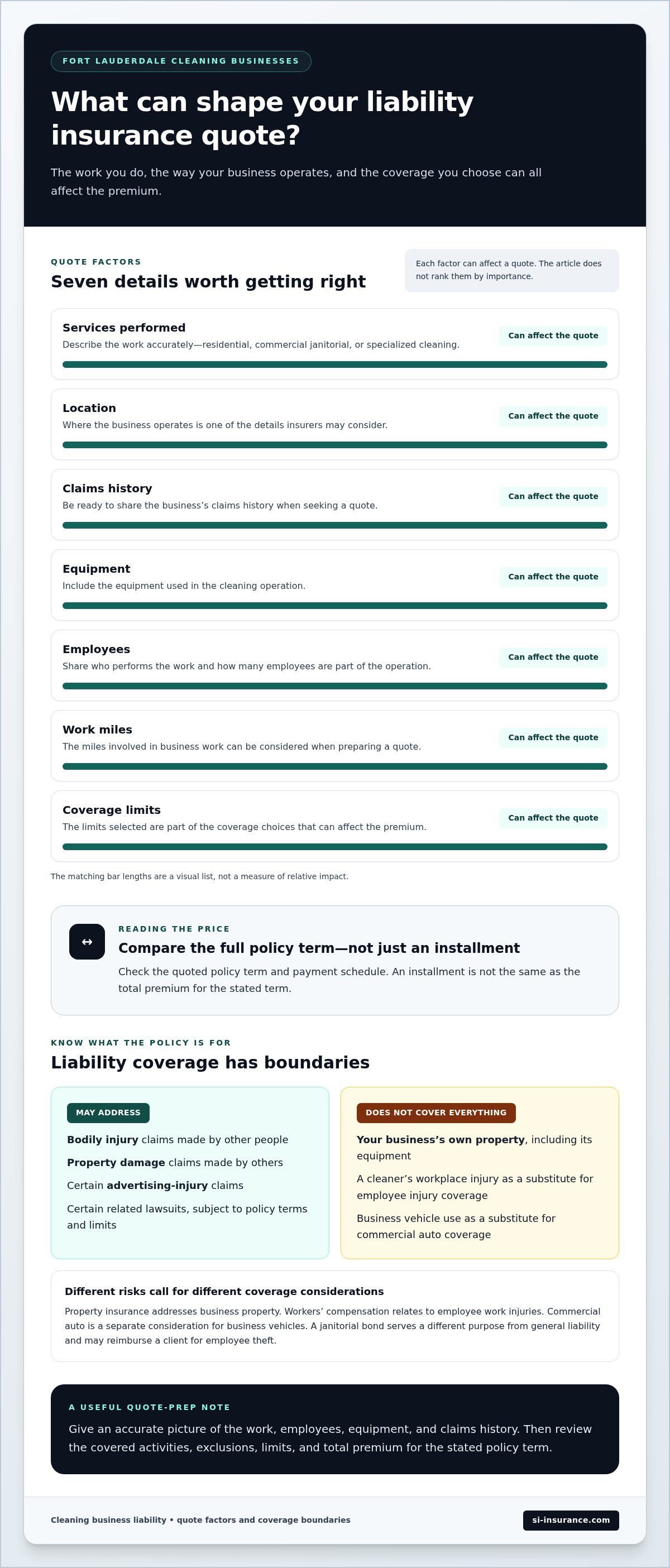
Choosing coverage is about more than meeting a client’s or landlord’s request for proof of insurance. It also means understanding which risks a policy addresses and where its limits lie. The premium depends on the operation and coverage selected. Services performed, location, claims history, equipment, employees, work miles, and coverage limits can all affect a quote.
This guide explains what general liability may cover, how claims and certificates of insurance work, and what can affect costs for a Fort Lauderdale cleaning business. It also distinguishes liability coverage from protection for business property, helping you assess what each policy is designed to do.
Table of Contents
What Is General Liability Insurance for Cleaning Businesses?
General liability insurance may help protect a cleaning business when a customer or another person alleges bodily injury, property damage, or advertising injury. For example, a client might claim a cleaner damaged a surface during a scheduled visit. The policy may also respond to certain lawsuits, subject to its terms and limits.
Business insurance costs depend on the operation, not just its name. Services performed, location, claims history, coverage limits, employees, equipment, and work miles can all affect a quote. When seeking liability insurance for a small cleaning service in Fort Lauderdale, describe the work accurately, whether it is residential cleaning, commercial janitorial work, or a specialized service.
For a practical overview of coverage and cost considerations, watch this video:
When reviewing policy pricing, check the quoted policy term and payment schedule. Compare the total premium for the stated term rather than treating an installment as the full business insurance cost. The policy period and payment arrangement are separate details to understand before selecting coverage.
General liability is not universally required by state law, but a cleaning client may require it before work begins. A commercial lease may also make liability coverage a condition of renting a space. Florida cleaning businesses may have different insurance needs depending on location and services, so consider the work and contract terms.
Commercial auto is a separate consideration. Florida business vehicles owned by a cleaning services business must be covered by a commercial auto policy. This coverage may help protect the business and its employees while driving business vehicles. Personal auto policies usually exclude business use, so a personal vehicle used for work may need hired and non-owned auto coverage.
Which insurers offer cleaning business liability insurance in Florida? Commercial insurers that write general liability policies for businesses may cover cleaning operations. Underwriting and policy terms vary based on the services performed, claims history, employees, equipment, and requested limits.
Is workers’ compensation insurance required for cleaning businesses in Florida? Florida non-construction businesses with four or more employees must provide workers’ compensation insurance. It may help cover medical bills, ongoing care, lost wages, and disability benefits after work-related injuries or illnesses.
Do cleaning businesses need janitorial bonds or employee dishonesty coverage? A janitorial bond may reimburse clients for employee theft, but the bond carrier expects reimbursement when it pays a claim. It serves a different purpose from general liability, so consider the client’s contract and the business’s exposure to theft allegations.
Are there Fort Lauderdale or Broward County insurance requirements for cleaning businesses? Florida has no statewide general business license, while counties and cities may have their own requirements. Local rules and contract terms can affect a business’s needs, and a lease or customer may require general liability coverage.
General liability coverage for customer injuries and property damage
For a cleaning business, general liability addresses claims made by other people, not every loss connected with a job. A customer who slips on a wet floor may allege bodily injury; a property owner may claim a cleaner damaged a countertop. In either case, liability coverage may help with covered claims and related lawsuits, subject to the policy’s terms, exclusions, and limits.
Property damage allegations can involve more than a visibly broken item. A client might say cleaning solution discolored a finished surface or water damaged flooring during a scheduled service. Record the job location, cleaning products used, reported damage, and communications with the customer. These details help document what happened and support the claims process.
General liability may also address certain advertising-injury claims, which differ from physical injury or damage. A dispute about a cleaning business’s promotional material, for example, is different from a claim that a worker damaged a customer’s furniture. Professional liability is also distinct: it does not cover physical injury or property damage. Some businesses consider both forms of protection for different exposures.
Workers’ actions can lead to third-party claims, but general liability is not a substitute for employee injury coverage. A customer’s injury and a cleaner’s workplace injury raise different policy questions. Describe who performs the work, which tasks they handle, and whether services include specialized cleaning. Accurate details help align cleaning business insurance with actual operations, rather than assumptions based on a broad business label.
Premiums reflect the operation and selected protection, including services performed, location, claims history, equipment, employee count, and coverage limits. A business taking on varied jobs may present a different exposure from one working in a single setting. Review limits, exclusions, and covered activities alongside the cost, rather than comparing premiums alone. Property insurance addresses a separate gap: general liability does not protect the cleaning business’s own equipment or other property. A Business Owners Policy can combine general liability, commercial property, and business income insurance.
A premium audit may reconcile policy estimates with the business’s actual operations when the policy requires one. Keep organized records of revenue, payroll, employee roles, and services completed during the policy period. If the business adds workers or begins offering floor care, those changes may affect the exposure used to calculate the premium. Clear records make the audit easier to support and help keep estimates aligned with the work.
For a broader view of how coverage can fit a company’s operations, review business insurance options alongside the specific liability protections under consideration.
Insurance quote application and certificates of insurance
A quote application describes a cleaning operation in terms an insurer can evaluate. A certificate then gives clients a concise record of selected coverage.
Applying for an Insurance Quote
Describe each service accurately, from routine residential cleaning to commercial janitorial work or specialized floor care. Include employee count, work locations, equipment, and prior claims. If staff drive between jobs, explain which vehicles they use and whether they are business-owned or personal. These details help distinguish general liability exposures from commercial auto needs.
Before submitting an application, gather business records and review the listed services. Compare the proposed policy description with the actual work, including occasional tasks that may carry different risks. For example, if the business adds carpet cleaning, disclose that change rather than relying on a description limited to standard janitorial duties.
Certificates for Cleaning Clients
A certificate of insurance is a document a cleaning business can provide as proof of liability coverage. A property manager may request one before allowing cleaners into an office, while a homeowner may ask before a first appointment. The certificate summarizes policy information; it does not replace the policy or expand its protection.
Match the certificate to the client’s request. Confirm that the business name and coverage details are correct, then send the document to the intended client or landlord. If the request concerns a particular job site, identify that location clearly when arranging the certificate. Keep a copy with the relevant contract and service records.
Liability Certificates and Coverage Limits
A certificate of liability insurance shows general liability coverage and its stated limits. What insurance limits do Fort Lauderdale commercial cleaning clients typically require? There is no single limit for every client; the contract or lease sets the requested amount and any additional conditions.
Read the agreement alongside the certificate. A client may specify a minimum liability limit, request evidence before work begins, or require notice of coverage changes. The certificate documents policy information, but it does not amend coverage or create rights beyond the policy and applicable endorsements. Compare the stated limits with the written requirement before submitting the document.
Keep a consistent file for each client: the contract, certificate, service description, and relevant policy records. If a request mentions employee coverage or commercial auto, treat those as separate policy lines rather than assuming general liability satisfies them. Good records connect each certificate to the right site, work scope, and proof of insurance.
Bodily injury, property damage, and personal injury claims
For a Fort Lauderdale cleaning service, key liability risks include customer injuries, accidental property damage, and certain advertising-injury claims. General liability may help address covered claims and related lawsuits, subject to the policy’s terms and limits.
Bodily Injury and Property Damage Claims
A wet entryway can lead to a customer’s slip-and-fall claim; a cleaning solution can damage a finish. In either case, the customer may seek payment for injury or repairs, and general liability may respond to covered claims. The policy’s limits, exclusions, and description of covered work determine how protection applies.
After an accident, record the date, job location, people involved, and work underway. Preserve relevant service instructions, customer communications, and photographs of the area or damaged item. If a customer reports an injury, document the report without guessing about medical expenses or accepting responsibility on behalf of the business. Prompt, factual records help clarify what happened.
Property damage claims can involve one item or a larger area. For example, a client might report that a cleaner scratched a surface or that water affected nearby flooring. Note the cleaning products and equipment used, the condition reported before work, and when the issue was discovered. These details can help distinguish damage connected with a cleaning task from other events.
Personal Injury and Cleaning Risks
Personal injury coverage may apply to certain advertising-injury allegations, such as a claim connected with promotional material. That differs from physical injury or a workplace accident. Describe the business’s advertising and services accurately, then review the policy language to understand which allegations it addresses.
What liability risks should a Fort Lauderdale cleaning service insure against? Consider customer slip-and-fall injuries, accidental property damage, and covered advertising-injury claims. Cleaning workers also face hazards such as slips, falls, chemical burns, and repetitive-motion injuries from mopping or vacuuming, but these are employee injury exposures, not customer claims.
Workers’ compensation may help cover employees’ medical bills, ongoing care costs, lost wages, and disability benefits after work-related injuries or illnesses. Florida non-construction businesses with four or more employees must provide workers’ compensation insurance. Keeping employee injury protection separate from general liability helps business owners identify which coverage addresses a customer claim and which addresses an injured worker.
Review the policy against actual tasks, including the chemicals, equipment, and locations involved. A business that adds floor care or works in customers’ homes should keep its service description current. If a claim arises, report it through the process outlined in the policy and retain related records. Clear documentation supports an accurate account of the incident and the work performed.
Factors affecting insurance costs
A cleaning business insurance quote reflects the work performed, the people and equipment involved, and the protection selected. Reviewing these details together helps explain why two Fort Lauderdale businesses may receive different premiums.
Services and job locations: A janitorial operation serving one commercial building may have a different risk profile from cleaners visiting multiple homes and job sites. Specialized tasks, such as pressure washing or floor care, can also change the exposure described in an application. List each service accurately, including work added after the original policy began.
Employees and claims history: The number of employees and the business’s record of past claims can affect insurance costs. Cleaning work can involve slips and falls, chemical burns, and repetitive-motion injuries from mopping or vacuuming. These hazards help explain why employee-related policies, including workers’ compensation, are distinct from general liability. Keep employee roles and claims records current when reviewing policies.
Coverage choices and limits: Higher selected liability limits change the amount of protection purchased and can affect the premium. Review limits alongside exclusions and covered work, rather than comparing prices alone. A Business Owners Policy combines general liability, commercial property insurance, and business income insurance. Commercial property coverage addresses direct physical loss or damage to business buildings or contents, such as from fire or windstorm.
Equipment and travel: Specialized cleaning equipment, the number of vehicles, and work miles can influence the business’s insurance profile. Tools carried between jobs may need different consideration from equipment kept at a fixed location. Inland marine insurance can protect cleaning tools and equipment while transported or used off-site. Describe how equipment moves between jobs, not just where it is stored.
Vehicles also create a separate rating consideration. Business-owned vehicles require commercial auto coverage in Florida, and work miles help describe their use. Personal vehicles used for business may need hired and non-owned auto coverage because personal auto policies usually exclude business use. Keep vehicle use, routes, and work-related mileage information consistent across applications and renewals.
To prepare for a quote review, gather a current service list, employee details, claims history, equipment inventory, vehicle use, and desired limits. Then compare proposed policies with actual operations. This can reveal whether commercial property, commercial auto insurance, or another policy addresses a distinct exposure, rather than assuming one policy covers every loss.
Discuss your business coverage needs as you evaluate how your services, equipment, and travel affect the protection your operation requires.
SI Insurance: Auto Insurance
SI Insurance offers Auto Insurance as a separate part of your broader protection plan. General liability addresses certain third-party claims, while vehicle coverage concerns risks connected with driving. If you use a personal vehicle to travel between cleaning jobs, consider how its business use fits your insurance needs; personal auto policies usually exclude business use.
Keeping these coverage questions distinct can help you assess your household vehicle needs without assuming one policy protects every part of a cleaning operation. SI Insurance also offers Motorcycle Insurance, Boat Insurance, and Home Insurance for other personal coverage needs.
For help reviewing your Auto Insurance needs, contact SI Insurance or visit SI Insurance online.
Make Your Next Coverage Review Count
Use your next review to align insurance decisions with how your cleaning business operates and plans to grow. A new contract, additional employees, or different work locations can change the risks to consider. For liability insurance for a small cleaning service in Fort Lauderdale, bring your service details and client requirements into the discussion so coverage decisions reflect the work you actually perform.
SI Insurance Agency offers Auto Insurance, Motorcycle Insurance, and Boat Insurance. If you are also reviewing protection for your business, SI Insurance Agency can help you consider coverage options relevant to your needs. Your operations and policy terms shape which options make sense.
Contact SI Insurance about coverage to discuss your next step. A considered review can help you move forward with greater clarity and confidence.
Frequently Asked Questions
What are the most common policies for Florida cleaning businesses?
Common choices include general liability, workers’ compensation, commercial auto, and a Business Owners Policy. The key is to match each policy to the business’s actual exposure. For example, a company that stores equipment at a work location has different property considerations from one that carries tools between customer sites. Review the operation as a whole so separate risks are not mistaken for one another.
What types of liability insurance does a small cleaning service need in Fort Lauderdale?
General liability is the primary policy to consider for claims involving customers or other third parties. A cleaning service that also provides recommendations or specialized expertise may consider professional liability for allegations tied to its services. An umbrella policy may provide higher limits over certain underlying liability policies. Match each policy to the kind of allegation it addresses, rather than treating “liability” as one broad category.
How much does general liability insurance cost for a cleaning business in Florida?
There is no single premium for every Florida cleaning business. To make a cost comparison useful, evaluate quotes with the same described work, policy period, and liability limits. A lower premium may reflect different coverage terms, so compare the documents rather than the headline figure alone. Also consider whether current operations still match the information used for the quote, especially after changes to services or staffing.
What does cleaning business general liability insurance cover and exclude?
Coverage depends on the policy wording, including its limits, definitions, and exclusions. A customer’s allegation that a cleaner damaged a fixture, for example, differs from a claim involving advice about a specialized cleaning treatment. General liability is not a catch-all for every dispute arising from a job. Review how the policy treats the specific service and allegation, and keep business property and employee injury exposures distinct.
How can a cleaning business get a certificate of insurance in Fort Lauderdale?
Request the certificate through the insurer or agent responsible for the policy, using the wording supplied by the recipient. For instance, a commercial client may ask for the cleaning company’s exact legal name and identify the premises where work will occur. Compare the completed certificate with the request before submitting it. If the client’s contract asks for more than proof of coverage, the certificate alone may not address every contract requirement.
What steps are required to buy liability insurance for a Florida cleaning service?
Begin by defining the business’s services and identifying the agreements that shape its insurance needs. Gather the information needed to describe the operation, then compare proposed policies for scope, limits, and exclusions. Before accepting coverage, read the issued documents and confirm that the named business and described work match the intended operation. Keep final policy records with relevant client agreements so future reviews use the same reference points.
Comments