


Home Insurance for Clearwater Coastal Homes With Old Roofs
An older roof can limit insurance options for a coastal home in Clearwater, but age alone doesn’t determine the premium. Insurers also consider the roof material, home value, location, flood zone, and chosen coverage. As a result, homes in the same area can have different insurance needs and costs.
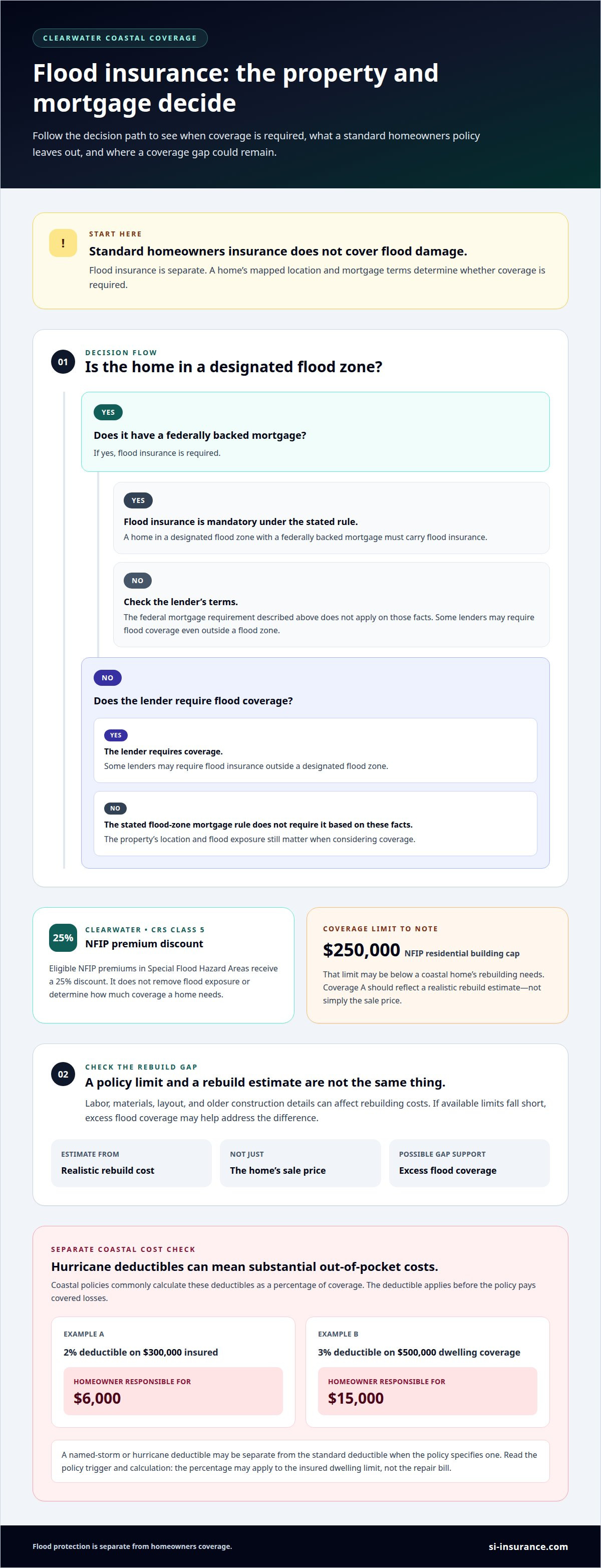
It makes sense to focus on the roof when reviewing coastal coverage, but storm exposure and flood risk also matter. Standard homeowners insurance does not cover flood damage. A home in a designated flood zone with a federally backed mortgage must carry flood insurance.
This guide explains how roof age, material, and permit records can inform the insurance assessment, how coastal coverage differs from standard homeowners insurance, and when flood insurance is required. You’ll also learn which property and coverage details influence premiums, helping you understand the trade-offs involved before deciding how to protect your home.
Table of Contents
Flood Coverage Is Separate From Standard Homeowners Insurance
Standard Florida homeowners insurance doesn’t cover flood damage; flood insurance is separate. The U.S. Census Bureau reports Clearwater’s median housing-unit year built was 1978.
Flood Coverage and Mortgage Requirements
Flood insurance is a separate policy, and mortgage terms can make it mandatory. A home in a designated flood zone with a federally backed mortgage must carry flood insurance. Clearwater’s CRS Class 5 rating provides a 25% NFIP premium discount in Special Flood Hazard Areas, according to the Federal Emergency Management Agency. That discount applies to eligible NFIP premiums; it doesn’t remove flood exposure or determine how much coverage a home needs. The property’s location and mortgage requirements both matter.
Flood Limits and Excess Coverage
The National Flood Insurance Program caps residential building coverage at $250,000, which may be below a coastal home’s rebuilding needs. Extended replacement cost coverage is typically 125-150% of the stated limit. Coverage A should reflect a realistic rebuild estimate, not simply the home’s sale price. Labor, materials, layout, and older construction details can affect that estimate. If the cost to rebuild exceeds available limits, excess flood coverage may help address the difference and reduce a potential protection gap.
Citizens and Private Insurers
Compare Citizens Property Insurance and private insurers by reviewing the terms for the specific home, not by relying on the company name alone. Check each option’s dwelling limit, wind and flood treatment, deductibles, exclusions, and claim conditions against the same Clearwater rebuild estimate. Different deductibles, for example, can change what you pay after a covered loss. Flood coverage remains a separate consideration, regardless of who provides the homeowners policy. This comparison helps show whether coverage matches the home’s rebuild needs and flood exposure.
How Roof Age, Material, and Permit History Affect Carrier Eligibility and Premiums
In Clearwater, roof age, material, condition, and permit history can affect carrier eligibility and premiums. If you’re insuring a coastal home with an older roof, having records can clarify more than its age alone.
Florida Senate Bill 2D bars insurers from denying coverage solely because a roof is less than 15 years old. For roofs over 15 years old, owners can obtain an inspection certifying at least five more years of useful life instead of facing an immediate replacement requirement.
Roof Age and Insurance Pricing
Roof age and type are pricing factors because they help carriers assess storm exposure and potential damage. When considering coverage for an older-roofed home in Clearwater, look at the roof’s condition and documented history as well as how old it is. Florida Senate Bill 2D eliminated the 25% roof replacement rule for homes built after March 2009 that comply with the 2007 or later Florida Building Code.
Roof Materials and Carrier Eligibility
Roof material helps insurers evaluate how a structure may perform in high winds, which can influence coverage terms and eligibility. Installation, condition, roof shape, and documented storm-hardening features add context. Florida’s 2023 roofing rules allow repair or replacement of only damaged portions when the remaining areas meet the 2007 Florida Building Code, making code compliance relevant to repair decisions.
Home Documentation and Permit History
Permit records and improvement documents help show what was installed, when the work took place, and which upgrades insurers can assess. For an older home, gather available records for the roof, electrical panels, plumbing, and water heater. Dates, permits, invoices, and inspection documents can help clarify the home’s improvements and condition.
Wind Mitigation Inspections and Credits
A wind mitigation inspection documents storm-resistant features, including roof construction details, for an insurer to review. Florida law provides credits for documented storm-hardening features, so evidence of qualifying measures may affect premiums. The report relates features such as roof attachments and coverings to the insurance assessment.
Organized records can support a more informed home insurance coverage discussion.
Is Flood Insurance Mandatory for Coastal Properties?
Flood insurance is mandatory for a home in a designated flood zone if it has a federally backed mortgage. Some lenders may also require flood coverage outside a flood zone. For Clearwater homeowners, especially those near the coast, the lender’s requirements and the property’s mapped location are important parts of the coverage decision.
Hurricane and wind deductibles can create substantial out-of-pocket costs after storms. Coastal policies commonly calculate these deductibles as a percentage of coverage, rather than a flat dollar amount. For example, a 2% hurricane deductible on a home insured for $300,000 leaves the homeowner responsible for the first $6,000 of hurricane damage. The deductible applies before the policy pays covered losses.
A named-storm or hurricane deductible is separate from the standard deductible when the policy specifies one. Read the policy’s trigger and calculation carefully: the deductible may depend on the insured dwelling limit, not the repair bill. A 3% deductible on $500,000 in dwelling coverage, for example, equals $15,000. That amount can remain the homeowner’s responsibility even when the covered damage is greater.
Wind mitigation inspections document features that may affect an insurer’s assessment of storm risk. The report records construction details, including roof features, but an older roof’s age and condition still matter for eligibility and premiums. Compare the inspection findings with the policy’s wind deductible and coverage terms to understand potential costs before a hurricane claim.
Coastal Policy Versus Standard Homeowners Insurance
A coastal policy is homeowners coverage assessed for shoreline exposure, not a universal policy form. In Clearwater, coastal premiums can be two to three times higher than inland premiums. Actual terms depend on location, construction, roof age, flood exposure, and selected coverage. State regulations and requirements can also affect insurance options in hurricane-prone areas.
Claims depend on the policy’s covered causes of loss, exclusions, limits, and deductibles. Wind damage to an older roof and interior damage after water intrusion, for example, may raise different coverage questions. A coastal policy may have a separate hurricane deductible, while standard homeowners insurance may use different terms. Flood damage is not covered by standard homeowners insurance, so it matters whether water came from storm surge or wind-driven rain.
Inspections and records can carry more weight when a coastal home has an aging roof. Insurers may assess roof condition, materials, permits, and wind-resistant features when evaluating eligibility and terms. A dated roof inspection or permit record can help show whether repairs or upgrades were completed. These requirements affect the application and renewal process; the policy wording determines how a later claim is assessed.
Seasonal occupancy can also affect a coverage review. A Clearwater home used occasionally may have longer periods without occupants than a year-round residence. The policy’s occupancy terms and any requirements for securing or maintaining the property matter during those periods. Before choosing coverage, compare the dwelling limit, covered causes, exclusions, inspection requirements, and deductibles together, rather than judging a policy by its premium alone.
For a comparison grounded in your home’s coastal exposure and roof details, discuss home insurance options.
SI Insurance: Home Insurance
For Clearwater homeowners considering coverage for a coastal property with an older roof, it helps to understand how the home, roof condition, and coastal exposure factor into an insurance decision. The goal is to understand the policy terms that matter to your household, rather than treating roof age as the only factor.
A useful coverage discussion can focus on the dwelling limit, covered causes of loss, exclusions, and applicable deductibles. Roof material, approximate age, repair history, and permit records help describe the home. Inspection reports or documentation of completed improvements can provide useful context. Consider flood protection separately from the homeowners policy.
For a Clearwater home used seasonally, explain how often it is occupied and how it is maintained while vacant. Those details can make occupancy terms especially important. For a primary residence with an older roof, consider how its condition affects available coverage and what documentation supports the home’s current state. Reviewing these points together can help you understand the policy’s scope and potential out-of-pocket costs before deciding.
Gather the home’s basic information and any roof or permit records you have, then identify the coverage questions that matter most. Contact SI Insurance to discuss Home Insurance or Homeowners Insurance for your Clearwater property.
Make Your Next Coverage Decision With Clarity
Choosing coverage for a coastal Clearwater home with an older roof is an opportunity to match your policy to how you use and maintain the property. Keep a concise record of property updates, occupancy patterns, and the risks you want your policy to address. This gives your coverage discussion a clear starting point and keeps your priorities in view.
Si Insurance Agency also offers Auto Insurance, Motorcycle Insurance, and Boat Insurance. If those policies are relevant to your household, considering them alongside home coverage can help you review your insurance needs together while keeping each policy’s terms distinct.
Whether you’re reviewing a renewal or considering coverage for a property you’ve recently acquired, SI Insurance can help you discuss your home insurance needs. Contact SI Insurance for help and take the next step with a clearer view of your options.
Frequently Asked Questions
How much is homeowners insurance in Clearwater, FL?
There is no single standard homeowners insurance price for Clearwater properties. Premiums depend on the home’s location, replacement cost, construction, roof condition, flood exposure, and selected coverage. A coastal home with an older roof, for example, may be assessed differently from a similar-sized inland home with newer materials. Compare quotes using the same dwelling limit and deductible so price differences reflect differences in policy terms.
Should I get a higher or lower Hurricane deductible on my policy?
Choose a hurricane deductible by weighing the premium against what you could pay after a storm. A higher deductible leaves more of a covered loss for you to pay, while a lower one reduces that immediate responsibility. Review how the deductible is calculated, which event triggers it, and whether it applies separately from other deductibles. Consider your available emergency funds before choosing policy terms.
What are the best insurance options for a coastal home?
The best fit is coverage that reflects the home’s rebuild cost, wind exposure, flood risk, and occupancy. Compare dwelling limits, exclusions, deductibles, and claim conditions rather than relying on the policy label. A homeowners policy and separate flood coverage, for example, address different risks. Also consider whether the dwelling limit reflects distinctive construction details, since rebuilding a coastal home may differ from replacing a standard structure.
Which insurers offer homeowners insurance for coastal properties in Clearwater, Florida?
Si Insurance Agency offers Home Insurance and connects clients with appropriate coverage from insurance carriers. Carrier names and available terms can vary by property and underwriting criteria. For a Clearwater home, the roof’s condition, construction, location, and desired coverage are useful details for a policy discussion. Compare options by limits, exclusions, deductibles, and claim terms.
How old can a roof be for homeowners insurance in Clearwater, Florida?
There isn’t one roof-age limit that guarantees acceptance for every Clearwater home. Florida Senate Bill 2D bars insurers from denying coverage solely because a roof is less than 15 years old. Owners of roofs over 15 years old can obtain an inspection certifying at least five more years of useful life instead of facing an immediate replacement requirement. Age alone doesn’t establish the roof’s condition.
How do roof age and condition affect home insurance rates and eligibility in Florida?
Roof age and condition can affect eligibility and premiums because insurers use them to assess potential storm damage. The roof’s material, visible wear, repair history, and permit records provide additional context. Documentation of a completed repair, for instance, can clarify the roof’s current condition and work history. A wind mitigation inspection may also record storm-resistant features for insurers to consider.
Comments