


Renters Insurance Coverage for Laptops and Bikes in Miami
Does renters insurance cover my laptop and bike in Miami? It may cover both if theft or damage results from a covered event, subject to the policy’s terms, limits, and deductible. Theft away from home may qualify too, although some policies set lower limits for property stolen elsewhere.
A policy may help replace an expensive device or bicycle, but reimbursement depends on whether it pays replacement cost or actual cash value, which accounts for depreciation. This guide explains how coverage may apply at home and away, how limits and deductibles affect a claim, and when supplemental coverage may help fill a gap.
Table of Contents
Does renters insurance cover your laptop, tablet or phone?
Renters insurance may cover electronics and other personal property when a covered event causes a loss. The policy’s covered-peril terms, coverage limits, and deductible determine what a claim may pay.
Personal Property Protection for Electronics
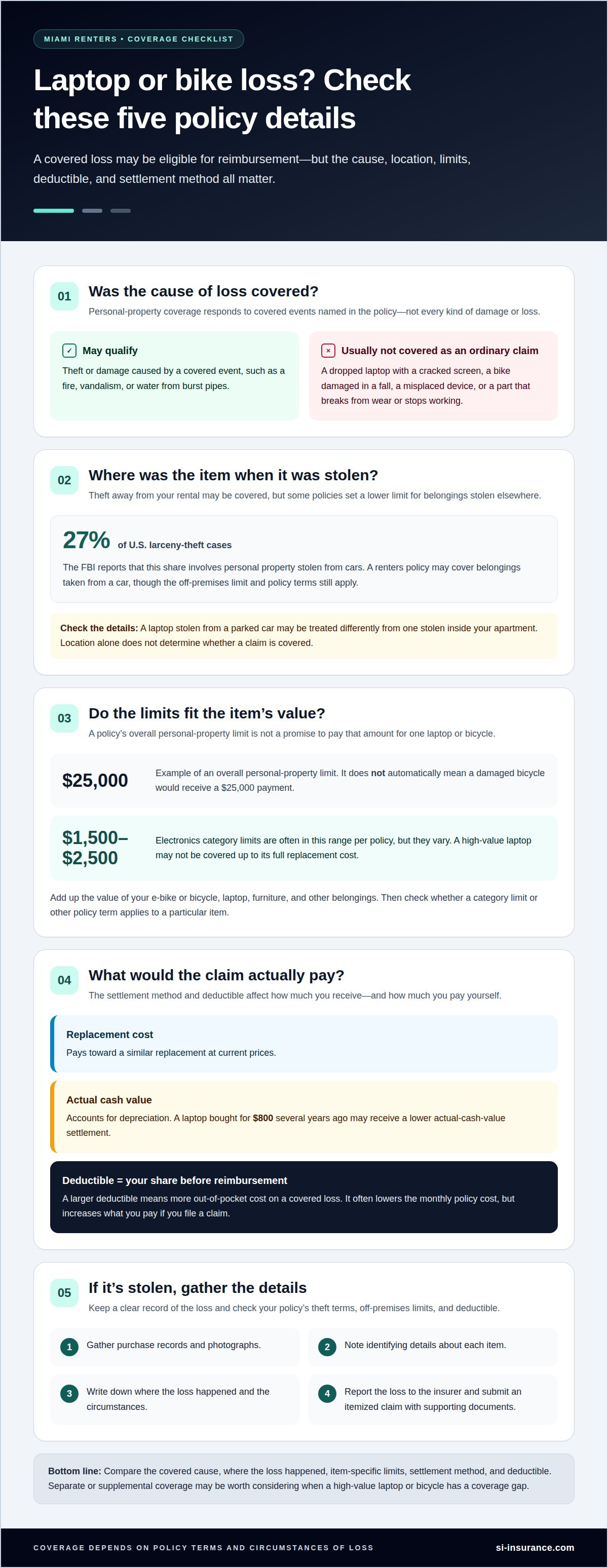
Personal-property coverage protects a renter’s belongings, including electronics, against covered losses described in the policy. A laptop damaged by a fire in the apartment may qualify, while a dropped laptop with a cracked screen generally won’t. Lost or misplaced devices, and repairs for parts that break or stop working, typically aren’t covered as ordinary claims.
The settlement method matters, too. Replacement-cost coverage pays toward a similar replacement at current prices; actual cash value accounts for depreciation. For example, a laptop bought for $800 several years ago may receive a lower actual-cash-value settlement. The landlord’s policy generally protects the building, not a tenant’s computer, phone, or bicycle.
One renters policy may be a worthwhile alternative to separate bike or electronics insurance if its personal-property coverage protects several belongings. However, item limits, exclusions, and the deductible may make separate coverage more suitable for a high-value device or bicycle.
Theft Away From Home
Personal-property coverage may also protect electronics stolen away from the rental, including items taken from a car or storage unit. Some policies set lower limits for theft away from home. A laptop stolen from a parked car, for example, may be treated differently from one stolen inside the apartment.
Florida doesn’t require renters insurance, though a landlord may make it a lease condition. If a covered event makes the rental uninhabitable, loss-of-use coverage may help pay for temporary housing, meals, and other living expenses.
If your laptop or bike is stolen, gather purchase records, photographs, and identifying details. Report the loss to the insurer and submit an itemized claim with supporting documents. For Miami renters, coverage depends on the policy terms and the circumstances of the loss.
Does renters insurance cover theft outside the home?
Personal-property coverage may apply when belongings are damaged or stolen by a covered cause, such as theft, fire, vandalism, or water from burst pipes. Whether a theft claim qualifies, and how much the policy may pay, depends on its covered-peril terms and any limit for items stolen away from home.
A laptop or bicycle stolen from a rental home may qualify if the policy covers theft. The claim is still subject to the policy limit and deductible. A computer stolen from an apartment is different from one that’s simply misplaced; lost items aren’t covered as theft. Jewelry may also have its own category limit.
Coverage away from home can matter on campus, during errands, or when a laptop is left in a vehicle. The FBI reports that 27% of U.S. larceny-theft cases involve personal property stolen from cars. A renters policy may cover belongings taken from a car, though some policies pay less for theft outside the home.
If a laptop is stolen from a vehicle or on a military base, its location alone doesn’t tell you whether it’s covered. Check the policy’s theft terms, off-premises limits, and deductible. It can also help to note what was taken, where it happened, and the circumstances.
Accidental damage is different from theft. Renters insurance typically doesn’t cover a laptop screen cracked in a drop, and a bike damaged in a fall isn’t automatically covered. Liability coverage addresses certain injuries or damage to someone else’s property, not repairs to your own computer or bicycle. If a fire makes an apartment uninhabitable, separate loss-of-use coverage may help with temporary living expenses.
Reviewing your policy can clarify how theft away from home and item limits apply to your belongings. Explore renters insurance coverage as part of that review.
Coverage limits for e-bikes and expensive bicycles
An e-bike or premium road bicycle can make up a big part of a renter’s belongings. Renters insurance may cover a bicycle if a covered event causes its loss, but the policy limit caps the payment for a covered claim. The limit and settlement terms affect whether reimbursement can match the bicycle’s value.
A personal-property limit applies to covered belongings as a whole; it doesn’t guarantee payment of that full amount for one item. For example, a policy with a $25,000 personal-property limit won’t automatically pay $25,000 for a damaged bicycle. The insurer evaluates the claim under the policy terms, including any deductible and applicable limit.
The deductible is the amount you pay before the insurer reimburses a covered loss. If a covered theft results in a bicycle loss, a larger deductible means you’ll pay more of the cost yourself. A higher deductible often lowers the monthly policy cost but increases out-of-pocket expenses if you file a claim. Consider the likely reimbursement alongside the deductible to decide whether filing a claim makes sense for you.
Think about what your bicycle and the rest of your belongings are worth. Include a high-value e-bike, laptop, furniture, and other covered property; their combined value can help you see whether the overall limit is enough. Your policy may also have terms that affect a particular item, so the total limit doesn’t tell the whole story.
Higher personal-property limits usually increase a Florida renters insurance premium. It comes down to a trade-off: a lower limit may leave more of a covered loss unreimbursed, while a higher limit can increase the premium. Look at your bicycle’s value, the limits that apply, and your deductible together to get a clearer sense of how the policy may help after a covered loss at your rental.
Electronics coverage limits and supplemental coverage
What an electronics claim pays depends on the cause of damage, any category limits in your policy, and how the loss is settled. If you own a high-value laptop, personal-property coverage may not cover its full replacement cost.
Electronics Category Limits
A category limit sets the maximum a policy will pay for covered electronics. These limits are often between $1,500 and $2,500 per policy, but they vary.
With actual cash value, depreciation reduces the payout. Replacement-cost coverage instead pays toward a similar device at current prices. The cause of damage matters, too: renters insurance typically won’t cover accidental screen damage or a device that simply stops working. Water damage is covered only when your policy includes that cause.
Additional Coverage for High-Value Electronics
A business-property rider may help fill a coverage gap if you use a computer exclusively for work. This can matter to freelancers and remote employees whose laptop is worth more than the policy’s separate business-property limit. If you only use a computer for freelance work occasionally, the policy’s electronics limit still applies.
Compare your device’s value with your policy limit and check which causes of loss are covered. That can help you see whether a covered claim might leave you paying part of the cost, and whether additional coverage makes sense.
Review coverage options for valuable electronics to see how policy limits may apply to your devices.
SI Insurance: Renter Insurance
SI Insurance can help renters consider how renter insurance relates to their laptops, bicycles, and other personal belongings. If an electronics category limit, deductible, or bicycle value leaves you uncertain about your protection, reviewing those policy details is a practical next step. The key is to understand how covered causes of loss, limits, and settlement terms apply to the items you rely on, rather than assuming every loss is treated the same way. SI Insurance also offers Auto Insurance, Motorcycle Insurance, and Boat Insurance for other coverage needs. To discuss renter insurance and your belongings, contact SI Insurance.
Review Your Coverage as Your Needs Change
Treat coverage as part of your household’s changing needs, rather than a decision made only at move-in. A new laptop, a higher-value bicycle, a move, or a change in how you use a device may make it worth revisiting your coverage. Consider whether your protection still reflects the belongings you rely on, and address any questions before a loss occurs.
If you’re still asking, “Does renters insurance cover my laptop and bike in Miami?” use that question to guide a focused conversation about protecting your belongings. SI Insurance offers Renter Insurance, along with Auto Insurance, Motorcycle Insurance, and Boat Insurance for other coverage needs.
For a considered review of your coverage needs, Contact SI Insurance to discuss your coverage. Talking it through can help you decide what works for your household.
Frequently Asked Questions
Does my landlord's insurance cover my belongings?
Usually, it doesn’t. A landlord’s insurance policy generally covers damage to the rental building, not a tenant’s belongings, such as a laptop, bicycle, or furniture. Your landlord’s policy shouldn’t be relied on to cover the items you own and keep in your apartment.
Does renters insurance cover a laptop or bike stolen outside the home?
It can, but the policy’s terms and any limit for belongings stolen away from home matter. A laptop taken from a car or a bicycle stolen from a storage unit may qualify as a covered loss, depending on the circumstances and whether theft is covered. Even if the item qualifies, an off-premises limit may reduce reimbursement.
What are typical renters insurance personal property coverage limits and deductibles?
Limits and deductibles vary by policy. The personal-property limit is the maximum available for covered belongings, while the deductible is what you pay toward a covered claim before reimbursement. For example, a policy with a $25,000 property limit won’t automatically pay that amount for a single loss; the claim is assessed under the policy’s terms.
Do renters insurance policies have special limits for laptops, electronics, or bicycles?
Some policies cap coverage for electronics at between $1,500 and $2,500 per policy, though the amount varies. This category limit may restrict payment even if the overall personal-property limit is higher. Bicycle coverage also depends on the policy’s terms and limits. If your laptop or bike is worth a lot, check how these limits could affect a claim.
How does renters insurance reimburse belongings: replacement cost or actual cash value?
Your policy’s settlement method determines how a covered loss is valued. Replacement-cost coverage pays toward a similar item at current prices; actual cash value accounts for depreciation. So, an older laptop may receive a lower actual-cash-value settlement than the cost of a comparable new device. Reimbursement also depends on the deductible and applicable limits.
Are e-bikes covered by renters insurance, and what exclusions apply?
An e-bike may be covered as personal property if it’s damaged or stolen by a covered cause of loss, subject to the policy’s terms and limits. That doesn’t mean every kind of damage is covered: renters insurance typically excludes accidental damage, loss, and mechanical breakdown for electronics. Check the policy’s covered causes and any applicable limits before relying on reimbursement for an e-bike.
Comments