


GAP Insurance for a Totaled Car in St. Petersburg: Costs and Coverage
A totaled car can leave you with a loan balance even after an insurance settlement, because the payout is based on the vehicle’s value, not what you owe. Gap insurance for a totaled car in St. Petersburg may cover an eligible financing shortfall after a covered total loss, subject to the policy terms. Florida generally does not require drivers to buy GAP coverage.
It’s understandable to wonder whether the settlement will pay off your loan, but the deductible and the vehicle’s value also affect what you may still owe. GAP coverage does not cover the deductible. It generally applies to the difference between the eligible loan balance and the primary insurer’s payout.
This article explains how the claim process works, how a deductible affects the settlement, and when a financing shortfall can arise. It also covers GAP insurance costs in St. Petersburg and across Florida, along with the loan and vehicle factors that can help you decide whether this coverage fits your situation.
Table of Contents
Is Florida GAP Insurance Required for a Loan or Lease?
Florida generally does not require drivers to buy GAP coverage for a loan or lease. It is optional protection for a specific shortfall: the difference between a vehicle’s actual cash value and the eligible loan balance after a covered total loss. When considering gap insurance for a totaled car in St. Petersburg, focus on the gap between the loan balance and the vehicle’s value.
Florida sources commonly describe an 80% damage threshold in the total-loss process. The precise handling can depend on the damage estimate, vehicle value, insurer’s payment decision, and title process. GAP insurance may also cover an eligible financing shortfall if the vehicle is stolen, subject to the contract’s terms.
GAP coverage may be purchased through an auto insurer or a dealership. The options differ in how the coverage is purchased and financed, so the contract determines what protection applies.
You must file a total-loss claim with the primary auto insurer before filing a GAP claim. Claim documents generally include the primary insurer’s settlement information, the lender’s current payoff statement, and the GAP policy or contract. For theft, include the insurer’s claim documents for the stolen vehicle. These records help establish any potential benefit under GAP coverage for a totaled vehicle in St. Petersburg.
GAP coverage is intended to address a financing shortfall after a covered total loss, rather than every cost associated with an accident. It also typically excludes damage to someone else’s property and injuries. If the GAP payout is less than the remaining balance, you are responsible for the amount not covered. If a claim is denied, the contract’s exclusions and the stated reason for denial determine what, if anything, remains payable.
GAP insurance and the difference between a car loan balance and vehicle value
A loan payoff and a vehicle’s market value measure different things. The difference can leave you with debt after an accident, even when collision coverage applies. For drivers considering gap insurance for a totaled car in St. Petersburg, the key question is whether the financing obligation could exceed the vehicle’s value.
Loan Balance and Depreciated Vehicle Value
The loan balance is the amount still owed on an auto loan; the depreciated vehicle value reflects what the car is worth in the current market. These figures change on different schedules: loan payments reduce debt, while depreciation can lower the vehicle’s value. If the balance is higher, the difference is a potential financing shortfall. GAP coverage is designed to address that difference after an eligible total loss, subject to the contract terms.
Actual Cash Value and Loan Payoff
Actual cash value is the vehicle’s market value immediately before a crash, not its purchase price or loan payoff. Depreciation affects that value as the vehicle ages and its condition and market circumstances change. Carfax estimates that the average vehicle loses more than 10% of its value during the first month after purchase. That decline can make the loan payoff exceed what the primary insurance covers after a collision.
Consider a car purchased for $30,000 and totaled one year later, with $28,000 still owed. The purchase price and remaining balance don’t establish the claim value; the insurer assesses the vehicle’s actual cash value before the loss. If that value is lower than the payoff, the difference may be eligible for GAP coverage. If the car’s actual value is higher than the amount owed, a financing shortfall generally doesn’t exist.
The key comparison is the documented payoff against the insurer’s valuation. Reviewing auto insurance coverage alongside vehicle financing can help clarify how the primary policy fits into that comparison.
Primary insurance payouts and deductibles
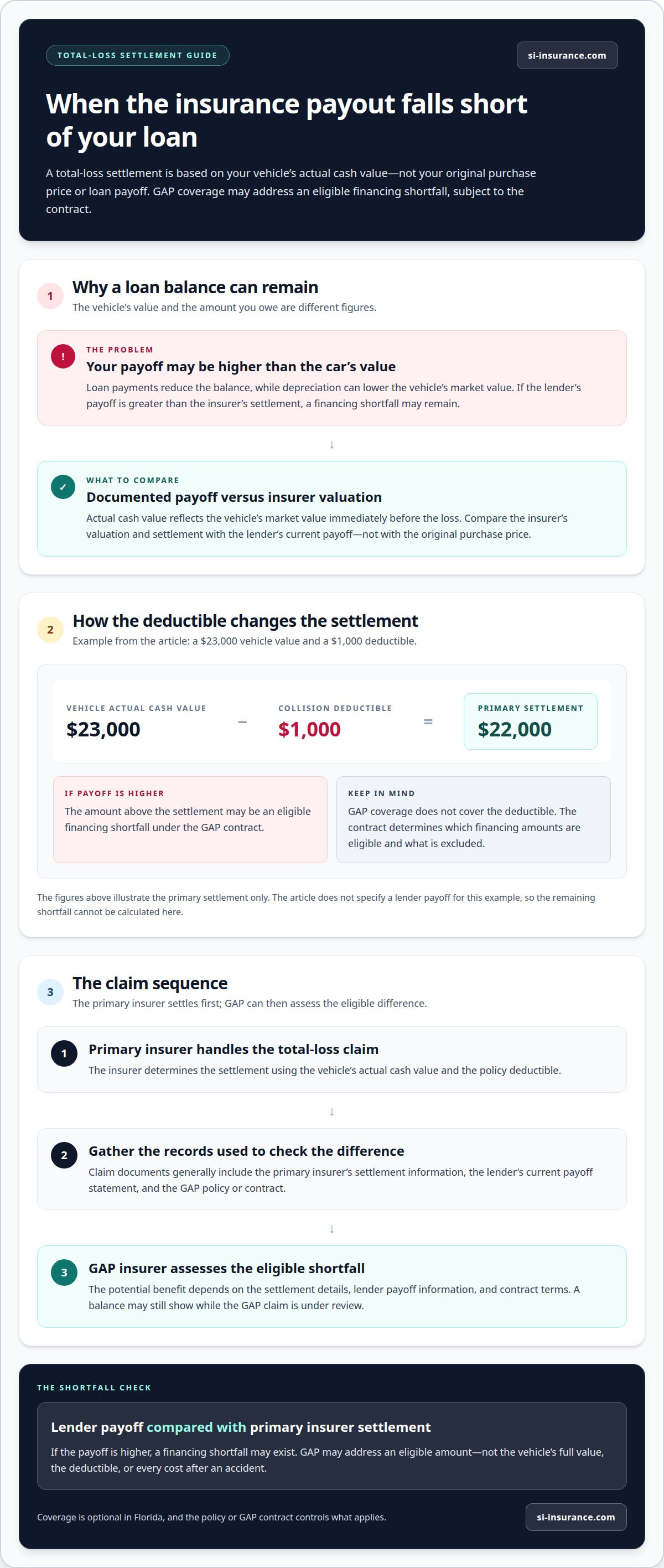
After an accident, the primary insurer calculates the totaled vehicle’s actual cash value and subtracts the deductible stated in the policy. The resulting settlement, not the purchase price, is applied toward the car loan. GAP insurance may address eligible negative equity when the payoff exceeds the settlement.
Consider a vehicle valued at $23,000 before the loss. A $1,000 collision deductible leaves $22,000 for the vehicle claim. If the lender’s payoff is higher, the shortfall is measured against the settlement, subject to the GAP contract. The deductible can affect how much remains after the primary payment.
Cash value and purchase price answer different questions. The purchase price records the original transaction; actual cash value reflects the vehicle’s market value immediately before the accident. Loan payoff reflects the remaining financing obligation. As a result, you can have negative equity even with an active insurance policy.
The order of claims also affects timing. First, the primary insurer handles the total-loss claim and determines the settlement. The GAP insurer can then assess the eligible difference using the settlement details and lender payoff information. There is no single payout timeline: processing depends on when the records are available and whether the documents support the calculation. The lender may still show an outstanding balance while the GAP claim is under review.
If a balance remains, the payoff figure should correspond to the claim period. Payments or other amounts under the financing agreement can change what you owe. The insurance policy and GAP contract determine which amounts are eligible and what is excluded. A collision settlement does not erase a car loan by itself, and a GAP payment does not cover the vehicle’s full value. It addresses only the contractual shortfall, so the settlement, deductible, and payoff all matter.
Gap insurance costs in St. Petersburg and other Florida cities
Reported GAP prices vary substantially by purchase channel and how the cost is presented.
These amounts are not directly comparable: a quoted value may reflect a different pricing basis or coverage arrangement. The available figures do not provide comparable costs for other Florida cities, so they should not be treated as a city-by-city ranking.
Another estimate puts GAP coverage at about 5% to 6% of a driver’s overall auto insurance premium. That percentage and the city-specific annual figure describe different measures. Drivers should distinguish a GAP rider’s stated annual charge from a dealership amount that may be financed with the vehicle. Financing can make the cost part of the loan rather than a separate payment.
Compare the full contract cost with the potential shortfall after a total loss. A long loan term, a small down payment, or a lease balance above the vehicle’s actual cash value can increase the amount at risk. Conversely, once your remaining loan balance is no greater than the vehicle’s fair market value, GAP may no longer serve the same purpose.
Review how the auto policy’s settlement and deductible interact with the GAP terms before weighing the listed costs. For a broader look at the primary coverage involved, review auto insurance options.
SI Insurance
SI Insurance offers auto insurance to drivers in St. Petersburg and across Florida. Reviewing your auto insurance can help clarify how the primary policy addresses a total loss, including the vehicle’s value and deductible. GAP coverage is separate, so it is important to distinguish the primary policy’s settlement from any potential financing shortfall.
If you’re weighing coverage or have questions about your auto insurance, SI Insurance can discuss your needs and the options available. Contact SI Insurance to talk through your coverage.
Make your next coverage decision with clarity
Before your next vehicle purchase or financing decision, consider how your coverage fits your broader financial picture. Understanding the role of GAP protection can help you assess whether a potential loan shortfall belongs in that review, alongside the terms of your auto policy and financing agreement.
Si Insurance Agency offers auto, motorcycle, and boat insurance. If you are reviewing your coverage after a total loss or planning for a future vehicle, the agency can help you understand what your auto insurance addresses.
Contact SI Insurance about GAP coverage to discuss your coverage needs and move forward with greater clarity.
Frequently Asked Questions
How Does GAP Insurance Work after a Car Is Totaled?
After the primary insurer processes a total-loss claim, GAP coverage may address an eligible amount still owed on the vehicle. The GAP insurer compares the claim settlement with the financing balance under the contract terms. If the lender’s payoff is higher than the settlement, for example, the policy may cover some or all of the difference. Contract exclusions and limits apply.
Who Needs GAP Coverage?
GAP coverage may be useful for drivers whose loan balance could exceed the vehicle’s value after a total loss. Consider it if you put less than 20% down or financed the vehicle for 60 months or longer. Longer terms, including 72 or 84 months, can also affect the balance-to-value relationship. If the vehicle’s fair market value exceeds what you owe, a shortfall is less likely.
Does gap insurance cover deductible costs?
No. GAP insurance does not pay the deductible on your primary auto policy. The deductible reduces the primary insurer’s settlement, but it remains your responsibility under the policy. If a collision claim includes a deductible, account for that amount separately from any possible GAP benefit. Review both contracts to understand how the deductible and any remaining loan balance are handled.
Does gap insurance cover negative equity?
GAP insurance may cover eligible negative equity after a covered total loss, meaning the financing payoff exceeds the vehicle’s applicable insurance settlement. The contract defines which amounts qualify and may exclude certain charges or balances. This protection does not pay off every debt connected to the vehicle. The relevant comparison is between the covered loan amount and primary settlement, as calculated under the GAP agreement.
Does gap insurance cover theft in Florida?
GAP coverage may apply if a vehicle is stolen, as well as after a covered total loss, subject to the agreement’s terms. The primary auto insurer handles the theft claim first; a GAP claim follows if the settlement leaves an eligible financing balance. Whether a benefit applies depends on the policy language and claim circumstances. Theft coverage does not mean GAP pays for unrelated losses or expenses.
Is Gap Insurance Worth It?
Consider GAP coverage if a total loss could leave you owing more than the vehicle’s insurance settlement, particularly with a small down payment or a longer loan. Compare the potential financing shortfall with the coverage terms and cost. If your loan balance is no greater than the vehicle’s fair market value, GAP may no longer serve the same purpose. The decision depends on your loan and the vehicle’s value.
Comments