


Home Insurance for Older Homes in Florida: A Strategic Guide for 2026
The pursuit of home insurance for older homes in Florida has transitioned from a routine transaction into a rigorous exercise in strategic risk management. You've likely experienced the frustration of a non-renewal notice triggered by a roof's chronological age or the complexity of a 4-point inspection that scrutinizes every vintage electrical panel and plumbing joint. It's a challenging environment where statewide average premiums can climb as high as $8,292, yet the recent stabilization of the 2026 market offers a unique opening for homeowners who approach their coverage with technical precision and foresight.
We're here to help you navigate these regulatory hurdles and secure a policy that offers both comprehensive protection and a manageable hurricane deductible. This guide provides a strategic roadmap for passing high-stakes inspections and understanding the critical nuances between Actual Cash Value and Replacement Cost. By aligning your property’s condition with the latest underwriting excellence, you can transform your vintage residence from a perceived liability into a well-protected asset that stands strong against the unique risks of the Florida coastline.
Key Takeaways
Learn why the stabilizing 2026 market offers a fresh start for homeowners looking to move away from state-backed coverage.
Understand how a successful 4-point inspection acts as your primary lever for securing competitive rates and superior terms.
Gain clarity on securing home insurance for older homes in Florida by navigating the technical nuances of roof age and valuation strategies.
Discover how to mitigate the "age penalty" on your premiums through strategic policy bundling and precise deductible management.
See how a bespoke approach to risk management can provide the long-term security and elite expertise your legacy home deserves.
Table of Contents
The Landscape of Home Insurance for Older Homes in Florida
The 2026 insurance market in Florida represents a significant departure from the volatility of previous years. For properties constructed before the year 2000, underwriting excellence is no longer just a suggestion but a prerequisite for market entry. Finding competitive home insurance for older homes in Florida requires a sophisticated understanding of how risk mitigation strategies have evolved following recent legislative reforms. While vintage aesthetics remain a draw for homeowners, carriers now prioritize the technical integrity and system updates that ensure a property can withstand the atmospheric pressures of a modern hurricane season.
Many homeowners find themselves transitioned into the Citizens Property Insurance Corporation when private market capacity tightens. However, as 18 new carriers have entered the state by early 2026, the strategic alignment between a home's age and a carrier's appetite for risk has become more nuanced. Standard policies often fail to provide the bespoke risk transfer needed for vintage residences; this often necessitates specific endorsements or comprehensive system hardening to secure a private policy that offers more than just basic coverage.
To better understand how the age of your property directly influences your coverage options and pricing, watch this helpful overview:
Defining the "Older Home" in the 2026 Market
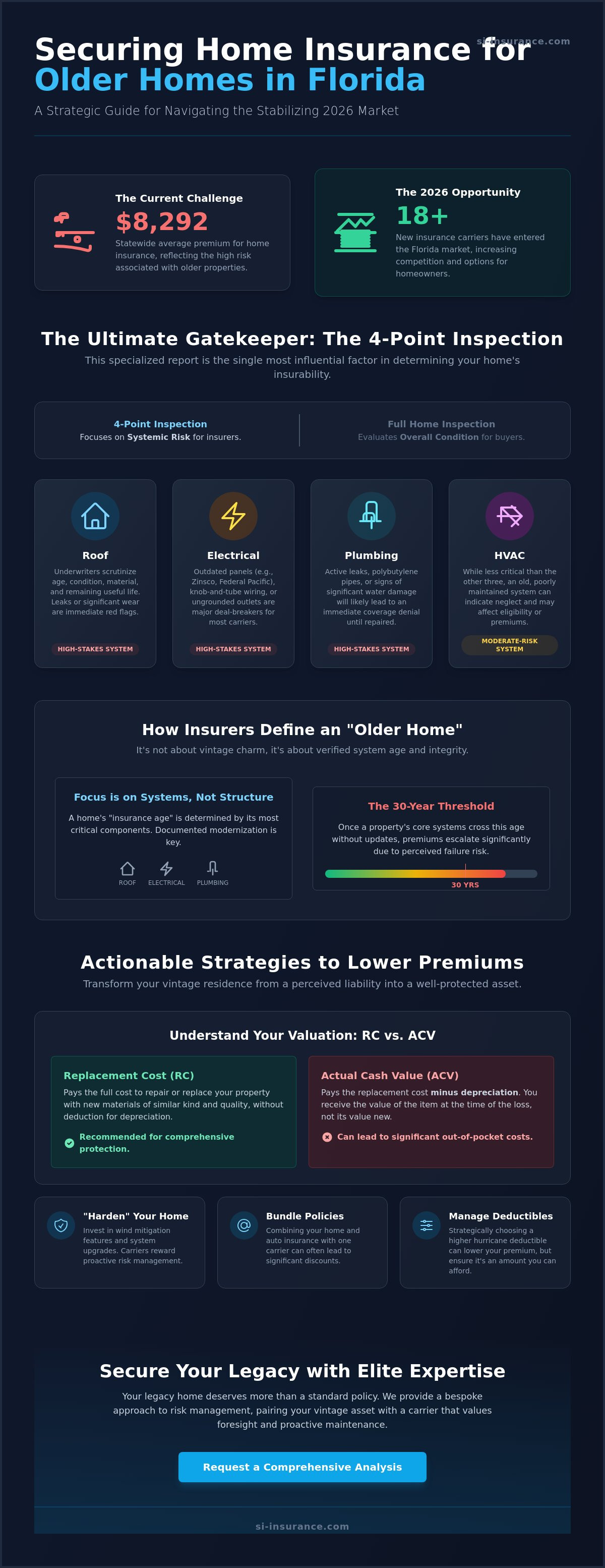
In the eyes of a contemporary underwriter, a home's age is measured by its systems rather than its architecture. While a house might be eighty years old, its insurance eligibility depends on the verified age of the roof, plumbing, and electrical components. Once a property crosses the 30-year threshold without documented modernization, premiums often escalate significantly. This spike reflects the increased probability of system failure, particularly in South Florida where building codes became much more stringent following historic storm events. It's not just about when the house was built, but when it was last brought up to modern standards.
The Economic Reality of Aging Infrastructure
Carriers in 2026 have shifted their focus from historical charm to technical hardening. This transition is a direct response to the correlation between property age and hurricane vulnerability. Strategic risk management for an older home involves matching your property’s specific profile with a carrier that specializes in vintage assets. At SI Insurance, we act as a strategic guardian, ensuring that your high-value older home is paired with a carrier that values foresight and proactive maintenance over simple chronological age. By focusing on "hardening" your home, you're not just protecting your family; you're positioning yourself for better rates in a stabilizing market.
Navigating the Mandatory 4-Point Inspection
For those seeking home insurance for older homes in Florida, the 4-point inspection acts as the ultimate gatekeeper. While a standard real estate inspection evaluates a property's overall condition for a buyer, the 4-point report is a specialized document designed specifically for the underwriter's eyes. It focuses exclusively on the four systems most likely to result in a significant claim: the roof, electrical wiring, plumbing, and HVAC. In the 2026 market, this document is the single most influential factor in determining whether a carrier will extend a quote or issue an immediate rejection.
The distinction between a full home inspection and a 4-point report is critical. A full inspection might note a cracked tile or a sticking door, but the 4-point report looks for systemic risks. If any of these four pillars are deemed "unsatisfactory," the application process typically stops. Underwriters use this data to ensure the property meets modern safety standards, prioritizing functional integrity over aesthetic appeal. If you're preparing to apply, reviewing your systems through the lens of risk mitigation is the first step toward a successful policy.
The Electrical and Plumbing Hurdles
Technical deal-breakers have become more rigid as carriers refine their underwriting excellence. Electrical panels from manufacturers like Federal Pacific or Zinsco are now almost universal grounds for rejection due to known fire risks. Similarly, cloth-insulated wiring or aluminum branch circuits often require full remediation before a policy is issued. On the plumbing side, homeowners in areas like Broward County face increased scrutiny regarding cast iron pipes, which are prone to internal corrosion. Water heaters have also seen a shift in lifecycle expectations; many carriers now consider a unit over 12 years old to be at its end-of-life, requiring replacement to maintain coverage eligibility.
Preparing Your Systems for Approval
Success during an inspection requires proactive system hardening. Before the inspector arrives, conduct a visual audit of your property to identify low-hanging fruit that could trigger a failure. A simple pre-inspection routine can save weeks of back-and-forth with an insurance carrier. Consider this strategic checklist:
Electrical: Ensure there are no "double-tapped" breakers in the panel and that all GFCI outlets are functioning.
Plumbing: Check under every sink for signs of slow leaks or corrosion on supply lines.
HVAC: Verify that the system is cooling properly and that the condensate drain line is clear of debris.
Roof: Remove any overhanging branches or moss growth that might suggest a lack of maintenance.
Documenting your updates is equally vital. If you've recently replaced a water heater or updated a panel, having those permits and receipts ready provides the transparency underwriters crave. If you aren't sure how your current systems will measure up to 2026 standards, a quick consultation with a specialized advisor at SI Insurance can help you identify potential red flags before they become official record.
Roof Age vs. Replacement Cost: A Strategic Comparison
The roof remains the most scrutinized component of any vintage property. In the 2026 market, the "15-Year Rule" continues to dictate the terms of engagement between homeowners and carriers. While Florida Senate Bill 2-D provided some protection by preventing insurers from refusing coverage solely based on roof age for structures under 15 years, it also introduced a significant shift in how older roofs are valued. Insurers now have the latitude to offer policies that settle roof claims based on Actual Cash Value (ACV) rather than Replacement Cost Value (RCV) once that 15-year threshold is crossed. This distinction is vital for those managing home insurance for older homes in Florida, as it directly impacts the financial liability you face after a storm.
It's a common misconception that a "30-year architectural shingle" will actually provide three decades of service in the subtropics. The reality of the Florida sun, characterized by intense UV radiation and thermal expansion, often degrades these materials within 15 to 18 years. Underwriters are well aware of this accelerated lifecycle. They often require proof of Secondary Water Resistance (SWR)—a self-adhering polymer modified bitumen "peel and stick" underlayment—to even consider a property for elite tier coverage. Without this layer of protection, your home's insurability remains at a strategic disadvantage.
Understanding Settlement Options
The choice between RCV and ACV is essentially a choice between full protection and shared risk. An RCV policy ensures the carrier pays the cost to replace your roof with new materials of like kind and quality. Conversely, an ACV policy deducts depreciation based on the age of the roof, which can leave a massive hole in your recovery funds.
The Role of Wind Mitigation
While the 4-point inspection confirms your home is safe to insure, the Wind Mitigation Inspection proves your home is built to withstand a hurricane. This separate assessment looks at roof-to-wall attachments, such as clips or wraps, and the presence of SWR. Documenting these features is the most effective way to secure a "Strategic Discount" on your premium. By matching your roof’s permit history with the 2026 building codes, you provide the analytical proof necessary to satisfy meticulous underwriters and lower your annual costs.
Actionable Strategies to Lower Premiums on Older Homes
Securing an affordable policy for a vintage residence requires more than just a standard application; it demands a proactive approach to risk mitigation. Obtaining home insurance for older homes in Florida often comes with a built-in "age penalty" from underwriters who view aging infrastructure as an inherent liability. One of the most effective ways to offset these costs is by consolidating your risk portfolio. When you learn how to bundle home and auto in Florida, you can leverage multi-policy discounts that provide a significant buffer against rising property rates.
Strategic deductible management is another powerful tool for the sophisticated homeowner. While a 2% hurricane deductible is standard in the 2026 market, opting for a higher fixed dollar amount on "all other perils" can lower the baseline premium without exposing you to excessive risk during a major storm. Additionally, many modern carriers offer premium credits for "smart" home monitoring systems. Installing automated water leak detectors and shut-off valves is a calculated move that mitigates the high frequency of non-weather water damage claims prevalent in older plumbing systems. Don't overlook state-sponsored initiatives like the "My Safe Florida Home" program, which provides matching grants for retrofitting older structures to improve wind resistance.
Hardening Your Investment
Underwriters prioritize impact-resistant openings when calculating wind credits. While accordion or roll-down shutters are effective, impact-rated windows offer a permanent, passive solution that often triggers the highest available insurance discounts. Beyond the exterior, upgrading an outdated electrical panel is a vital long-term risk mitigation strategy that moves your home out of the "high-risk" underwriting pool. For properties with original underground infrastructure, adding "Service Line Coverage" is a wise endorsement. This protects against the expensive failure of aging water or sewer lines that standard policies typically exclude.
Strategic Policy Structuring
In a tight market, accepting a higher deductible might be the only viable path to securing a private policy and avoiding the state-backed insurer of last resort. You should also evaluate the difference between "Dwelling Basic" (DP-1) forms and "Premier" (HO-3) forms for your vintage assets. While a basic form might offer lower premiums, it often utilizes Actual Cash Value settlements. For high-value older homes, the Premier form provides the comprehensive protection and replacement cost coverage necessary to preserve your property's legacy. To see how these strategies can be tailored to your specific property, connect with an SI Insurance advisor today.
Securing Your Legacy with SI Insurance Agency
Protecting a vintage Florida residence requires more than just a standard policy; it demands a partnership with a strategic guardian who understands the high stakes of coastal property management. At SI Insurance Agency, we recognize that securing home insurance for older homes in Florida isn't a commodity to be shopped but a complex risk transfer project that needs meticulous attention. Our firm provides a bespoke gateway to an exclusive network of specialized carriers that prioritize properties with documented system hardening and maintenance. These aren't the high-volume retail insurers seen in national advertisements; they're elite providers that value the foresight you've invested in your home's infrastructure.
Homeowners in Broward County face unique geographic and regulatory challenges that require a sophisticated, local touch. Our Sunrise and Pompano Beach experts offer a white-glove service that interprets the shifting 2026 market with absolute precision. In an environment where underwriting excellence is the only path to private coverage, having a local agent who understands the nuances of local building codes is essential. We don't just deliver a document; we provide the intellectual confidence that your property's legacy is secure against both atmospheric and economic volatility.
Consultative Risk Management
Our process moves far beyond the standard quote by analyzing your property’s specific vulnerabilities from a technical perspective. We examine the intersection of your home’s era of construction with the modern updates you've implemented to engineer a bespoke risk transfer solution. This consultative approach ensures your policy reflects your actual exposure rather than a generic statistical average. Whether you're visiting our Sunrise or Pompano Beach locations, you'll work with a seasoned consultant who acts as a calculated partner in your long-term protection strategy.
The Path Forward
Beginning your strategic insurance review is a straightforward but essential step in securing your financial future. When you meet with an SI Insurance specialist, bring your most recent 4-point inspection, your wind mitigation report, and documentation of any major system upgrades completed since 2020. These data points allow us to present your home in the best possible light to our underwriting partners, highlighting the "hardening" efforts that lower your risk profile. If you're ready to move away from the uncertainty of the state-backed market and toward a solution engineered for excellence, we're ready to lead the way. Request a strategic home insurance review from SI Insurance Agency to begin the process of securing your vintage Florida home.
Building a Resilient Future for Your Vintage Florida Home
The 2026 insurance market offers a renewed sense of stability, but capturing that value for a vintage property requires a calculated approach. Success depends on your ability to demonstrate underwriting excellence through proactive system updates and meticulous documentation. By addressing the specific requirements of a 4-point inspection and understanding the long-term impact of roof valuation, you move from a position of uncertainty to one of absolute security.
At SI Insurance, we act as your strategic guardian, leveraging our deep expertise in Broward County building codes and our alignment with top-tier Florida carriers. We don't just find policies; we engineer risk management solutions that protect your property's legacy. Navigating the complexities of home insurance for older homes in Florida is far simpler when you have a partner who values foresight and precision. We're here to ensure your home remains a well-protected asset for years to come.
Frequently Asked Questions
Can I get home insurance in Florida if my roof is over 20 years old?
Yes, you can secure coverage for a roof over 20 years old if a licensed inspector confirms it has at least five years of useful life remaining. Under Florida's 2026 regulatory framework, insurers shouldn't refuse to renew a policy based on age alone if the roof passes a professional inspection. This provides a strategic window for homeowners to maintain their private market status while planning for future infrastructure improvements.
What is the most common reason older homes fail insurance inspections in Florida?
Outdated electrical systems and aging roofs are the most frequent reasons for inspection failures in the 2026 market. Specifically, panels from manufacturers like Federal Pacific or Zinsco are often viewed as immediate deal-breakers due to fire safety concerns. Addressing these core vulnerabilities is the most effective way to secure home insurance for older homes in Florida. By modernizing these systems, you shift your property from a high-risk category into a more competitive underwriting pool.
Is Citizens Insurance the only option for homes built before 1970?
Citizens is no longer the only option for homes built before 1970 due to the recent entry of 18 new property insurers into the Florida market. This increase in private capacity has led to a significant depopulation of the state-backed insurer. Many private carriers now actively seek well-maintained older homes that have undergone strategic system hardening. These private policies often provide more comprehensive coverage options and higher liability limits than the basic forms offered by the state.
How much does a 4-point inspection cost in Broward County in 2026?
While specific fees fluctuate based on market demand, homeowners in Broward County can expect to pay a professional fee that reflects the specialized nature of the assessment. This cost is generally a small fraction of the potential premium savings found through successful underwriting. The inspection acts as a technical baseline, allowing your agent to shop for the most competitive rates among carriers that specialize in high-value, vintage assets.
Do insurance companies in Florida cover cast iron pipes in older homes?
Most insurance companies in Florida now include specific exclusions or limitations for cast iron pipes in properties built before 1975. Due to the high frequency of internal corrosion claims, underwriters often require a plumbing scope or proof of replacement to offer full water damage coverage. If your pipes are original, you might consider a specialized service line endorsement. This provides a focused layer of protection for the underground infrastructure that standard policies typically omit.
What is the "My Safe Florida Home" program and does it apply to me?
The My Safe Florida Home program offers matching grants to help homeowners strengthen their properties against hurricane-force winds. This state-funded initiative is specifically designed to lower the risk profile of older residences through retrofits like impact-rated windows and reinforced roof attachments. For those looking for home insurance for older homes in Florida, participating in this program is a calculated move. It provides the financial assistance needed to secure the wind mitigation credits that significantly reduce annual premiums.
How does a hurricane deductible differ for an older home?
Hurricane deductibles for older homes are generally calculated as a percentage of the total dwelling coverage, often starting at 2%. In the 2026 market, carriers may require a higher percentage for vintage properties to balance the increased risk of structural vulnerability. It's essential to understand that this deductible applies specifically to windstorm events. Strategic management of your deductible levels can help you secure a private policy that offers replacement cost coverage for your most valuable assets.
Can I insure an older home that has an unpermitted addition?
Insuring an older home with an unpermitted addition requires a meticulous review of the property's technical compliance. Most carriers will either exclude the unpermitted structure from the policy or require a retroactive permit from the local building department to ensure it meets safety standards. This situation highlights the importance of working with a sophisticated agent. We can help you navigate these regulatory hurdles and find a carrier willing to offer a bespoke risk transfer solution for your unique property.
Comments