


How to File a Car Insurance Claim in Florida: A Comprehensive 2026 Guide
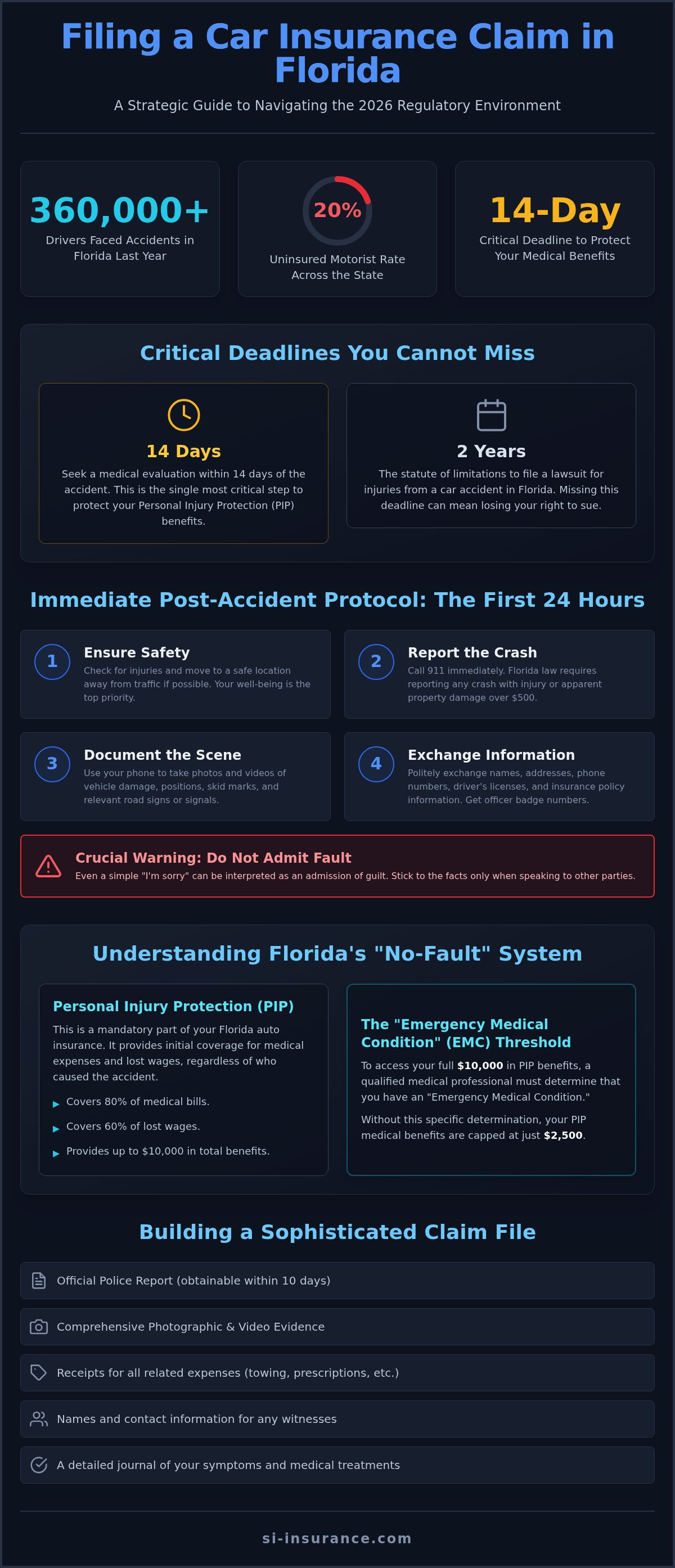
Imagine standing on the shoulder of a busy Florida interstate, looking at a dented bumper and feeling the weight of a complex legal system pressing down on you. It's a situation that over 360,000 drivers faced last year, yet many still find themselves paralyzed by the state's unique "no-fault" requirements. Understanding how to file a car insurance claim in Florida is not just a matter of paperwork; it's a high-stakes race against a 14-day clock that determines whether you receive the medical benefits you pay for every month.
You probably feel that the current system is designed to be confusing, and frankly, you're right to be cautious. With a two-year statute of limitations and a 20% uninsured motorist rate across the state, a single misstep can lead to a denied claim or a significant financial loss. This guide serves as your elite roadmap, offering a composed and meticulous strategy to manage the 2026 regulatory environment. We'll explore the critical necessity of an Emergency Medical Condition determination, the reality of modified comparative negligence, and the exact steps required to ensure your claim is settled successfully, giving you the absolute security you deserve.
Table of Contents
The First 24 Hours: Immediate Post-Accident Protocol in Florida
The moments following a collision are critical for your physical well-being and your eventual financial recovery. While the adrenaline of the event might mask symptoms, your first priority must be a medical assessment. In the context of Florida’s No-Fault System, waiting even a few days to see a doctor can jeopardize your Personal Injury Protection (PIP) eligibility. The preliminary steps you take in these first 24 hours will dictate how to file a car insurance claim in florida successfully, ensuring you don't fall victim to technical denials.
To better understand the immediate steps after a collision, watch this helpful overview:
Legal Reporting Requirements Under Florida Statute § 316.065
Florida law is precise regarding when a law enforcement officer must be notified. Under Florida Statute § 316.065, you're legally required to report a crash that results in injury, death, or property damage that appears to exceed $500. In 2026, with the high cost of modern vehicle sensors and bodywork, almost any visible damage will surpass this $500 threshold. If an officer doesn't attend the scene, you must file a report through the FLHSMV website to maintain a valid legal record. You can usually obtain the official report from your local precinct within 10 days of the incident.
Composure and Communication at the Scene
Maintaining a professional and composed demeanor is vital. It's human nature to want to apologize or explain what happened, but you must resist this urge. Admitting fault at the scene, even out of politeness, can be used against you during the claim adjustment process. Instead, focus on gathering objective data. You'll need to exchange specific identifiers with the other parties involved:
Full names, phone numbers, and physical addresses.
Insurance carrier names and specific policy identifiers.
Driver's license numbers and license plate digits.
Badge numbers and names of any responding law enforcement officers.
Once the scene is secure and you've sought medical attention, contact your independent agent at Si Insurance Agency. Initiating the preliminary notification process through a local expert ensures that your carrier is alerted within the required timeframes. This strategic coordination protects your interests and sets a professional tone for the entire claims process. Knowing how to file a car insurance claim in florida starts with this disciplined, fact-based approach on day one.
Documentation and Evidence: Building a Sophisticated Claim File
Once the immediate chaos of a collision subsides, your primary objective shifts from crisis management to meticulous preservation. Evidence is the bedrock of any successful insurance settlement. Successfully navigating how to file a car insurance claim in florida requires more than just filling out a form; it demands a comprehensive evidentiary record that leaves no room for ambiguity. A blurred photo of a scratch rarely suffices when adjusters are calculating high-value property damage or medical liabilities. By treating your claim file like a professional audit, you instill a sense of intellectual confidence in your position.
Digital Evidence and Scene Photography
Your smartphone is your most potent tool at the scene. Capture the orientation of all vehicles involved from multiple perspectives, ensuring you include wide shots that show the entire intersection or stretch of road. It's vital to document environmental factors like obscured traffic signals, skid marks, or standing water that may have contributed to the incident. If you have dashcam footage, secure the memory card immediately. This digital record serves as a definitive, objective account that can quickly resolve disputes over liability. Organizing these files systematically is the most effective way to understand how to file a car insurance claim in florida with absolute confidence.
The Self-Report: When Police Do Not Attend
In many metropolitan areas, law enforcement may not respond to minor accidents where no injuries are apparent. If an officer is not present to create an official record, the responsibility for documentation falls entirely on you. You're required to follow the Immediate Post-Accident Protocol by filing a "Driver Report of Traffic Crash" online through the Florida Department of Highway Safety and Motor Vehicles. This self-report must be completed within 10 days for any crash resulting in property damage. Failing to establish this official record can lead to claim denials, as carriers often view the absence of a report as a lack of verified evidence.
Beyond the scene, maintain a dedicated log of every interaction related to the accident. Record the names of adjusters, the dates of phone calls, and the specific details discussed. Keep every medical receipt and discharge summary in a central folder, even for minor check-ups. This level of organization ensures that your narrative remains consistent throughout the life of the claim. If you're unsure which carrier provides the most streamlined digital claims experience, a consultation with Si Insurance Agency can offer the professional clarity you need to move forward.
Witness statements also provide a layer of validation that your own testimony cannot. If bystanders are present, collect their contact information and ask if they're willing to provide a brief account of what they saw. An independent third-party perspective is often the deciding factor in complex claims involving shared fault.
Deciphering Florida’s No-Fault System: PIP and the 14-Day Rule
Florida's insurance landscape operates under a "no-fault" framework, a concept that often leads to significant confusion for those involved in their first collision. Essentially, this system mandates that regardless of who caused the accident, your own insurance provider is responsible for covering your initial medical expenses and lost wages through Personal Injury Protection (PIP). This structure is designed to reduce the burden on the court system, but it places a heavy responsibility on the policyholder to act within strict parameters. Mastering how to file a car insurance claim in florida requires an intimate understanding of these mandates, particularly the time-sensitive medical requirements that can make or break your settlement.
The Critical 14-Day Medical Treatment Window
In Florida, the clock starts ticking the moment the collision occurs. You have exactly 14 days to seek initial medical care to remain eligible for PIP benefits. If you wait until day 15, you likely forfeit the right to use the coverage you've been paying for. This rule is absolute. Even if your injuries seem minor, a professional evaluation is necessary to document any latent issues. Within this window, the severity of your diagnosis also dictates your funding. To access the full $10,000 limit, a qualified medical provider must determine that you have an "Emergency Medical Condition" (EMC). Without this specific designation, your medical benefits are capped at a mere $2,500, which barely covers a single emergency room visit in today's economy.
Property Damage vs. Bodily Injury
While PIP addresses your physical recovery, Property Damage Liability (PDL) handles the structural impact on others. It's a common misconception that no-fault applies to the vehicles themselves; in reality, the person who caused the accident is still liable for the damage to your car. However, because Florida has the highest rate of uninsured motorists in the nation at roughly 20%, relying solely on the other driver's PDL is a risky strategy. This is where Uninsured Motorist (UM) coverage becomes an essential layer of your risk management portfolio.
Stepping outside the no-fault system to sue for pain and suffering is only possible if your injuries meet a specific "permanency" threshold. Additionally, since Florida adopted a modified comparative negligence rule, you can only recover damages if you're found to be 50% or less at fault. This complex interplay of regulations is exactly why having a local advocate from Si Insurance Agency is so valuable. They help you navigate these thresholds with the precision of a seasoned consultant, ensuring you understand exactly how to file a car insurance claim in florida while protecting your long-term financial health.
The Methodical Step-by-Step Process for Filing Your Claim
Filing the claim is the administrative transition where your gathered evidence meets the carrier's evaluation protocols. You can initiate this through a digital portal, but for a more tailored experience, notifying your local agent ensures the submission is framed with strategic accuracy. Understanding how to file a car insurance claim in florida involves more than clicking "submit"; it requires a disciplined follow-through as the carrier assigns an adjuster to verify the loss. This phase is less about the accident itself and more about the technical reconciliation of your policy's promises with the reality of the damage.
Working with the Insurance Adjuster
The adjuster acts as the carrier's primary evaluator. During the vehicle inspection, ensure the car is accessible and you're prepared to point out specific damage documented at the scene. When you're asked for a recorded statement, remember that clarity is your greatest ally. Stick to the facts you know. Don't speculate on speeds or distances if you aren't certain, as these estimates can be used to shift the balance of comparative negligence. In Florida, a vehicle is deemed a "Total Loss" when the cost of repairs reaches a specific threshold relative to the car's actual cash value. This determination is a critical pivot point that dictates whether you receive a repair or a replacement settlement.
Reviewing and Accepting the Settlement
Once the assessment is complete, you'll receive an initial offer. This figure should reflect the current market value for a replacement or the comprehensive cost of repairs using quality parts. It's common for a body shop to discover hidden structural issues once they begin the teardown process. In these cases, you'll need to file a supplemental claim. This is a standard procedure, but it requires prompt communication with the adjuster to avoid delays in the repair timeline. Having a professional review your settlement offer can prevent you from accepting a valuation that doesn't reflect the true cost of a replacement in the current Florida market.
The process concludes when the carrier issues payment to you or directly to an authorized repair facility. Throughout this phase, Si Insurance Agency acts as your technical consultant, reviewing offers for fairness and ensuring the carrier adheres to the policy's specific language. If you're ready to secure an advocate for your next renewal or need guidance on a current policy, contact Si Insurance Agency to ensure your risk management strategy is airtight. Their team provides the elite oversight necessary to navigate how to file a car insurance claim in florida with absolute precision.
Strategic Recovery: Why a Local Florida Agent is Your Best Ally
While national carriers often encourage policyholders to rely on automated mobile applications or faceless call centers, the reality of a high-stakes accident requires a more sophisticated level of oversight. A digital interface can accept your data, but it cannot offer the strategic counsel necessary when you're determining how to file a car insurance claim in florida amidst shifting legal precedents. A local agent acts as a protective guardian, ensuring that your narrative is presented with the precision required to satisfy complex carrier requirements. This personalized advocacy transforms a generic transaction into a meticulous risk management strategy.
Local expertise is particularly valuable when navigating regional repair networks. An agent based in Broward County understands which facilities maintain the highest standards for structural integrity and which adjusters are most thorough in their evaluations. This regional familiarity ensures that your vehicle is restored according to elite professional standards rather than the minimum requirements of a corporate cost-cutting measure. By positioning yourself with a calm and calculated partner, you gain the intellectual confidence that your physical and financial recovery is being managed with absolute foresight.
The Si Insurance Agency Advantage
Si Insurance Agency operates with a deep understanding of the unique challenges facing Florida drivers. Our presence in Sunrise and Pompano Beach allows us to bridge the gap between individual policyholders and massive national carriers, acting as an intermediary that speaks the language of high-level risk mitigation. We don't just facilitate paperwork; we provide the elite consultation needed to ensure your interests are protected at every stage of the process. Understanding Why Choose a Local Insurance Agency in Sunrise, FL? is about recognizing the value of a partner who prioritizes your long-term security over corporate efficiency.
Preparing for the Future
The 2026 legal environment in Florida, characterized by established tort reforms and a shortened two-year statute of limitations, demands a proactive approach to coverage. Reviewing your policy before an incident occurs is the most effective way to ensure your limits reflect the current economic reality, especially given the state's high rate of uninsured motorists. By consulting The Ultimate Guide to Auto Insurance in Florida, you can gain a deeper perspective on how to structure your personal or commercial auto policy for maximum resilience. This foresight is a hallmark of elite risk management, transforming a reactive process into a calculated strategy for long-term protection.
If you're seeking a partner who leads with meticulous analysis and professional composure, Speak with a professional agent at Si Insurance today to refine your insurance portfolio. Mastering how to file a car insurance claim in florida is a complex journey, but it's one that becomes significantly more manageable with a seasoned expert by your side.
Securing Your Path to Recovery in 2026
Navigating the aftermath of a collision is a test of both composure and technical knowledge. We've explored the non-negotiable 14-day medical window and the necessity of building an evidence file that stands up to professional scrutiny. Mastering how to file a car insurance claim in florida isn't about rushing the process; it's about executing a deliberate methodology that protects your Personal Injury Protection benefits and your long-term financial stability. Every detail you record and every medical appointment you keep serves as a vital component of your strategic recovery.
While the state's no-fault system presents unique hurdles, you don't have to face them alone. Si Insurance Agency provides the elite, personalized oversight that national call centers simply cannot match. From our offices in Sunrise and Pompano Beach, we offer dedicated claims support to residents across the state, leveraging our status as an independent agency to provide access to multiple competitive carriers. This intellectual approach ensures that your risk management strategy remains robust even in a shifting legal landscape.
Before your next renewal, take a proactive step toward absolute security. Get a Professional Policy Review from Si Insurance Agency to ensure your coverage is engineered for Florida's specific challenges. You've got the roadmap; now let's make sure you have the right partner for the journey ahead.
Frequently Asked Questions
What is the 14-day rule for car insurance claims in Florida?
You must seek initial medical care within 14 days of the accident to qualify for Personal Injury Protection (PIP) benefits. This rule is a cornerstone of how to file a car insurance claim in florida successfully. If you miss this window, your insurer can legally deny coverage for your medical expenses. Even if your symptoms seem minor, a professional evaluation is required to preserve your right to the mandatory $10,000 PIP limit.
Does Florida’s no-fault law mean I can’t sue the other driver?
You can still sue the other driver if your injuries meet the "permanency" threshold defined by state law. While PIP covers 80% of medical costs regardless of fault, it doesn't prevent legal action for significant scarring, permanent injury, or loss of bodily function. Additionally, because Florida follows a modified comparative negligence system, you can pursue damages for vehicle repairs or pain and suffering if you're found to be 50% or less at fault.
What happens if I’m in a hit-and-run accident in Florida?
You should immediately report the incident to law enforcement and then notify your insurance provider to initiate a claim under your own PIP and Uninsured Motorist (UM) coverage. Since Florida has a high rate of uninsured drivers, UM coverage is a critical safeguard. Your PIP will handle initial medical costs, while UM coverage typically addresses property damage and additional medical expenses that the fleeing driver's insurance would've covered.
How much PIP coverage am I required to have in Florida?
Florida law mandates a minimum of $10,000 in Personal Injury Protection (PIP) and $10,000 in Property Damage Liability (PDL). This PIP coverage is designed to pay for 80% of necessary medical expenses and 60% of lost wages, capped at the $10,000 limit. It's important to understand how to file a car insurance claim in florida to ensure these funds are distributed correctly, especially if an Emergency Medical Condition is diagnosed.
Do I have to pay my deductible if the accident wasn’t my fault?
Yes, you're generally required to pay your deductible upfront when filing a claim through your own policy, regardless of who caused the collision. However, if the other driver is clearly at fault, your insurance company may attempt to recover the deductible from the at-fault party’s insurer through a process called subrogation. If they're successful, you'll eventually be reimbursed for the amount you paid out of pocket during the initial repair phase.
How long does an insurance company have to pay a claim in Florida?
Florida statutes generally require insurance companies to pay or deny a property damage claim within 30 days of receiving notice. For PIP claims, the insurer must pay within 30 days of receiving written notice of a covered loss. If the carrier requires additional time for a complex investigation, they must provide a written explanation. Staying in close contact with your local agent ensures these timelines are respected and your settlement is processed without delays.
What should I do if my insurance claim is denied?
Your first step is to request a formal letter of denial that clearly outlines the specific policy provisions or factual findings used to reach the decision. Review this document carefully with an independent agent who can help you identify potential errors in the adjuster's assessment. You have the right to appeal the decision internally or file a complaint with the Florida Department of Financial Services if you believe the denial was issued in bad faith.
Can I choose my own repair shop in Florida?
You have the legal right to select any repair facility you prefer for your vehicle's restoration. While your insurance company might suggest a "preferred" or "network" shop to streamline the process, they cannot compel you to use them. Choosing a local shop you trust ensures the work meets your personal standards. Your agent can often provide insights into which regional facilities maintain the best reputations for quality and structural integrity.
Comments