


What Does Condo Insurance Cover in Florida? A Strategic 2026 Guide
What if the biggest risk to your Florida condo isn't a major storm, but a surprise bill from your association that you just aren't ready for? It's a worry many of us share, especially as we watch insurance premiums and HOA fees climb across the state. You've likely felt that bit of anxiety when a new assessment is mentioned, wondering if your own policy will actually step up when it matters most. It's confusing to figure out exactly what does condo insurance cover in Florida, but getting those details right is the only way to truly protect your investment.
I'm here to help you get total clarity on your coverage needs. We'll move past the confusing jargon and look at how your HO-6 policy interacts with your association's master policy in 2026. This guide will walk you through the 'walls-in' coverage you need, explain why loss assessment protection is more vital than ever, and help you meet every requirement your lender has. By the time we're finished, you'll have a clear plan to safeguard your home and your finances against whatever the Florida coast throws your way.
Key Takeaways
Identify the specific "drywall-inward" boundary that separates your personal liability from the association’s master policy.
Get a comprehensive breakdown of what does condo insurance cover in Florida, from interior structural upgrades to the replacement cost of your personal belongings.
Protect your finances from the unique threat of special assessments and learn how the Florida hurricane deductible functions in the current 2026 market.
Establish a robust defense with personal liability and loss of use coverages that step in when your unit becomes uninhabitable or a guest is injured.
Master a strategic methodology for evaluating multiple carriers to secure a policy that balances sophisticated risk management with lender compliance.
Table of Contents
The Foundations of HO-6 Coverage in Florida
Your condominium unit represents more than just a residence; it's a significant financial asset that requires a specialized layer of protection known as an HO-6 policy. While the building itself is managed by an association, your individual policy acts as a protective guardian for your private living space. It's the primary mechanism that ensures you aren't left vulnerable when the unexpected occurs. When evaluating what does condo insurance cover in Florida, it's vital to start with the concept of drywall-inward protection. Most Florida mortgage lenders demand this coverage because they recognize that the association's insurance is designed to protect the collective structure, not your specific investment.
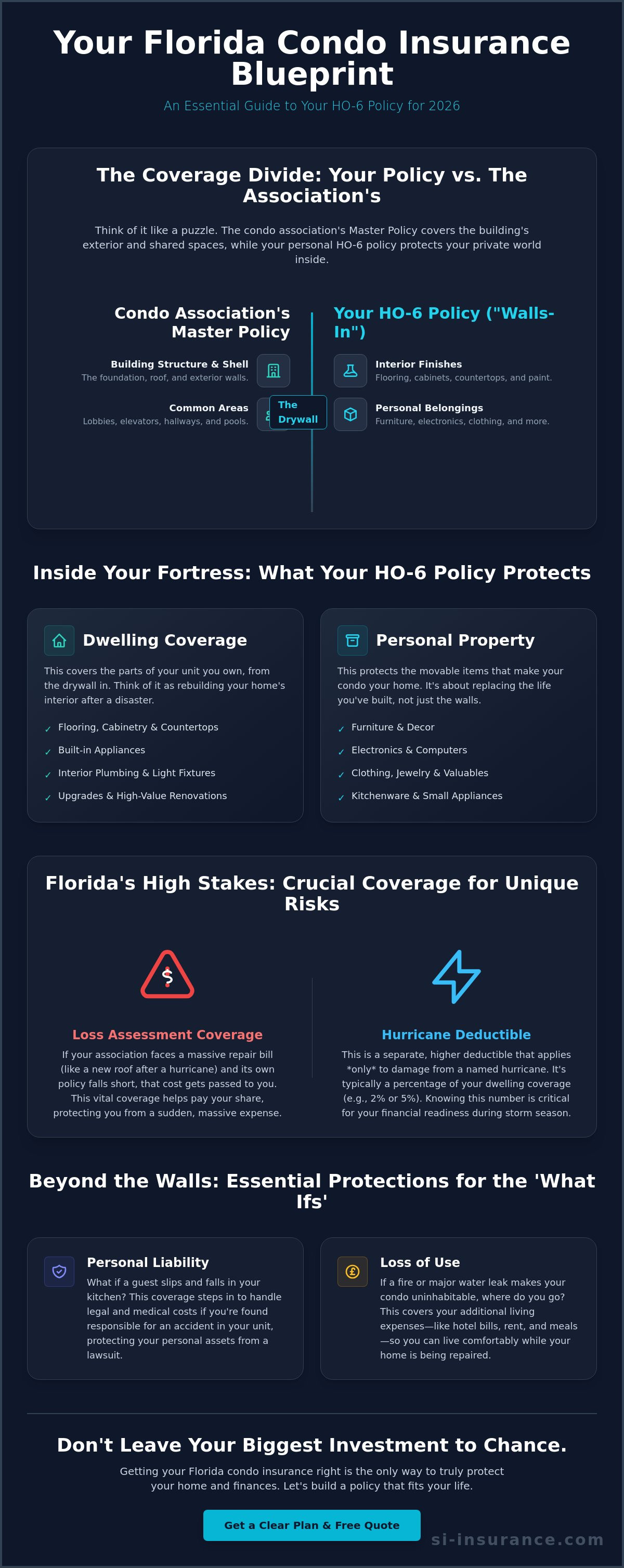
Navigating the nuances of HO-6 condo insurance is essential for any owner in the Sunshine State. It provides a strategic shield that covers everything the master policy ignores. To visualize how these layers of protection work together, it helps to see the breakdown of responsibilities in a real-world context.
To better understand this concept, watch this helpful video:
HO-6 vs. The Condo Association Master Policy
The relationship between your policy and the association’s master policy is often misunderstood. The master policy generally addresses the shell of the building and common areas like the lobby or elevators. In Florida, many associations utilize a "Bare Walls" structure, which excludes everything inside your unit starting from the drywall. Even if a pipe bursts and ruins your custom hardwood floors, the master policy likely won't pay a cent. Some buildings use "All-In" policies that cover original builder-grade fixtures, but even then, your personal electronics, furniture, and upgrades remain your sole responsibility. Distinguishing between these two layers is the only way to avoid catastrophic gaps in your coverage.
The 'Walls-In' Coverage Mandate
When people ask what does condo insurance cover in Florida, they're often surprised by the sheer scope of the "walls-in" requirement. Florida Statute 718 outlines specific insurance responsibilities, placing the burden of interior finishes squarely on the unit owner. This includes your flooring, cabinetry, appliances, and even the internal plumbing fixtures. You must ensure your policy reflects the current replacement cost of these materials. If you've upgraded to quartz countertops or luxury vinyl plank flooring, your coverage must be meticulously adjusted to reflect those high-value improvements. Accurate valuation is the difference between a full recovery and a significant financial setback.
Interior Protection: From the Drywall Inward
The interior of your residence is a curated reflection of your lifestyle and success. While the previous section established the boundary at the drywall, we must now examine the specific protections provided within those boundaries. Understanding exactly what does condo insurance cover in Florida requires a meticulous look at two primary categories: Coverage A and Coverage C. These aren't just line items on a policy; they're the financial safeguards for your flooring, cabinetry, and every item that makes your house a home.
Coverage A, or Dwelling coverage, specifically addresses the structural elements you're responsible for maintaining. This includes the high-end finishes that the association's "bare walls" policy ignores. If a storm breaches your unit, your recovery depends on having adequate limits here. As part of your Florida hurricane preparedness strategy, you should verify that your dwelling limits reflect current local construction costs, which have risen significantly in recent years. It's about more than just compliance; it's about the security of knowing your home can be restored to its original elegance.
Structural Elements and Built-in Fixtures
This coverage extends to your kitchen cabinets, bathroom vanities, and built-in appliances. If you've invested in custom lighting or specialized wall treatments, these are considered part of the dwelling. It's vital to document high-end upgrades with receipts and photos. Without this evidence, a carrier might only offer reimbursement for builder-grade materials. We recommend a methodical review of your unit’s "as-built" condition versus its current state to ensure no value is left unprotected.
Personal Belongings and Valuables
Coverage C protects your personal property, including furniture, clothing, and electronics. When analyzing what does condo insurance cover in Florida, you'll find that the most critical decision is choosing replacement cost over actual cash value. Replacement cost ensures you can purchase a new item at today's prices, whereas actual cash value only pays the depreciated amount. For high-value items like designer watches or fine art, standard limits are often insufficient. You may need specialized jewelry insurance in Florida to provide the absolute security your collection deserves. Taking a meticulous inventory of your belongings provides the intellectual confidence that your lifestyle remains shielded from loss. If you're unsure if your current limits are sufficient, you can review your condo insurance options with a professional who understands the Florida market.
Florida-Specific Risks: Hurricanes, Floods, and Assessments
The Sunshine State’s climate necessitates a level of strategic foresight that few other regions demand. In 2026, the Florida insurance market has reached a state of complex equilibrium, requiring owners to adopt a meticulous planning methodology to protect their equity. When determining what does condo insurance cover in Florida, you must account for the specific mechanics of the hurricane deductible. Unlike a standard flat-fee deductible, these are typically calculated as a percentage of your dwelling coverage, often ranging from 2% to 10%. This means a major storm could result in significant out-of-pocket costs before your policy even begins to pay, making it essential to align your liquid reserves with your policy’s structure.
Surviving this volatile landscape isn't just about selecting a policy; it’s about understanding the unique interplay between environmental hazards and evolving state regulations. You'll need to look beyond the basic premium and analyze how your coverage responds to the high-velocity wind events that define our coastal existence. This requires a shift in perspective, viewing your insurance as a sophisticated risk management tool rather than a mere monthly expense.
The Critical Role of Loss Assessment Coverage
Recent safety legislation, specifically the ripples from SB 4-D and subsequent 2024 updates, has fundamentally changed the financial landscape for condo owners. Associations are now mandated to conduct milestone inspections and structural integrity reserve studies, often uncovering massive repair needs that haven't been funded. When the association lacks the cash to cover a multi-million dollar roof replacement or a massive master policy deductible after a storm, they pass those costs to you through special assessments. Loss assessment coverage serves as a vital financial safety net that reimburses you for your share of building-wide deductibles or collective liabilities passed down by the association. Without a high limit in this category, a single building-wide repair could result in a personal bill for tens of thousands of dollars.
Weather Hazards and the Flood Insurance Gap
It’s a common misconception that a standard HO-6 policy protects against all water damage. In reality, there is a stark divide between wind-driven rain and rising ground water. If a hurricane shatters your window and rain ruins your flooring, your condo policy typically responds. However, if storm surge or heavy rains cause water to rise from the ground into your unit, standard policies offer no protection. Whether you're researching home insurance in Florida or a unit-specific policy, securing a separate flood insurance policy is a necessary component of a professional risk strategy. This ensures that regardless of the water’s source, your interior investments remain shielded from the catastrophic costs of remediation and restoration.
The Liability Shield for Modern Owners
Personal liability coverage acts as a robust barrier between your accumulated assets and the high-stakes world of legal claims. If a guest sustains a significant injury within your unit, or if an accidental overflow from your bathtub causes extensive water damage to the three units below you, Coverage E provides the necessary legal defense and settlement funds. This protection isn't confined to your physical address; it typically follows you globally, offering a layer of security during your daily life. It's vital to select limits that reflect your actual net worth rather than accepting standard policy minimums. For those with significant assets, aligning this coverage with a personal umbrella insurance policy is a hallmark of elite financial planning.
Coverage F, or Medical Payments to Others, serves a different but complementary purpose. It's designed to handle minor medical expenses for guests injured on your premises regardless of who is at fault. By quickly addressing these smaller costs, you can often prevent minor accidents from escalating into more complex and adversarial legal disputes. This "goodwill" coverage is a proactive way to manage risk before it transforms into a larger financial liability.
Additional Living Expenses (ALE)
Loss of Use coverage, often referred to as Additional Living Expenses, is perhaps the most vital "lifestyle" protection in a post-storm environment. If a hurricane or fire renders your unit uninhabitable, ALE ensures you don't have to compromise your standard of living while repairs are underway. This coverage pays for hotel stays, temporary rentals, and even the increased cost of meals. In the current Florida market, where labor and material shortages can extend repair timelines for months, having a policy that guarantees a "like-kind" lifestyle is essential for your peace of mind. Whether you're a seasonal resident or a full-time owner, this provision allows you to maintain your social and professional obligations without the stress of unexpected housing costs. To ensure your policy provides sufficient duration and limits for these expenses, you should consult with a specialized condo insurance advisor to review your current HO-6 structure.
Navigating the Florida Condo Market: Securing the Right Policy
Finding the right coverage shouldn't feel like you're trying to solve a puzzle with missing pieces. Since every building has its own quirks, figuring out what does condo insurance cover in Florida for your specific unit really starts with a look at your association's paperwork. You don't want to rely on a generic online quote that doesn't understand your HOA's specific rules or the recent safety inspections your building might have gone through. Taking a careful, step-by-step approach to comparing different carriers is the best way to make sure you're truly protected without overpaying.
Think about bundling your condo policy with your auto insurance too. It's an easy way to keep things organized and often leads to some helpful savings on your premiums. By working with an independent agency, you get to see options from a wide range of Florida carriers instead of being stuck with just one company's limited choices. This kind of flexibility is a lifesaver in our state, where insurance rules can change as quickly as the weather.
Expert Consultation for Tailored Protection
Generic quotes often miss the mark because they don't account for the unique building codes we have here. A pro who knows the local market can read through your HOA's bylaws to find exactly where their responsibility ends and yours begins. This helps you choose deductibles and limits that actually make sense for your life, rather than just checking a box for your mortgage lender. It's about building a safety net that fits your home perfectly.
The SI Insurance Advantage in 2026
At SI Insurance, we pride ourselves on being a steady partner you can rely on. We focus on giving you the kind of personal attention you deserve, especially when the stakes are this high. With our offices right in Sunrise and Pompano Beach, we're neighbors who understand the specific challenges of living in Broward County. We're here to make sure you feel confident and secure in your coverage. Contact SI Insurance for a thorough review of your condo coverage and let's make sure your home is protected the right way.
Securing Your Coastal Legacy for the Future
Navigating the complexities of the 2026 insurance market requires more than just a basic policy; it demands a strategic alignment of your personal assets with the evolving regulatory landscape. You've seen how the "drywall-inward" boundary defines your financial responsibility and why loss assessment coverage has become an indispensable shield against building-wide structural mandates. Understanding exactly what does condo insurance cover in Florida is the first step toward achieving absolute security in an environment where association reserves and master policies are constantly shifting.
Protecting your home shouldn't be a source of stress. As an independent agency with deep roots in Broward County and South Florida, we provide the methodical, step-by-step guidance necessary to navigate these high-stakes decisions. We offer access to multiple top-rated Florida carriers to ensure your coverage is as sophisticated as the lifestyle it protects. You don't have to manage these risks alone. Secure your Florida condo with a professional consultation from Si Insurance Agency and gain the intellectual confidence that your property is truly shielded. We're here to help you build a resilient future under the sun.
Frequently Asked Questions
Is condo insurance required by law in Florida?
Florida law doesn't explicitly mandate that unit owners carry personal insurance. However, you'll find that mortgage lenders and nearly every condo association require an active policy as a condition of your residency or loan. This ensures that the collective financial health of the building isn't jeopardized by a single uninsured loss. It's a standard safeguard that protects your equity and the interests of your neighbors throughout the year.
What is the difference between a master policy and an HO-6 policy?
A master policy is held by the association and typically covers the building's shell, roof, and common areas. In contrast, your HO-6 policy is designed to address everything from the "drywall inward." When asking what does condo insurance cover in Florida, remember that your personal policy fills the critical gaps left by the association. It specifically protects your interior finishes, personal property, and your individual liability for accidents occurring inside your unit.
Does my Florida condo insurance cover flood damage?
Standard HO-6 policies don't provide coverage for rising ground water or storm surge. While your policy might cover rain entering through a broken window, true flood damage requires a separate Flood Insurance policy. Given Florida's coastal geography, securing this additional layer of protection is a necessary step for any unit owner. It ensures your interior investments are fully shielded from hydrological events that a standard policy excludes.
What is loss assessment coverage and why is it so high in Florida?
Loss assessment coverage pays for your share of a special assessment when the association lacks funds to cover building-wide damage or liability claims. This coverage is particularly vital in Florida due to frequent hurricane activity and recent legislative changes that mandate strict structural reserve funding. If the building’s master policy deductible is millions of dollars, this coverage prevents you from paying a massive personal bill for repairs to common elements.
How much condo insurance coverage do I actually need for my unit's interior?
You should carry enough Dwelling coverage to rebuild your unit to its current state using modern materials. When calculating what does condo insurance cover in Florida, you must account for high-end flooring, custom cabinetry, and specialized fixtures. It's best to base this amount on current local construction costs rather than your purchase price. A professional review of your unit's finishes can provide the precision needed to set these limits accurately.
Does condo insurance cover my belongings if I am a seasonal 'snowbird' resident?
Your policy generally protects your belongings year-round, regardless of whether you're currently in residence. However, you should review your policy for any vacancy or unoccupancy clauses that might limit coverage if the unit is empty for more than 30 or 60 consecutive days. Taking proactive steps, like installing a leak detection system or having a property manager check the unit, can often help maintain your coverage and provide peace of mind.
Will my condo insurance pay for a hotel if my unit is damaged by a hurricane?
Yes, the Loss of Use portion of your policy handles these expenses. If a covered peril like a hurricane makes your unit uninhabitable, your insurance will reimburse you for the additional costs of staying in a hotel and dining out. This ensures you can maintain your standard of living during the restoration process. It's a vital component for anyone who doesn't have an immediate local alternative for housing after a storm.
What is a hurricane deductible and how does it apply to my Florida condo?
A hurricane deductible is a percentage-based fee, usually ranging from 2% to 10% of your dwelling limit, that applies specifically to windstorm damage. Unlike a flat-fee deductible for a fire or theft, this amount can be significantly higher. It triggers when the National Hurricane Center declares a hurricane. You should ensure you have enough liquid savings to cover this amount should a major storm impact your property and result in a claim.
Comments