


Cape Coral Hurricane Coverage: 2026 Homeowner Review
What if the hurricane damage you’re most concerned about falls outside your homeowners policy? For Cape Coral residents, understanding hurricane coverage homeowners insurance Cape Coral policies provide starts with separating wind damage from flooding, including storm surge. One policy may not address every kind of hurricane loss, because coverage depends on what caused the damage and the terms of the policy.
Reviewing your coverage before a storm is approaching gives you time to read the policy and identify questions. This guide explains how homeowners and flood coverage differ, what to look for in a hurricane deductible, and how to compare your dwelling limit with your home’s rebuilding needs. You’ll also find a checklist of property details and documents to gather before reviewing coverage options.
SI Insurance Agency helps Florida homeowners review homeowners and flood coverage options through its carrier network. Whether your home is in Cape Coral or another Florida community, a focused review starts with your property and the policy documents you have now.
Table of Contents
What hurricane coverage means for a Cape Coral homeowners policy
Hurricane readiness starts with understanding how your policy is structured, ideally well before a storm is imminent. Review the protections, limits, deductibles, and exclusions together rather than relying on the general label “homeowners insurance.” When assessing hurricane coverage homeowners insurance Cape Coral policies provide, read the specific policy wording and endorsements. An endorsement can change how a particular loss is treated.
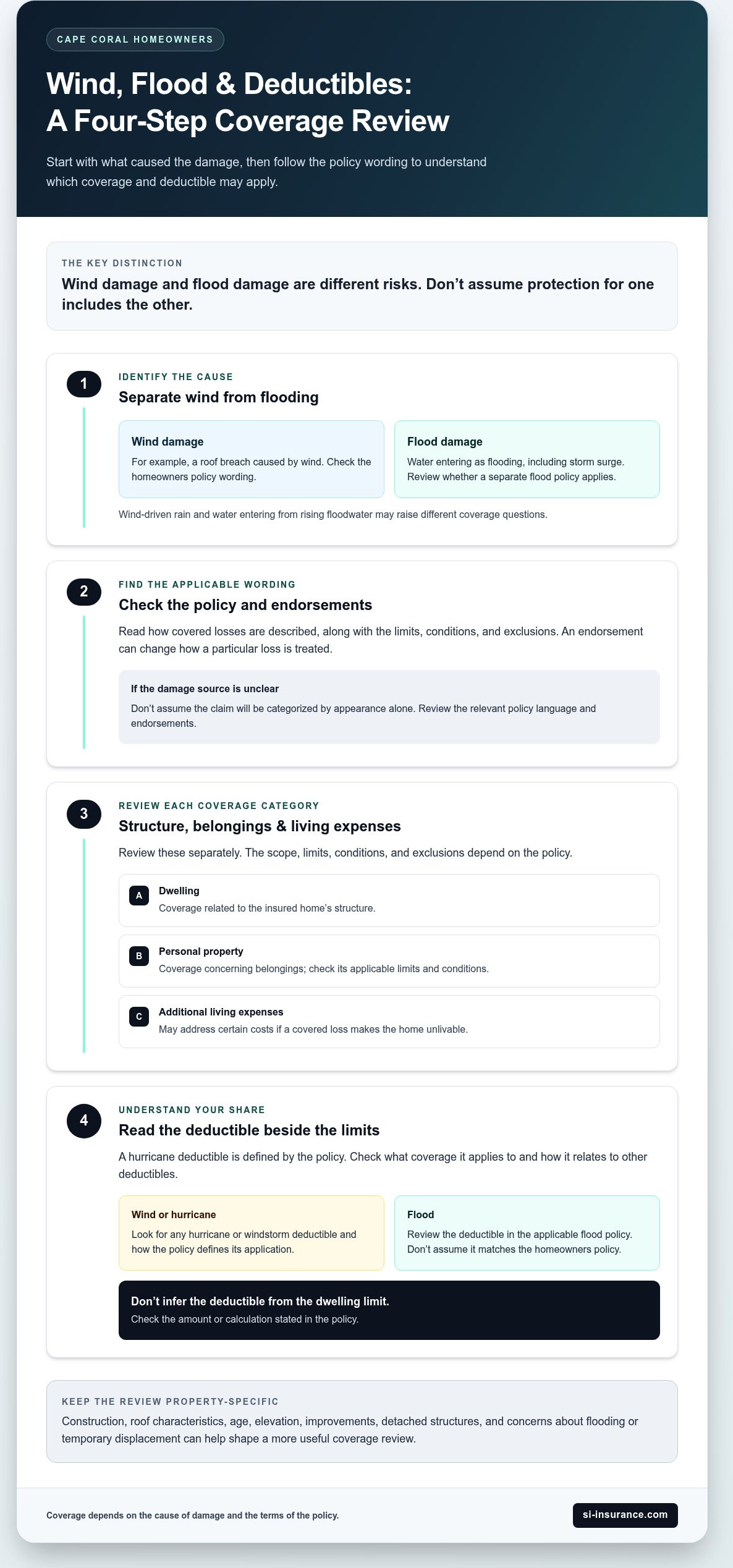
Wind damage from a hurricane and flood damage from storm surge are distinct risks. Don’t assume that homeowners coverage for one includes the other. The cause of damage and the applicable policy terms both matter. When reviewing your documents, distinguish damage from wind-driven rain or a roof breach from water that enters as flooding, then identify the provisions that may apply to each situation.
Why Cape Coral homeowners should review coverage by property
Cape Coral’s canals and proximity to the Gulf make it sensible to consider both wind and water exposure. Still, location alone doesn’t establish a home’s complete risk or determine its policy terms. Homes in the same area can differ in construction, roof characteristics, age, elevation, and improvements. Those details can help shape a more useful coverage review.
Start with the property and the people who rely on it. Note features that could affect repair or rebuilding needs, any detached structures, and whether flooding or temporary displacement is a particular concern. These details create a practical starting point instead of treating every Cape Coral home as though it faces the same risks.
What a homeowners policy may address after hurricane damage
Review the policy in separate categories: the dwelling, personal property, and additional living expenses. Dwelling coverage relates to the insured home’s structure. Personal property coverage concerns belongings. Additional living expenses may address certain costs if a covered loss makes the home unlivable. The scope, limits, conditions, and exclusions for each category depend on the policy, so use these categories as prompts for review, not as a promise that a particular hurricane loss will be covered.
For flood exposure, check whether a separate flood policy is part of your household’s protection and how its terms relate to your homeowners policy. The National Flood Insurance Program (NFIP) offers background on one source of flood insurance. The relevant policy documents determine the coverage in place for a particular property. For a broader overview of homeowners coverage in Florida, consult this Florida home insurance guide as you prepare questions and compare your home’s needs with its policy limits.
How hurricane wind, flood damage, and deductibles differ in Cape Coral
When reviewing hurricane coverage homeowners insurance Cape Coral residents carry, separate three questions: what caused the damage, which policy provision may apply, and what deductible could affect a claim. A roof breach caused by wind and water entering from rising floodwater may involve different parts of your insurance protection. The distinction can be harder to assess after a storm, so read the covered-loss wording and endorsements carefully.
Does homeowners insurance cover hurricane wind damage?
Wind-related damage may be covered under a homeowners policy, subject to its terms, limits, and exclusions. That doesn’t answer every question about a particular claim. Damage to the structure and damage to belongings are separate categories to review, each with its own applicable limits and conditions. Check the policy’s covered-loss wording and endorsements instead of relying on a general description of hurricane protection.
Wind coverage doesn’t automatically mean flood coverage. The two address different causes of damage and may rely on separate policy terms.
Why flood coverage is a separate review
Flooding and wind-driven rain aren’t interchangeable descriptions. Water entering through a wind-damaged opening may raise different coverage questions from water that inundates the property. The policy wording and facts of the loss matter. Standard homeowners policies commonly treat flooding separately, so review whether your household has a separate flood policy and what it says it covers. If the source of water is uncertain, don’t assume the claim will be categorized by appearance alone.
A hurricane deductible is an amount or calculation defined by the policy. Read how it is described, what coverage it applies to, and how it relates to other deductibles. Don’t infer the amount from the dwelling limit without checking the actual terms. For a focused review of homeowners and flood protection, SI Insurance coverage options can be a starting point for discussing your home’s needs.
How to assess hurricane coverage limits and policy gaps
A useful review connects the figures in your policy to the home and belongings you may need to repair or replace. Start with the property description and dwelling limit, then consider personal belongings, temporary living needs, and costs you may have to pay yourself. A limit sets a boundary for coverage. It doesn’t guarantee full reimbursement for every loss.
Work through each category separately. This helps reveal where one limit may appear adequate while another needs a closer look:
Dwelling: Compare the insured home’s description and limit with its size, construction, roof, renovations, and other features that could affect rebuilding needs.
Personal belongings: Consider what you own now, whether the policy’s personal property limit reflects those belongings, and whether special limits or exclusions could affect particular items.
Temporary living needs: Review whether additional living expenses are addressed, which conditions apply, and what limits or time provisions the policy sets.
For example, a dwelling limit might be enough for some repairs but fall short of the amount needed to rebuild after extensive damage. A separate personal property limit could also constrain reimbursement for belongings, even when the dwelling limit is higher. Settlement terms, exclusions, deductibles, and limits all shape the outcome. Read them together rather than treating one headline amount as a measure of complete protection.
Check dwelling, belongings, and temporary living coverage
Start with the declarations page. Confirm the insured property description and dwelling limit, then compare them with the home as it exists today. Create or update a household inventory, including photographs or records that help document what you own. Review the personal property limit alongside it. Finally, read the additional living expense provisions so you understand the conditions and limits that apply if a covered loss temporarily prevents you from living at home.
Review deductibles, exclusions, and home details together
Locate the hurricane deductible and read how the policy defines its application. Consider the potential out-of-pocket amount before choosing or accepting a deductible. A higher deductible can mean taking on more of a loss yourself before insurance responds. Then compare the policy’s property details with the home’s current condition, including roof characteristics, opening protection, construction information, and renovations.
Even a small discrepancy can complicate a review later. If the roof has been replaced, openings upgraded, or the home materially renovated, gather accurate records and identify whether the policy reflects those changes. Read exclusions and endorsements alongside the limits. A feature listed in the property description doesn’t, by itself, establish how a future loss will be handled. These details give you a clearer, home-specific basis for discussing possible gaps in homeowners and flood coverage.
A pre-storm hurricane coverage checklist for Cape Coral homeowners
A policy review is easier to complete before a storm is on the horizon. Start by putting your policy documents and property information in one place. Then use them to identify questions about wind, flood, deductibles, and claim records. Preparing ahead can make it easier to find key details and describe your home accurately later.
Gather your policy documents. Collect the declarations page, full policy forms, and endorsements for homeowners and flood coverage, if applicable. Save digital copies in a secure location you can access away from home, and keep key insurance contact information with them.
Make a current home inventory. Record major belongings, noting identifying details and keeping receipts or other ownership records when available. Dated photos or video can help document your belongings and the visible condition of the home. Store copies securely away from the property so they aren’t lost in the same event.
Document the property before storm season. Photograph the exterior and interior, including the roof only where it can be done safely, and capture existing conditions. Keep images dated and organized so they provide a useful reference if you later need to describe damage.
Record relevant home updates. Note the roof’s age, opening protection, construction details, and renovations. Keep supporting records for completed work with your policy materials, and compare those details with the property information in your insurance documents.
Prepare focused coverage questions. Write down what you want clarified about wind and flood coverage, deductibles, dwelling and personal property limits, exclusions, and the documentation needed if you file a claim.
Review well ahead of an active threat. Coverage changes may be restricted during active storm threats or subject to carrier terms. Don’t assume a policy can be changed once a storm is approaching. Review applicable carrier conditions in advance.
Prepare policy documents and a home inventory
Keep your documents together in a secure digital folder, with a backup stored separately from your home. Alongside the declarations page, include the full policy forms and endorsements, plus current contact details for your insurance agency and carrier. An inventory doesn’t need elaborate formatting to be useful. Consistent descriptions, dated images, and available proof of ownership can help organize the information you may need.
Review storm protection and ask focused coverage questions
Use your property notes to check whether the policy records reflect the home’s current roof, opening protection, construction, and renovation details. Prepare specific questions about how wind and flood provisions differ, which deductible applies, and how limits and exclusions affect the protection shown in your documents. Keep the review grounded in your home’s actual features and your priorities.
Once your documents and questions are assembled, review Florida homeowners coverage options as part of a broader look at your homeowners and flood coverage needs.
How SI Insurance can help review Cape Coral hurricane coverage
Once your documents and property notes are together, connect them to the coverage options available for your home. SI Insurance Agency serves homeowners throughout Florida and matches clients with options from a network of carriers. The agency can help you consider homeowners and flood coverage together in one review while keeping in mind that they are separate policies with distinct terms, limits, and exclusions.
A review of hurricane coverage homeowners insurance Cape Coral residents carry should be specific to the property, not based on assumptions about what a typical policy includes. The goal is to clarify what your documents say, identify questions that remain, and consider available options in light of your home’s features and priorities. Reviewing options can inform a decision, but it can’t guarantee how a future claim will be assessed.
What to bring to a homeowners coverage review
Bring the declarations page, current policy documents, endorsements, and records of known home updates. Include notes about the roof, opening protection, renovations, and other property details. This gives the discussion a reliable starting point and helps connect the home’s current condition with the information reflected in the policy.
It also helps to arrive with specific questions. For example:
How do the policy documents describe wind-related coverage and its limitations?
How does flood coverage fit alongside the homeowners policy, and what terms apply separately?
How is the hurricane deductible defined, and how do the dwelling limits compare with rebuilding needs?
Which property details or endorsements need clarification?
Share what matters most to your household, whether that’s understanding the home’s structure limits, belongings, flood exposure, or the financial responsibility you could face after a loss. Your priorities help give the review context.
Turn a Cape Coral coverage review into clear next steps
A useful review should leave you with organized findings, not just a stack of policy pages. Separate what the documents clearly state from what needs explanation and which coverage options may be worth comparing. When reviewing homeowners and flood protection together, keep their limits and conditions distinct so one policy isn’t mistaken for a substitute for the other.
SI Insurance Agency can help evaluate homeowners and flood coverage options through its carrier network, using the property information and priorities you bring to the discussion. The review gives you a clearer basis for deciding what questions to resolve and what options to consider. It is a review of available coverage, not a promise that a particular hurricane-related loss will be covered.
To discuss your home, existing policy, and coverage questions, discuss your Florida homeowners coverage with SI Insurance Agency.
Make your next coverage review count
Set aside time to review your policy while you can consider your options carefully, rather than waiting until a storm is approaching. Keep a short record of unanswered questions and revisit it when your home, belongings, or insurance documents change. This helps keep your hurricane coverage homeowners insurance Cape Coral review connected to the property you have today, not the one described in an older policy file.
A useful next step is a focused conversation about your home, existing coverage, and the details you want clarified. SI Insurance Agency helps homeowners across Florida consider homeowners and flood coverage options through its carrier network. The applicable policy wording remains the guide to specific protections and claim decisions.
Discuss your Florida homeowners coverage with SI Insurance Agency to review your home and coverage questions.
Frequently Asked Questions
Does homeowners insurance cover hurricane damage in Cape Coral?
It may cover certain hurricane-related losses, but the policy’s terms determine which ones. A review of hurricane coverage homeowners insurance Cape Coral homeowners carry should distinguish damage caused by wind from losses involving water, since those causes may be treated differently. Wind damage to a covered part of the home may be handled differently from water entering after a storm. Read the covered-loss wording, exclusions, limits, and endorsements in your specific policy.
Is flood damage from a hurricane covered by homeowners insurance?
Flood damage is commonly treated separately from homeowners coverage, so don’t assume protection against hurricane wind also applies to rising water or storm surge. Check whether you have a separate flood policy and review its terms alongside your homeowners policy. If water enters after a roof or window is damaged, the source and path of the water may matter when the loss is assessed. The applicable policy wording determines how the situation is handled.
What is a hurricane deductible, and when does it apply?
A hurricane deductible is the amount or calculation specified in a policy that may apply to a qualifying hurricane-related claim. The policy explains what event triggers it, how it is calculated, and which covered property or loss it applies to. Don’t assume it works like your standard deductible. Locate the deductible language in your policy documents and consider the potential out-of-pocket expense before a claim occurs.
Can I get homeowners insurance when a hurricane is approaching Florida?
Availability and the ability to start or change coverage may depend on carrier terms and current storm conditions. Some insurers may restrict binding new coverage during an active threat, so don’t rely on obtaining protection at the last minute. A policy’s effective date determines when coverage begins. It shouldn’t be treated as retroactive. Review your options as early as possible, before a storm is approaching.
Does homeowners insurance cover a roof damaged by hurricane winds?
Wind damage to a roof may be covered, subject to the policy’s terms, limits, deductible, and exclusions. The policy wording and circumstances of the damage matter. A leak alone doesn’t establish how a loss will be handled. If the roof is damaged, photograph visible conditions from a safe location and keep records of related repairs. Your policy documents describe the coverage and claim requirements that apply.
What should I document before filing a hurricane insurance claim?
Record the date you discovered the damage, the affected areas, and what you observed about its possible source. Take clear photos or video from several angles, including close views and wider shots that show where the damage is located. Keep receipts for related expenses and copies of communications about the loss. A simple timeline can help organize events and provide a consistent account when discussing the claim.
Does homeowners insurance pay for temporary housing after hurricane damage?
A homeowners policy may provide additional living expense coverage if a covered loss makes the home unfit to live in, but the policy’s conditions and limits apply. Review the wording to understand what circumstances qualify and which expenses may be considered. Keep receipts and note why you had to leave the home. Don’t assume every hotel stay or evacuation expense is covered. The applicable terms and facts determine the outcome.
Comments