


First-Time Home Buyer Insurance Checklist for Jacksonville, FL (2026)
Could a home that seems well protected still leave you exposed after a Jacksonville storm? It can: standard homeowners insurance generally doesn’t cover flood damage, and wind or hurricane deductibles may work differently from the deductible for other claims. This first time home buyer insurance checklist Jacksonville buyers can use starts with the property itself, not a one-size-fits-all policy.
It’s reasonable to feel uncertain when policy limits, exclusions, and terms are unfamiliar, especially when you’re also preparing to close. The right coverage depends on details such as the home’s location, roof, age, and condition, so compare policies on more than the premium.
Use this checklist to review core homeowners coverage, identify property-specific risks, and prepare focused questions before finalizing your purchase. Inspection records and information about the home’s history can help you understand what to discuss. With a clearer view of what’s covered, what may require separate protection, and how deductibles apply, you can approach closing with greater confidence.
Table of Contents
What First-Time Jacksonville Home Buyers Should Know About Homeowners Insurance
How Jacksonville Weather and Flood Exposure Affect a Home Insurance Checklist
How to Compare Home Insurance Coverage Before Buying a Jacksonville Home
A Jacksonville First-Time Home Buyer Insurance Checklist for Before Closing
How SI Insurance Can Help Jacksonville Buyers Review Home Insurance
What First-Time Jacksonville Home Buyers Should Know About Homeowners Insurance
Homeowners insurance is a contract that can help protect a home and its occupants financially when certain losses occur. The policy sets out the limits, covered causes of loss, and exclusions. Those details matter more than the policy’s name when you’re deciding whether it fits a particular property and your needs.
Include insurance in your home-buying review, not just the paperwork you handle immediately before closing. Reviewing the terms while preparing to purchase gives you time to understand what is protected, identify questions, and compare the proposed coverage with the insurance instructions in your loan documents. For general background on common coverage types and exclusions, see this Homeowners Insurance Overview.
What does a homeowners insurance policy generally cover?
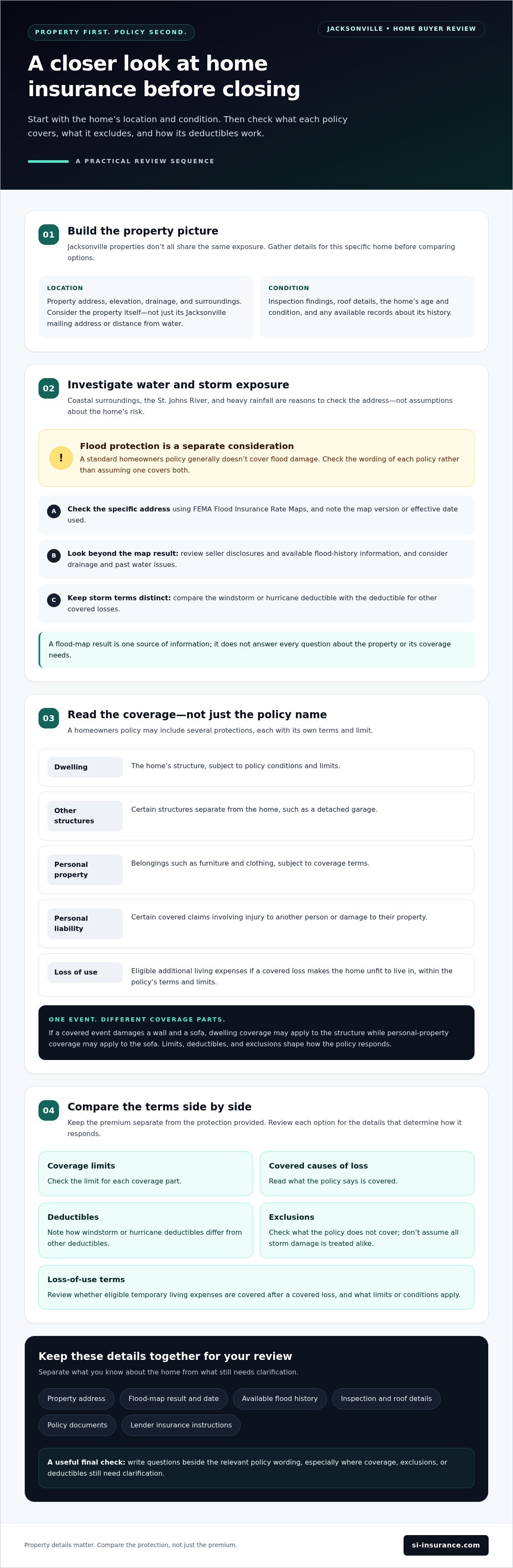
Policies may include several distinct protections, each with its own terms and limit:
Dwelling: The home’s structure, subject to policy conditions and limits.
Other structures: Certain structures on the property that are separate from the home, such as a detached garage.
Personal property: Belongings inside the home, such as furniture and clothing, subject to coverage terms.
Personal liability: Protection for certain covered claims involving injury to another person or damage to their property.
Loss of use: Help with eligible additional living expenses if a covered loss makes the home unfit to live in, within the policy’s terms and limits.
For example, a covered event might damage both a wall and a sofa. Dwelling coverage applies to the home’s structure, while personal-property coverage may apply to the sofa. The relevant limits, deductibles, and exclusions determine how the policy responds, so don’t assume one coverage part protects everything on the property.
Why does Jacksonville location matter to a home insurance review?
Jacksonville and Duval County provide local context, but the city name doesn’t mean every property has the same exposure. The St. Johns River, the Atlantic coast, and areas farther inland create different geographic settings. A home’s specific address, elevation, drainage, and surroundings can shape the questions worth asking. Broad assumptions based on a Jacksonville mailing address may miss important differences between properties.
Review flood information for the specific address rather than inferring exposure from distance to the coast or a neighborhood name. Homeowners and flood insurance are distinct considerations, and protection depends on the terms of each policy. As you build your first time home buyer insurance checklist Jacksonville, note questions about the property’s location, coverage limits, exclusions, and how the policy treats relevant causes of loss. That gives you a more useful basis for comparing options before you finalize the purchase.
How Jacksonville Weather and Flood Exposure Affect a Home Insurance Checklist
Jacksonville’s coastal setting, the St. Johns River, and periods of heavy rainfall are reasons to investigate a home’s individual exposure, not to assume every property faces the same risk. Conditions can differ by address and parcel. Distance from water alone may not tell the full story, so connect local research to the property’s records and the wording of the coverage you’re considering.
Keep homeowners coverage and flood insurance as separate items in your review. A standard homeowners policy generally excludes flood damage, but policy language determines how covered causes of loss and exclusions apply. Storm damage can raise questions about the source of water or wind and which deductible applies. For broader Florida consumer context as you review coverage, consult the Florida Homeowners Insurance Consumer Guide.
How should buyers assess flood exposure near Jacksonville?
Look up the specific property using FEMA Flood Insurance Rate Maps, and note the map version or effective date used for your review. Treat the result as one source of information, not a complete insurance recommendation. It doesn’t answer every question about drainage, past water issues, or the coverage a property may need. Review seller disclosures and available flood-history information for the address, and keep unresolved questions with your purchase documents.
Which storm-related policy details deserve a closer review?
Read the windstorm or hurricane deductible alongside the deductible for other covered losses, and note how each is described in the policy. Then examine covered causes of loss and exclusions rather than assuming all storm damage is handled alike. Review loss-of-use terms, too, including whether eligible temporary living expenses are covered after a covered loss and what limits or conditions apply.
Before comparing options, organize the property details that can inform your review: the address, flood-map result, available flood-history information, inspection findings, and policy documents. This helps separate what you know about the home from what still needs clarification. As you build a checklist for buying your first home in Jacksonville, record questions beside the relevant policy wording instead of relying on broad assumptions about the area.
SI Insurance can help you review Florida home insurance options and policy details as part of your purchase preparation. Learn more through this home insurance discussion.
How to Compare Home Insurance Coverage Before Buying a Jacksonville Home
Policy documents can feel dense, especially when quotes use different terms or organize coverage differently. Start with a side-by-side comparison of the details most likely to affect how a policy responds to a loss. Mark unfamiliar wording so you can clarify it before making a decision.
Keep the premium in its own column. A lower price doesn’t show whether limits are adequate, a deductible is manageable, or an exclusion changes the protection you expect. A useful comparison records what each policy covers and how its terms apply, so you’re weighing protection as well as cost.
Which coverage limits and deductibles should buyers compare?
Compare each policy’s dwelling limit with its stated basis for estimating covered rebuilding costs. The purchase price and the cost to rebuild aren’t necessarily the same measure, so review how the policy describes its dwelling limit rather than relying on the home’s sale price. Also compare personal-property limits and look for category-specific limits or restrictions that could affect belongings you value.
Set each general deductible beside any separate windstorm or hurricane deductible. Record whether the policy describes a deductible as a fixed amount or in another way, and note which covered events trigger it. These distinctions matter because a quote’s headline premium won’t show how much you may be responsible for under different claim scenarios.
How can buyers identify exclusions and coverage gaps?
Read the exclusions and covered-causes-of-loss sections with the property in mind. For a Jacksonville home, flag wording about water, flood, wind, maintenance, and any other condition raised by the inspection or property records. Don’t assume damage associated with a storm is treated as one category. The policy wording and circumstances can affect how coverage applies.
Keep flood insurance questions separate from the homeowners-policy comparison. Note what each homeowners policy says about flood-related loss, then record any separate flood coverage you’re considering on its own line. This makes it easier to see which questions belong to which policy instead of treating the documents as interchangeable.
Replacement cost and actual cash value are terms to examine, not shorthand to interpret without reading the contract. Replacement cost generally refers to a settlement basis tied to replacing covered property, while actual cash value may account for depreciation. Policy definitions, conditions, and settlement rules vary. Compare the exact wording for both the dwelling and personal property, where applicable, and note how the stated basis would apply to a covered claim.
Use a concise checklist to capture differences that could change your protection or out-of-pocket responsibility:
Limits: Note the dwelling and personal-property amounts and the basis used for settlement.
Deductibles: Record the general deductible and separate storm-related terms.
Exclusions: Flag wording that relates to the property’s condition or location.
Covered property: Identify what is covered and any category-specific restrictions.
This comparison won’t identify one policy as universally best. It will show where the terms differ, which details need clarification, and whether the premium reflects protection that fits the particular home.
A Jacksonville First-Time Home Buyer Insurance Checklist for Before Closing
Insurance preparation is easier when each step is tied to the property and your closing timeline. Gather reliable information first, use it to review coverage, then confirm that the policy documents reflect the transaction details. Keep copies of the documents and note unanswered questions so they don’t get lost among closing tasks.
What information should buyers gather for a home insurance review?
Start a file for the property. Include the full address, purchase details, inspection findings, available seller disclosures, and information about past water issues or repairs. Add documented details about the roof, construction, protective devices, and renovations. If a detail is unknown, leave it blank rather than estimating. An unsupported guess can lead to an inaccurate review.
Keep your lender’s insurance instructions with these materials. Requirements and documentation can vary by transaction, so use the instructions and loan documents for your purchase rather than relying on a general checklist. Store quotes, policy documents, correspondence, and notes about terms you want explained in the same file.
What should buyers verify before their closing date?
When you have policy documents to review, check that the named insureds and property address match the purchase information. Confirm the coverage limits, deductibles, and policy effective date, then compare the timing with the closing schedule and the lender’s instructions. If the closing date changes, revisit the effective date instead of assuming the original arrangements still align.
Make flood coverage a separate item in the review. If separate flood insurance is part of your plan, record how it applies to the property and check its documentation and effective date alongside the homeowners policy. Don’t assume the homeowners policy alone addresses flood exposure. The documents should make clear which policy applies to which coverage.
This first time home buyer insurance checklist Jacksonville buyers can use follows a simple sequence: research the address, gather property and lender documents, compare policy terms, then verify names, limits, deductibles, and effective dates before closing.
Research the property: Gather the address, purchase details, available property disclosures, and relevant location information.
Organize the records: Add inspection findings and documented roof, construction, protective-device, and renovation details.
Review the terms: Compare coverage documents and note questions about limits, deductibles, exclusions, and any separate flood coverage.
Check the transaction details: Confirm the named insureds, property address, policy effective date, and documentation against your lender’s instructions and closing timeline.
SI Insurance helps buyers review Florida home insurance options and policy details as they prepare for ownership. Explore home insurance options as part of your pre-closing review.
How SI Insurance Can Help Jacksonville Buyers Review Home Insurance
Before a first home purchase, insurance choices can feel like another set of documents to decode. SI Insurance can help you consider Florida home insurance options in relation to the home you’re buying and the protection you want to review. The goal is to make policy terms easier to understand, rather than rely on broad assumptions about what a standard policy will do.
Bring the questions you’ve noted during your research. A coverage discussion can focus on how the property’s details relate to limits, deductibles, and policy wording, and highlight terms that deserve a closer read. It can also help you organize priorities, such as understanding protection for the dwelling and belongings or clarifying how separate flood coverage fits into your planning. The selected policy’s written terms determine the final coverage.
What can a home insurance conversation help clarify?
Start with what you know about the property and what you want the coverage to address. The address, inspection findings, roof details, and available disclosures provide useful context. From there, you can review the limits and deductibles presented in the options and flag exclusions or unfamiliar language for explanation. A focused discussion turns a general concern into specific questions tied to the home and the documents in front of you.
A review can also help distinguish an assumption from a policy provision. If you’re unsure how a particular cause of loss is treated, identify the relevant wording and discuss what it says instead of relying on a verbal summary or the policy’s name. Keep the written policy documents as the reference for what is covered, subject to the limits, conditions, and exclusions.
How can buyers take the next step with confidence?
Prepare a simple folder before your discussion, whether digital or printed. Include the property address, purchase information, inspection details, and your lender’s insurance instructions. Add any policy documents or coverage summaries you’re reviewing, then write down the questions that matter most to you. Having those materials together keeps the review grounded in the actual transaction, rather than trying to recall details under closing pressure.
Property details: Address, roof information, inspection findings, and relevant disclosures.
Transaction documents: Purchase details, lender instructions, and closing timeline.
Coverage questions: Limits, deductibles, exclusions, and any separate flood coverage.
A first time home buyer insurance checklist Jacksonville buyers use is most useful when it leads to clear questions and an informed review of policy terms. For a straightforward conversation about your options, explore Florida home insurance guidance with SI Insurance as you prepare for ownership.
Move Toward Closing With a Clear Coverage Plan
Before you sign, give yourself time to resolve insurance questions that could affect your decision or closing preparations. A first time home buyer insurance checklist Jacksonville buyers can return to should be more than a box-ticking exercise. Use it to keep key details visible, separate confirmed policy terms from assumptions, and track questions that remain.
A short conversation about your home and coverage priorities can bring the next steps into focus. SI Insurance offers home and homeowners insurance to customers across Florida, so Jacksonville buyers can discuss their options with an agency serving communities throughout the state. Review the written policy carefully and make sure its details align with your purchase and timeline.
Explore home insurance options with SI Insurance as you prepare for closing. Thoughtful review and clear documentation can help you move toward your first home with greater confidence.
Frequently Asked Questions
Does homeowners insurance cover flooding in Jacksonville?
Flood damage is generally addressed separately from a standard homeowners policy, but the policy wording controls. If a property has a history of water intrusion, keep available disclosure or repair records and note what they say about the source of the water. A flood-map result can inform your review, but it doesn’t determine the policy response. Before closing, compare the homeowners documents, any separate flood policy, and the lender’s written instructions.
Do I need flood insurance to buy a home in Jacksonville?
Whether flood insurance is required for a purchase depends on the property, loan, lender, and applicable requirements, so there’s no single answer for every Jacksonville buyer. Review the lender’s instructions for your transaction and keep any requirements in writing. Separately, consider the property’s flood information as part of your own risk review. A lender’s decision and your personal assessment are distinct considerations when preparing a first time home buyer insurance checklist Jacksonville buyers can use.
What does homeowners insurance cover for a first-time buyer?
A homeowners policy may cover the dwelling, certain other structures, belongings, liability, and eligible additional living expenses, subject to its terms. To see how those protections apply to your purchase, review the declarations page for named insureds, address, and listed limits, then check the policy wording for conditions and exclusions. If you own valuable items, look for special category limits and consider whether the stated personal-property terms reflect what you plan to keep in the home.
How much homeowners insurance coverage should I get for a Jacksonville home?
There isn’t one coverage limit that fits every Jacksonville home. Review how the policy determines the dwelling limit, and make sure the information used to assess the property reflects known features such as renovations or construction details. Consider belongings, liability, and deductibles as separate parts of the decision. The purchase price alone doesn’t establish the amount of protection needed. Use the written terms and property-specific information to identify questions before selecting coverage.
When should I arrange homeowners insurance when buying a house?
Begin reviewing coverage while preparing for closing, so there’s time to address questions and gather documents. Timing and paperwork depend on the transaction, so use the lender’s instructions and closing schedule as your reference. If the closing date changes, check whether the policy’s effective date still matches the updated timeline. Keep the address and inspection information available, and review the final documents for errors before relying on them.
Is hurricane damage covered by homeowners insurance in Jacksonville?
Coverage for hurricane-related damage depends on the policy’s covered causes of loss, exclusions, and deductible terms. Review the actual wording rather than assuming all storm damage is treated alike. Note how the policy describes wind damage and whether a separate hurricane deductible applies. Water entering the home may raise a different coverage question. If a term is unclear, SI Insurance can help explain it in relation to the written policy before its effective date.
Can I compare homeowners insurance policies by premium alone?
No. A premium doesn’t show the full extent of protection or your potential out-of-pocket responsibility. Compare quotes based on the same property details, then review limits, deductibles, exclusions, covered causes of loss, and settlement terms alongside price. If one quote uses different assumptions about the home or coverage, the figures may not provide a like-for-like comparison. A brief written summary of the meaningful differences can help you make a more informed choice.
Comments