


How to Get Car Insurance After a DUI in Orlando: A Step-by-Step Guide
What should come first after a DUI in Orlando: shopping for a policy or confirming what Florida requires for your license? If you’re researching how to get car insurance after a DUI in Orlando, start by checking your license and filing requirements. That helps you request quotes with accurate information and compare policies on equal terms.
Your next steps depend on your case, so don’t assume you know your license status or whether an insurance filing applies. Confirm current requirements with the Florida Department of Highway Safety and Motor Vehicles (FLHSMV), then give insurers consistent, accurate information when you request quotes. This guide explains what to check, what details to prepare, and how to compare coverage and carrier options. It also clarifies whom to contact with questions about your Florida filing, license reinstatement, or insurance options for your Orlando-area circumstances.
Table of Contents
Steps before buying car insurance after an Orlando DUI
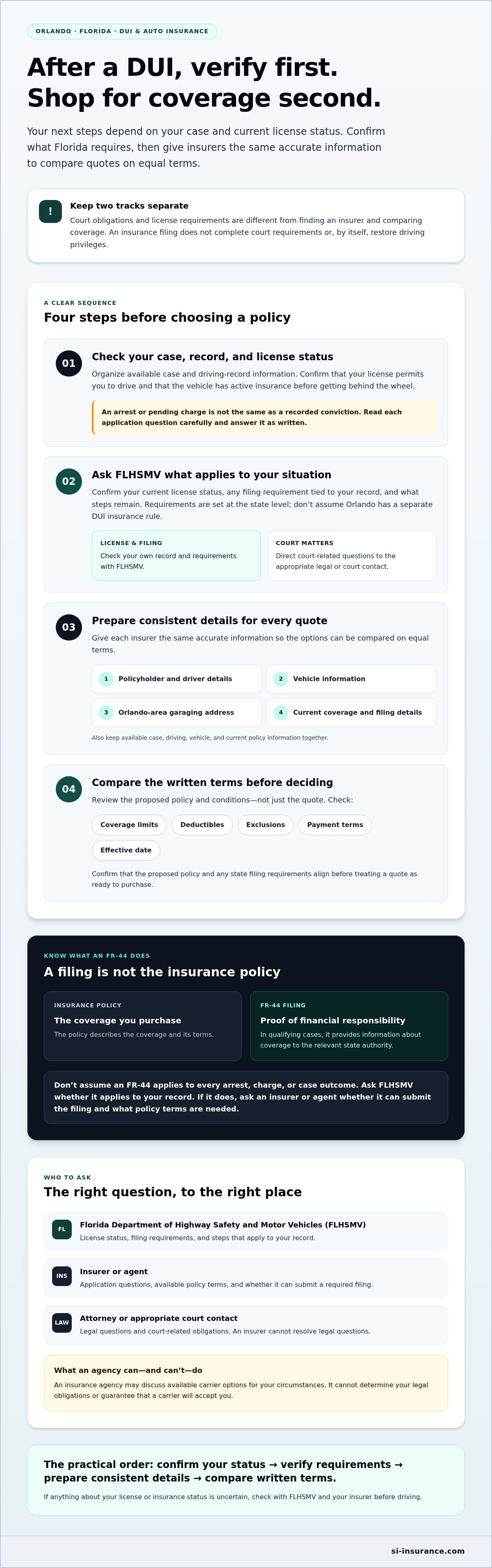
There isn’t one insurance-shopping path for every driver after a DUI. Your next steps may depend on whether the case is pending or resolved, what appears on your driving record, your license status, and how an insurer evaluates your application. Keep two tracks separate: meeting court requirements and confirming what’s needed for your license are different from finding an insurer and comparing coverage.
Before driving, confirm that your license status permits you to drive and that the vehicle has active insurance. If either is uncertain, check with FLHSMV and your insurer before getting behind the wheel. For general background, Driving under the influence (DUI) describes the term broadly, but it can’t determine the requirements for your case.
Does an arrest, charge, or conviction change the insurance search?
It can affect what an insurer asks and how it evaluates an application, but an arrest or pending charge is not the same as a recorded conviction. Read each application question carefully and answer it as written. Don’t describe a pending matter as a conviction or omit information the application requests. If you’re unsure how a question applies, ask your attorney or the relevant authority. An insurer can explain its application, but it can’t resolve legal questions.
Which Orlando and Florida details should you confirm first?
Have the policyholder’s details, vehicle information, Orlando-area garaging address, and current coverage status ready. Ask FLHSMV whether a filing or other license-related requirement applies to your record and what steps remain. Requirements are set at the state level, so don’t assume Orlando has a separate DUI insurance rule. Confirm your obligations before relying on a quote or applying for reinstatement.
Use this sequence to keep the process organized:
Gather records: Organize available case, driving, vehicle, and current policy information.
Verify requirements: Confirm license status and any filing obligations with FLHSMV. Direct court-related questions to the appropriate legal or court contact.
Request quotes: Give each insurer the same accurate details.
Compare written terms: Review the proposed coverage, conditions, and effective date before deciding.
This preparation gives you a practical starting point for how to get car insurance after a DUI in Orlando without assuming every insurer or case will be treated alike.
Florida DUI insurance requirements: verify FR-44 and license obligations
An FR-44 may be part of the insurance and license process after a Florida DUI, but don’t assume it applies to every arrest, charge, or case outcome. Whether a filing is required, and what must be in place before you can drive, depends on your record and current status. Check your requirements with FLHSMV before choosing a policy or planning to reinstate your license.
What is an FR-44, and how is it different from an insurance policy?
An FR-44 is a filing used to provide proof of financial responsibility to the state in qualifying cases. It isn’t the insurance contract itself. The policy describes the coverage you purchase, while the filing communicates information about that coverage to the relevant authority. If FLHSMV confirms an FR-44 applies, ask an insurer or agent whether it can submit the filing and what policy terms are needed.
Don’t rely on a general description to determine your filing status or how long a requirement applies. Confirm those details for your case with FLHSMV. The department’s Florida's DUI and IID Programs page provides official information about Florida DUI and ignition interlock programs. Contact the department for answers about your own license and filing record.
Who can confirm the requirement for your specific case?
Start with FLHSMV to check your current license status and any filing requirement tied to your record. Then ask a prospective insurer or agent whether it can submit the required filing and how it will confirm that the filing has been processed. Keep court obligations separate: an insurance filing doesn’t complete court requirements or, by itself, restore driving privileges.
As you work through how to get car insurance after a DUI in Orlando, check that the proposed policy and any state filing requirements align before treating a quote as ready to purchase. If you’re considering agency assistance, you can ask SI Insurance about Florida auto insurance options and whether it can assist with your Orlando-area circumstances. An agency can discuss available carrier options, but FLHSMV determines license and filing requirements, and no agency can guarantee that a carrier will accept an application.
How to compare car insurance options after a DUI in Orlando
Once you’ve confirmed which filing and license requirements apply, compare quotes on equal terms. Give each insurer the same driver, vehicle, Orlando-area garaging address, coverage selections, and filing information. If one quote uses different limits or leaves out a required filing, its initial premium may not be a useful comparison.
A quote is an estimate, not necessarily confirmation that coverage can be bound. Insurers use their own underwriting guidelines, and decisions can vary based on your record and other circumstances. Before choosing, ask what information or conditions remain and confirm the policy’s effective date in writing. Don’t rely on a preliminary price alone.
Which coverage details should you compare beyond the quote?
Look beyond the premium and compare the written policy terms. An insurance professional can help you review liability limits and whether the policy includes any filing FLHSMV has confirmed applies to your case. If offered, compare collision, comprehensive, and uninsured-motorist coverage across proposals. These options aren’t interchangeable, so check what each quote actually includes.
Use the same checklist for each proposal:
Coverage: Confirm limits, selected options, deductibles, and exclusions.
Filing: Ask whether the required filing is included and how the insurer will submit it.
Payment terms: Review the payment schedule and any conditions shown in the written offer.
Effective date: Confirm when coverage begins and coordinate it with any existing policy to avoid an unintended gap.
If a term is unclear, ask the insurer or agent to explain it before deciding. Compare the same protection and timing, not just the first number presented.
How can an independent agency help you evaluate options?
An insurance agency may help identify and discuss available carrier options, explain differences between proposals, and clarify what information an insurer still needs. It can’t guarantee that a carrier will accept an application or decide which requirements apply to your license. For broader context, review Florida auto insurance options and ask whether the agency can assist with your Orlando-area circumstances.
A consistent comparison makes how to get car insurance after a DUI in Orlando more manageable: keep application details the same, verify filing questions, and choose only after reviewing complete written terms and the confirmed start date.
What information to prepare before requesting post-DUI car insurance quotes
Having key details ready can make quote requests clearer and help you compare insurer responses. There isn’t one document list for every application, so ask each insurer what it needs and answer every question accurately. Don’t conceal or misrepresent a DUI-related matter. If you’re unsure how an application question applies, check with your attorney or the relevant authority before responding.
What details may an insurer ask you to provide?
Prepare the basics, then provide any additional records the insurer requests. Details vary by carrier and circumstance, so use this as a working checklist rather than a universal requirement.
Driver information: Your identifying details and information about your driving record, as requested.
Vehicle information: The vehicle’s identifying details and how it will be used, if asked.
Address and current insurance: The vehicle’s garaging address and details of any existing policy or coverage gap.
Case or record information: Relevant case documents or driving-record information, if the insurer asks for them.
Filing details: Information about an FR-44 or other filing that FLHSMV has confirmed applies to your situation.
Keep your answers and details consistent across quote requests. If your case status or license record has changed, make sure you understand what the application asks before submitting it.
How do you confirm the policy and filing are active?
Before relying on a quote, ask the insurer to confirm in writing whether coverage has been issued, its effective date and time, and how any required filing will be handled. A quote or application alone isn’t proof that coverage is active or that a filing has been completed. Confirm filing status with the insurer and license-related status with FLHSMV.
Keep the written quote, the information you submitted, policy documents, and any filing confirmation together. Make the effective date easy to find, and follow official instructions before driving. If anything is unclear, pause and verify rather than assume the policy or filing is in place.
This preparation makes how to get car insurance after a DUI in Orlando easier to manage: you’ll have details insurers may request and a record of what each one confirms. You can ask SI Insurance about auto insurance options and whether it can assist with your Orlando-area circumstances.
Get help finding car insurance after a DUI in Orlando
Once you know what requirements apply, prepare accurate information, ask insurers about available options, compare written terms, and confirm coverage before driving. A DUI can make the application process feel uncertain, but the right contact depends on what you need clarified.
What should you ask an insurance agent?
Ask which insurers may consider your circumstances and what information they need to evaluate an application. If FLHSMV has confirmed that a filing applies, ask whether the insurer can submit it and how you’ll receive confirmation. Request written coverage details, including the policy’s effective date, before deciding. An agent can explain insurance options and application steps, but can’t guarantee a carrier will accept you.
When should you contact FLHSMV, an attorney, or an agent?
Contact FLHSMV to verify your driver-license status and any filing requirements. Take questions about your specific case or legal obligations to a qualified attorney. An insurance agent is the appropriate contact for quote details, coverage comparisons, application questions, and whether a carrier may be able to handle a required filing.
Keep those responsibilities distinct. An insurance agency can discuss coverage options, but it can’t determine what the law requires in your case, resolve court matters, restore driving privileges, or promise that an insurer will offer a policy. If you’re unsure whether you’re permitted to drive, confirm your status with FLHSMV before getting on the road.
For readers considering how to get car insurance after a DUI in Orlando, a documented process helps: verify requirements with the relevant authority, prepare accurate details, compare available options, and confirm the policy and any required filing are in place. A quote alone isn’t proof that coverage is active.
SI Insurance offers auto insurance to Florida communities, with listed offices in Sunrise and Pompano Beach. If you’re in the Orlando area, you can discuss auto insurance options with SI Insurance and ask whether it can assist with your circumstances. The agency can clarify whether it can help you explore carrier options for your situation.
Take the next step with a clear plan
Finding how to get car insurance after a DUI in Orlando starts with confirming what applies to your case, rather than assuming every driver has the same filing or license requirements. Check your status with FLHSMV, prepare accurate details for insurers, and compare written coverage terms and effective dates before choosing a policy.
Keep the roles clear: FLHSMV can confirm license and filing status, an attorney can address legal questions, and an insurance agent can discuss quotes, coverage, and application steps. An agency can help explore available carrier options, but it can’t determine your legal obligations or guarantee that an insurer will accept your application.
SI Insurance Agency offers auto insurance in Florida, with offices in Sunrise and Pompano Beach. Orlando-area drivers can ask whether the agency can assist with their circumstances and discuss available options. Discuss Florida auto insurance options when you’re ready. With your requirements confirmed and details organized, you can move forward with greater clarity.
Frequently Asked Questions
Can I get car insurance in Orlando after a DUI?
You may be able to find an insurer, but approval and available coverage depend on the carrier’s underwriting and your circumstances. To understand how to get car insurance after a DUI in Orlando, first confirm your license and filing status with FLHSMV, then request quotes using accurate, consistent information. SI Insurance Agency offers auto insurance and serves Florida communities, with listed offices in Sunrise and Pompano Beach, not Orlando.
Does a DUI in Florida require an FR-44?
A Florida DUI conviction generally requires an FR-44 filing, but an arrest or pending case isn’t the same as a conviction, and individual records and license status matter. Don’t assume a filing requirement based only on a general description of Florida rules. Ask FLHSMV to confirm what applies to your case, then check with an insurer whether it can submit the filing if required.
How long do I need an FR-44 in Florida?
Florida’s FR-44 requirement is generally maintained for three years from the date of license reinstatement. Confirm the start date and duration for your individual case with FLHSMV rather than relying on a quote or general estimate. Ask the insurer how it handles ongoing filing requirements and what to do if your policy changes, so you can avoid an unintended lapse.
Can I get insurance while my DUI case is still pending?
You can ask insurers about coverage while a case is pending, but whether a carrier will consider your application depends on its underwriting and the information requested. Answer application questions truthfully and distinguish a pending charge from a conviction. If you’re unsure how a question relates to your case, ask your attorney or the relevant authority. An insurance quote doesn’t confirm your license status.
Will every insurance company cover a driver after a DUI?
No. Insurers make their own underwriting decisions, and not every company may offer coverage or handle a required FR-44 filing. A decision can depend on your record and other application details. If one insurer declines or can’t submit a filing, ask whether other carriers may consider your circumstances. An insurance agency may help discuss available carrier options, but it can’t guarantee acceptance or policy availability.
How can I compare car insurance quotes after a DUI?
Request each quote using the same driver, vehicle, garaging address, coverage selections, and filing details. Compare written limits, deductibles, exclusions, payment terms, and effective dates, not just the initial premium indication. Ask whether the quote is bindable and what steps remain before coverage begins. Confirm the policy’s start date in writing, and make sure any filing FLHSMV requires is addressed.
Can an insurance agent help with an FR-44 filing?
An agent may be able to help arrange a filing through an insurer that handles it, but not every carrier offers that option. Ask whether the insurer can submit the FR-44, what information it needs, and how filing status will be confirmed. FLHSMV remains the source for your license and filing requirements. An agent can discuss insurance options, not determine your legal obligations or restore driving privileges.
Comments