


How to Insure Jewelry and Valuables in Florida: A Practical Guide
If a ring disappears while you’re away from home, would your current policy respond the way you expect? The answer depends on the policy’s limits, exclusions, and how the item is insured. For Florida residents considering how to insure jewelry and valuables in florida, a little preparation can make a policy review far more useful.
A homeowners, renters, or condo policy may include personal-property coverage, but that doesn’t automatically mean every valuable is covered at its full value or in every situation. The terms for a particular item, or for a loss away from home, depend on the policy wording and how coverage is arranged.
This guide explains how to review your policy, create an inventory that describes what you own, and compare coverage options for valuable belongings. Clear descriptions and valuation records can make it easier to discuss your needs and identify questions about item-level protection. The goal is a practical plan based on your belongings and how you use them, not assumptions about what an existing policy covers.
Table of Contents
How to insure jewelry and valuables in Florida: start by finding the coverage gap
A homeowners, condo, or renters policy may include personal-property coverage, but a general summary won’t show how every valuable is treated. To find a potential coverage gap, compare an item’s documented value with the policy terms that apply to it. Limits, covered causes of loss, deductibles, and claim conditions can all affect that comparison. Review the policy wording rather than assuming an item is fully protected.
General personal-property coverage addresses belongings as a category. Coverage arranged for specifically listed items identifies those belongings and applies the terms stated for them. Which arrangement fits depends on the item and the policy. That distinction is a useful starting point when considering how to insure jewelry and valuables in florida.
Which valuables should prompt a closer coverage review?
Consider engagement and wedding rings, watches, heirloom jewelry, and other belongings with significant financial or personal value. Sentimental importance may not appear on a purchase receipt, but it can still make careful documentation a priority. Start with the items that would be hardest to replace, then review their records and the policy terms that apply. Don’t assume an item automatically qualifies for a particular coverage option.
If you’re researching jewelry professionals as part of documenting an item, the Jewelers of America overview provides background on the trade association and its consumer information.
What should Florida residents look for in an existing policy?
Gather your homeowners, condo, or renters policy documents, then look for the provisions that apply to jewelry and other valuables. Check for item-specific or category limits, the causes of loss described, deductibles, exclusions, and claim conditions. Note unfamiliar terms so you can get a clear explanation instead of relying on a general description of the policy.
Policy wording varies by insurer and policy, so there isn’t one universal answer for Florida households. A loss away from home may be treated differently from a loss at the insured residence. Read the relevant terms before assuming the same protection applies in both situations. For broader property-policy context, see Home Insurance in Florida: A Strategic Guide to Protecting Your Sunshine State Investment in 2026.
Compare the policy terms with the belongings you own and the records you have for each item. If a limit appears lower than an item’s documented value, or a type of loss isn’t clearly addressed, note that as a question to resolve. A clear inventory makes the next step easier: reviewing each valuable on its own merits.
Build a jewelry and valuables inventory before choosing coverage
An inventory turns a broad conversation about valuables into an item-by-item review. It records what you own, gathers available evidence of value, and shows which records might need updating. Creating it before comparing coverage options gives you a practical basis for reviewing jewelry protection alongside your existing property policy.
What details belong in a valuables inventory?
For each item, record its type, material, distinguishing features, brand or maker when known, and date acquired. Take photographs from multiple angles, including close-ups of identifying marks or serial numbers where applicable. Gather supporting records you already have, such as receipts, appraisals, or documentation of a gift. The records will vary by item, so don’t assume each one needs every type of document.
List the items. Include jewelry and other valuables you want to review, and note which matter most financially or personally.
Describe each one. Record details that distinguish it from similar items, including materials, maker, markings, and date acquired when known.
Take clear photographs. Photograph each item from more than one angle to show its appearance and distinctive features.
Collect available proof of value. Save receipts, valuation documents, and gift records you have, and keep copies securely with the inventory.
A receipt and an appraisal serve different purposes. A receipt records a purchase and its price. An appraisal can describe an item’s characteristics and assessed value. Whether either document is required depends on the applicable policy, so use the policy’s documentation requirements rather than a general rule. Forbes Advisor’s guide to jewelry insurance offers additional background on coverage and item documentation.
When might an appraisal or updated valuation help?
A valuation document can describe a piece and its assessed value, making a coverage discussion more specific. Compare older records with what you know about the item today. If its value may have changed substantially, an updated valuation can help you review the amount being considered. Follow the relevant policy terms rather than relying on a fixed appraisal schedule or assuming a particular qualification is required.
Store digital copies securely and separately from the items themselves, and keep original records where you can retrieve them. Update your inventory after a significant purchase, a gift, or a material change in value. Once your records are organized, you can discuss jewelry insurance options with SI Insurance alongside your existing property coverage.
Compare policy options for jewelry and valuables in Florida
A homeowners or renters policy doesn’t necessarily cover every valuable at its full documented value. To understand how to insure jewelry and valuables in florida, compare the terms that apply to each item instead of relying on a policy label or a general description of coverage.
The applicable policy wording, not the label alone, determines how a loss is treated. Options and terminology vary by insurer, so use the comparison below as a framework for reviewing documents, not as a promise that a particular feature applies.
How does general property coverage differ from item-specific coverage?
General property coverage is part of a broader policy and remains subject to that policy’s terms. Scheduled coverage typically identifies particular belongings individually, while standalone jewelry coverage is arranged separately from a general property policy. These descriptions don’t establish which items qualify or what a claim would pay. The applicable policy wording controls.
What should you compare before selecting an option?
Use your inventory and supporting records to compare each item’s documented value with the relevant limits and deductible. Then check how the policy addresses theft, damage, loss away from home, and unexplained disappearance. Terms differ, so don’t assume protection at home applies in the same way elsewhere or that every type of loss is treated alike.
If the wording is ambiguous, get written clarification before relying on an assumption. Keep the response with your policy records, and consider the item, its documentation, and the wording together. This comparison gives you a better basis for deciding whether your current arrangement fits your needs or another coverage option merits review.
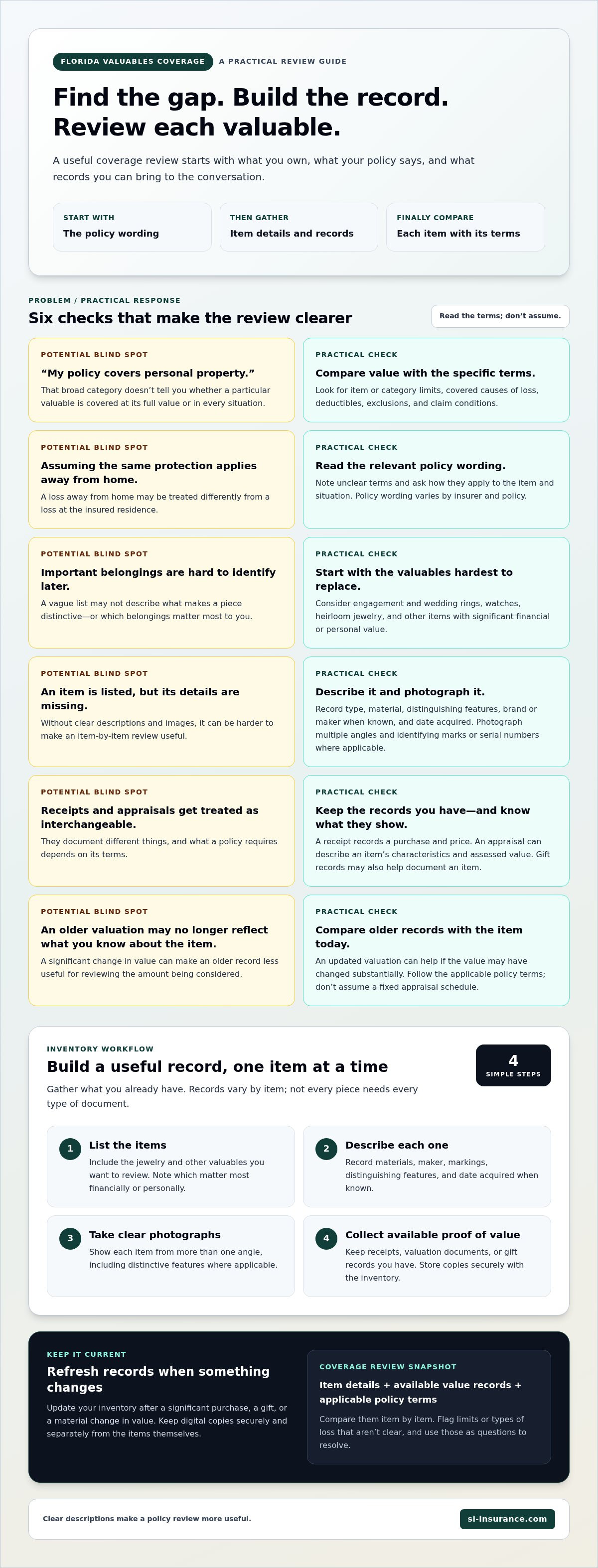
Use this Florida checklist to arrange or update valuables coverage
A focused review is easier when you consider your belongings, records, and policy documents together. As you decide how to insure jewelry and valuables in florida, keep your Florida circumstances in mind without assuming every insurer uses the same terms or treats a particular loss the same way.
What information should you prepare for a coverage review?
Gather the records that let you compare each item with the coverage being considered. This checklist can help you prepare:
Policy documents: Bring your current declarations and the relevant wording from your homeowners, condo, or renters policy.
Item inventory: List the valuables you want reviewed, with identifying details and photographs.
Available records: Collect receipts, appraisals, or gift documentation you have. Different items may have different supporting records.
Use and location: Note where items are generally kept and whether they’re regularly worn or transported, including during travel.
Open questions: Write down uncertainties about item-level limits, deductibles, exclusions, and documentation that may be relevant to a claim.
Travel, storage, and changes in where an item is kept can be relevant to policy terms. Review how the proposed coverage addresses those circumstances instead of assuming that terms for items kept at home apply in the same way elsewhere. Read the wording to understand whether a named event is covered or excluded for jewelry.
How should Florida policy differences be handled?
Use general guidance to identify what to review, then refer to the policy itself. Insurer forms and terms vary, so statewide assumptions shouldn’t replace checking the documents that apply to your coverage. For Florida-specific consumer information, consult current materials from the Florida Department of Financial Services or the Florida Office of Insurance Regulation, and verify the guidance before relying on it.
Compare your existing property policy with the proposed coverage item by item. Check limits and terms for each valuable, along with covered causes of loss, deductibles, exclusions, and documentation provisions. If wording is unclear, ask for written clarification and keep it with your records. A verbal summary may not explain how a specific term applies.
For a personalized review of your inventory alongside your existing property insurance, discuss jewelry coverage options with SI Insurance.
Review jewelry insurance with a Florida agency and keep records current
A useful valuables review brings together your inventory, the wording of your existing property policy, and the coverage options you’re considering. SI Insurance Agency offers jewelry insurance alongside homeowners, condo, and renters coverage. Reviewing these together can help you organize questions about individual belongings and understand how relevant policy terms relate to your records.
SI Insurance is an independent Florida agency operated by SI Insurance LLC. It serves customers across Florida, with offices in Sunrise and Pompano Beach. For broader background, the companion resource Jewelry Insurance in Florida: A Strategic Guide to Protecting Your Valuables in 2026 explores the topic further.
When is it sensible to revisit your valuables coverage?
Revisit your records after acquiring a significant piece, receiving an heirloom, or obtaining a new valuation. A move or a change in where an item is stored may also make a review useful, particularly if you wear or transport it regularly. There’s no universal review interval; let changes in your belongings, circumstances, and policy terms guide the timing.
Keep the inventory and supporting documents together, and note when an item’s description or valuation changes. That way, a future discussion can focus on what’s new instead of rebuilding the record from memory.
What can a coverage conversation clarify?
Bring your inventory and current policy documents to compare existing terms with the options under consideration. A coverage conversation can help you work through questions such as:
What limits and deductibles apply to each item or category?
Which causes of loss does the wording address, and what exclusions or conditions should you understand?
What valuation and ownership records are relevant to the proposed coverage?
What procedures and documentation apply if you need to make a claim?
For readers considering how to insure jewelry and valuables in florida, clear answers can make the next step more informed. Rely on the issued policy documents for final coverage terms. A discussion or summary doesn’t replace the wording that governs the policy.
If you’re ready to review your valuables alongside your existing property coverage, discuss jewelry insurance options with SI Insurance.
Make your valuables review your next practical step
Protecting jewelry and other valuables starts with knowing what you own and how your policy treats each item. A clear inventory, useful records, and a careful comparison of limits, deductibles, and covered causes of loss can reveal questions to resolve before relying on an existing policy. That’s the practical foundation for understanding how to insure jewelry and valuables in florida.
An independent Florida agency can help you review jewelry insurance alongside homeowners, condo, or renters coverage. SI Insurance Agency, operated by SI Insurance LLC, serves customers across Florida and has offices in Sunrise and Pompano Beach. The agency offers jewelry insurance, providing a relevant starting point for reviewing your coverage options.
Discuss jewelry insurance options with SI Insurance Agency and take a considered next step toward organizing protection for the valuables that matter to you.
Frequently Asked Questions
Does homeowners insurance cover jewelry in Florida?
It may provide some coverage, but the amount and circumstances depend on the specific homeowners policy. Jewelry may be subject to item or category limits, exclusions, deductibles, and conditions that affect how a loss is handled. Review the policy wording rather than assuming it covers every piece at its full value. Florida policies can differ, so use your own documents to understand what applies to your belongings.
Can I insure jewelry separately from my homeowners or renters policy?
Yes. Jewelry may be insured through a separate policy or an item-specific arrangement connected to a property policy, depending on the available options and applicable terms. These arrangements can differ in eligibility, limits, covered causes of loss, deductibles, and documentation requirements. Compare the wording with your existing homeowners or renters coverage to understand how the arrangements relate and whether a potential gap remains.
How do I insure an engagement ring in Florida?
Start by recording the ring’s identifying details, taking clear photographs, and gathering available proof of purchase or valuation. Then review your homeowners, condo, or renters policy for applicable limits and terms, and compare them with available item-specific or separate jewelry coverage. Ask how the wording addresses theft, damage, loss away from home, deductibles, and claim documentation. The issued policy documents determine the final terms.
What documents do I need to insure jewelry?
Useful records may include a detailed item description, photographs, a purchase receipt, an appraisal or other valuation document, and gift documentation when relevant. The exact documents requested vary by insurer and policy, so don’t assume every item needs the same records or that one document is always mandatory. Keep copies securely and organize them so they can be matched to the correct item during a coverage review.
Is jewelry covered if it is lost or stolen away from home?
It depends on the policy and the circumstances of the loss. Coverage away from home, including while traveling, may be treated differently from a loss at the insured residence. Review the wording for covered causes of loss, exclusions, limits, and relevant conditions. Don’t assume loss, theft, damage, or unexplained disappearance is treated the same way under every policy or coverage arrangement.
Do I need an appraisal to insure jewelry?
Not necessarily. Whether an appraisal is needed depends on the insurer’s requirements and the applicable policy terms. An appraisal can describe a piece and provide an assessed value, while a receipt records purchase information. Each serves a different purpose. Gather the documents you have, then review what’s needed for the coverage being considered. Use policy-specific documentation requirements rather than relying on a general rule.
How often should I update my jewelry insurance inventory?
There isn’t one review interval that applies to every policy. Update your inventory after acquiring a valuable piece, receiving an heirloom, or obtaining a new valuation, and revisit it if you move or change how items are stored. These updates help keep your records aligned with what you own. Review any policy-specific requirements as well, since documentation and valuation terms vary by insurer.
Comments